
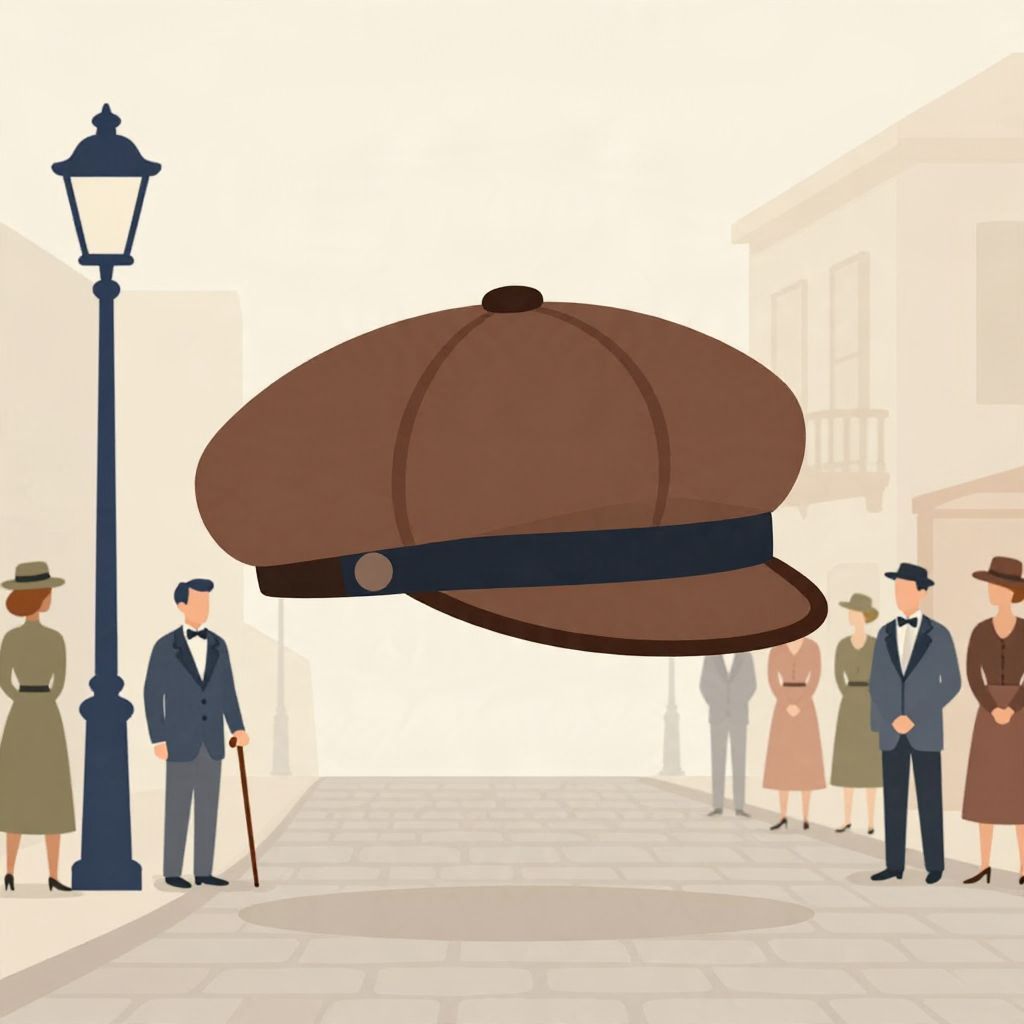
What is a pork pie hat? It is a brimmed hat with a flat, circular crown and a narrow, often upturned brim, usually made of felt or straw. The style became especially familiar in the 19th and 20th centuries, but its shape and name have a longer, more layered history than many people realize.
Although today it is often associated with jazz musicians, film noir, and mid-century urban style, the pork pie hat did not begin as a single, fixed fashion invention. Its meaning changed over time, shifting from practical everyday wear to a recognizable cultural symbol.
What Is a Pork Pie Hat?
A pork pie hat is a low-crowned hat with a flat top and a narrow brim, sometimes turned slightly upward all around. The name comes from its resemblance to a traditional pork pie pastry. Historically, the term has been used for several similar hat styles, especially in the 19th and 20th centuries, so exact shapes can vary by place and period.
Where Did the Pork Pie Hat Come From?
The pork pie hat emerged from broader 19th-century hatmaking traditions rather than from one single inventor. Its design developed alongside other brimmed hats for men and women, especially styles made from felt, straw, and later lighter materials. By the mid-1800s, hats with flat crowns and modest brims were already common in Europe and North America.
Early influences in the 19th century
Hat styles in the 1800s were highly responsive to class, occupation, and fashion cycles. The pork pie’s compact shape made it practical for travel and city wear, while its neat silhouette suited the increasingly tailored clothing of the industrial age. It was not always called a pork pie hat at first; the name became more common later, after the shape was already recognizable.
Why the name “pork pie”?
The most straightforward explanation is visual: the crown and brim resemble the raised, rounded edge of a pork pie. Like many clothing terms, the name is descriptive rather than technical. In fashion history, such names often appear after a style has already become familiar, which is why the label can be applied somewhat loosely to related hats.
How Did the Pork Pie Hat Change Over Time?
The pork pie hat changed as fashion moved from formal Victorian dress to more casual, mass-produced clothing. Its shape remained recognizable, but materials, brim width, and crown height varied. By the early 20th century, the hat had become part of both everyday wear and performance culture, especially in music and entertainment.
Victorian and Edwardian wear
In the late 19th and early 20th centuries, pork pie-like hats appeared in urban fashion, often worn by men in business and leisure settings. They were not yet tied to a single subculture. In some cases, they overlapped with other compact brimmed hats, making the category historically fuzzy rather than rigid.
From practical hat to style marker
As hats became less essential in daily life during the 20th century, certain styles gained symbolic value. The pork pie hat stood out because it was compact, distinctive, and easy to recognize. It could suggest refinement, coolness, or individuality depending on who wore it and where.
Why Is the Pork Pie Hat Associated with Jazz?
The pork pie hat became strongly linked with jazz in the 1930s and especially the 1940s and 1950s. Musicians liked its sharp silhouette and relaxed feel, and audiences came to associate it with improvisation, urban sophistication, and a certain self-conscious cool. This association was cultural, not inherent to the hat itself.
Jazz culture and visual identity
Jazz musicians often developed recognizable personal styles as part of their public image. Clothing, posture, and accessories mattered in performance culture. The pork pie hat fit that world because it was stylish without being overly formal. It could look sharp on stage and casual offstage, which helped it become a visual shorthand for jazz identity.
The Lester Young connection
One of the most famous associations is with tenor saxophonist Lester Young, who was known for wearing a pork pie hat. His influence helped popularize the style among musicians and fans. While he did not invent the hat, his public image made it iconic in jazz history.
How Did Film and Popular Culture Shape Its Meaning?
Hollywood and popular media helped preserve the pork pie hat after everyday hat-wearing declined. On screen, it could signal toughness, wit, eccentricity, or urban style. Because visual symbols matter in film, the hat’s compact shape made it useful for creating a memorable character type quickly.
From noir to cool style
In mid-20th-century film and photography, the pork pie hat often appeared in scenes meant to evoke city life, nightlife, or a slightly rebellious mood. It was not as universal as the fedora, but that narrower association made it more distinctive. Over time, the hat became less a daily necessity and more a deliberate style choice.
Later revivals
The pork pie hat returned in various revivals, especially when retro fashion came back into style. Musicians, actors, and fashion-conscious wearers adopted it because it carried historical associations without looking overly formal. Its appeal lay partly in that layered past: old-fashioned, but never entirely out of date.
What Makes a Pork Pie Hat Different from Other Hats?
People often confuse the pork pie hat with the fedora, trilby, or homburg. The key difference is the crown shape. A pork pie hat usually has a flat top and a short, rounded profile, while a fedora typically has a creased crown and a broader brim. The distinctions can blur, especially in fashion retail.
Common comparisons
- Pork pie hat: flat crown, narrow brim, compact shape
- Fedora: indented crown, usually wider brim
- Trilby: similar to a fedora but with a shorter brim
- Boater: flat crown too, but usually straw with a stiff, flat brim
These categories overlap because hat styles evolved gradually. A hat sold as a pork pie in one era or country might have been labeled differently elsewhere. That is one reason fashion historians often focus on shape, material, and context rather than treating names as fixed.
What Materials Were Used to Make Pork Pie Hats?
Traditionally, pork pie hats were made from felt, straw, or other lightweight materials depending on season and use. Felt versions were common for cooler weather and more formal wear, while straw versions suited warm climates and summer fashion. The material often mattered as much as the shape in determining the hat’s setting and status.
Felt and straw versions
Felt pork pie hats tended to look more substantial and were often worn in city environments or performance settings. Straw versions were lighter and more casual. In both cases, the hat’s small crown and neat outline made it easy to wear with tailored clothing.
Mass production and accessibility
As hat manufacturing became more industrialized, styles like the pork pie hat became easier to produce and buy. This helped spread the look beyond elite fashion circles. What had once been a specialized style could now be worn by a wider public, even if it still carried strong social and cultural associations.
Did the Pork Pie Hat Have Social Meaning?
Yes. Like many items of clothing, the pork pie hat could signal class, profession, taste, or belonging. In some settings it suggested respectability; in others, artistic independence or urban cool. Its meaning depended on who wore it, when, and in what social environment.
Respectability and individuality
In the late 19th and early 20th centuries, hats were often expected as part of proper dress. A pork pie hat could therefore mark a man as well turned out. Later, as hat-wearing declined, the same style could read as intentionally distinctive, even nostalgic. The hat’s social meaning shifted with fashion norms.
Race, music, and identity
In jazz history, the pork pie hat also became part of Black cultural expression in the United States. That association should be understood carefully: it was not just a fashion trend, but part of a broader world of performance, style, and self-presentation. The hat’s visibility in jazz helped it travel far beyond the music itself.
Is the Pork Pie Hat Still Worn Today?
Yes, though far less commonly than in the past. Today it is usually worn as a deliberate style statement rather than as everyday headwear. It appears in vintage fashion, stage performance, and occasionally in formal or semi-formal dress. Its continued presence shows how historical clothing can survive as a symbol after its practical role fades.
Modern fashion and nostalgia
Modern wearers often choose the pork pie hat because it suggests individuality and historical awareness. It can evoke jazz age elegance, mid-century cool, or retro urban style. In that sense, the hat has become a historical reference as much as an accessory.
Why Does the Pork Pie Hat Matter in History?
The pork pie hat matters because it shows how ordinary objects can accumulate cultural meaning over time. It began as a practical brimmed hat, but through fashion change, music, and media, it became a symbol of style and identity. Its history reflects broader shifts in dress, class, and popular culture.
In short, a pork pie hat is a small, flat-crowned brimmed hat with a long cultural afterlife. Its origins lie in 19th-century hatmaking, but its lasting fame comes from jazz, film, and the power of fashion to turn everyday objects into historical symbols. If you want to explore related style history, you might next look at the history of the fedora or how jazz fashion shaped 20th-century culture.