
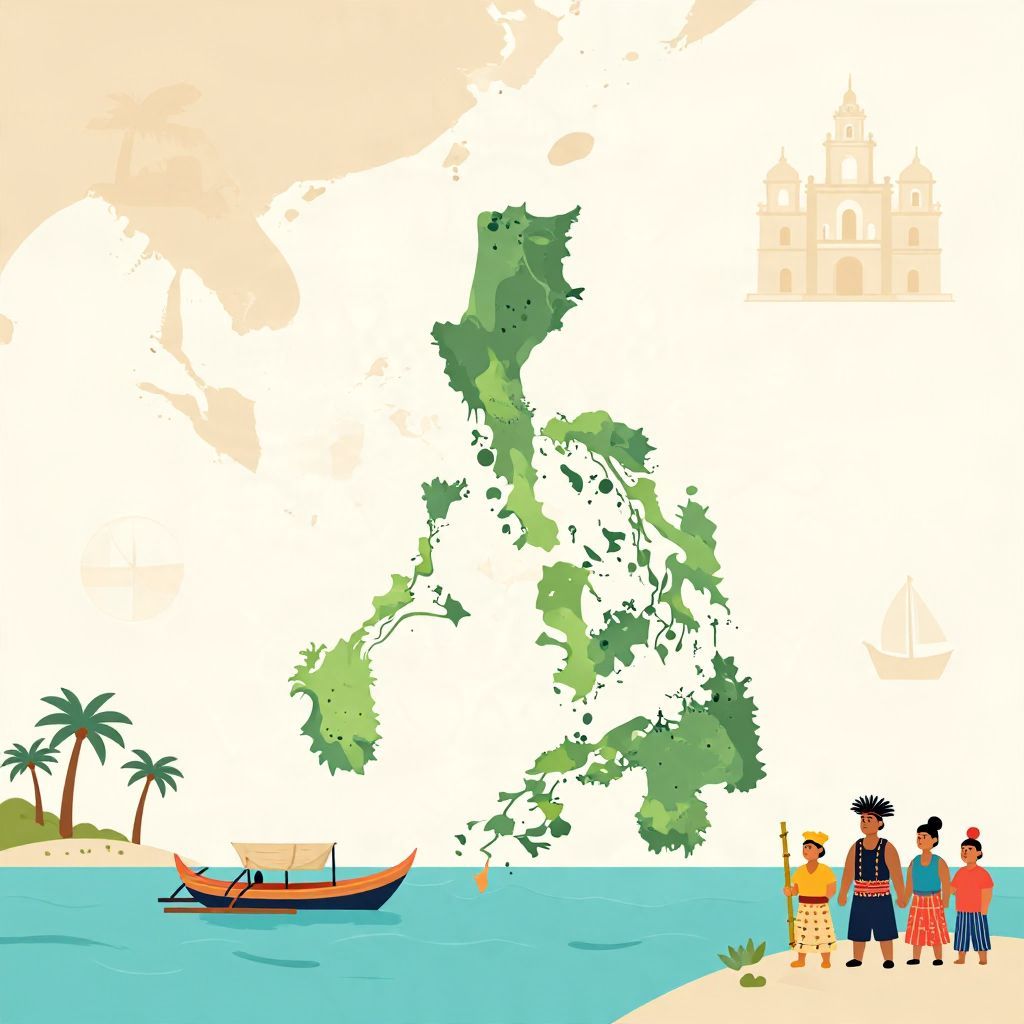
Is Filipino Asian or Pacific Islander? The short historical answer is that Filipinos are generally considered Asian, because the Philippines is part of Southeast Asia. But the question has a longer history than a simple label, and different governments, institutions, and communities have classified Filipinos in different ways over time.
That difference matters because identity categories are not timeless facts; they are shaped by migration, empire, census rules, and politics. To answer the question well, we need to look at geography, history, and how the term “Pacific Islander” has been used in the modern era.
Is Filipino Asian or Pacific Islander?
Filipinos are usually classified as Asian, specifically as people from Southeast Asia. The Philippines is an archipelago in the western Pacific, but its historical, cultural, and political connections place it within Asia rather than among the Indigenous peoples usually meant by “Pacific Islander.”
This distinction is important: “Pacific Islander” often refers to peoples from Polynesia, Micronesia, and Melanesia, while “Filipino” refers to people from the Philippines, a nation in Southeast Asia with its own long and complex history.
Why the Philippines Is Usually Classified as Asian
Geography and regional history
The Philippines lies in Southeast Asia, between the South China Sea and the Philippine Sea. Its location has linked it for centuries to the wider Asian mainland through trade, migration, religion, and empire. Long before modern national borders, the islands were part of regional networks that connected China, Vietnam, Borneo, the Malay world, and the Indian Ocean trading sphere.
That historical setting is one reason scholars and international organizations place the Philippines in Asia. The country shares many patterns with other Southeast Asian societies: Austronesian language roots, maritime trade, layered local polities, and later influence from Indianized, Islamic, Chinese, Spanish, and American systems.
The modern regional category of Southeast Asia
Southeast Asia is a modern geographic and historical label, but it is widely used in scholarship, diplomacy, and education. The Philippines belongs to this region alongside Indonesia, Malaysia, Singapore, Brunei, Thailand, Vietnam, Laos, Cambodia, and Myanmar. In this framework, Filipino identity is Asian, not Pacific Islander.
In everyday speech, some people use “Pacific Islander” loosely because the Philippines is an island nation in the Pacific Ocean. Historically, however, that is not the same as belonging to the Pacific Islander peoples as the term is commonly used in anthropology, history, or U.S. racial categories.
Why Some People Call Filipinos Pacific Islander
Island geography can be misleading
The Philippines is made up of more than 7,000 islands, so it is easy to assume that “island” means “Pacific Islander.” But geography alone does not determine historical classification. Japan is an island country, yet it is Asian. The same logic applies to the Philippines.
What matters more is historical region, cultural development, and how a people have been categorized in different eras. The Philippines’ island geography places it in the Pacific, but its historical identity developed within Southeast Asia.
U.S. racial and census categories
In the United States, the category “Asian American and Pacific Islander” has sometimes grouped Filipinos with Pacific Islanders for administrative or political reasons. This has led to confusion. In many U.S. settings, Filipinos are counted as Asian; in some broader coalitions, they are included in “Asian Pacific Islander” or “AAPI” because the term combines two different groups for advocacy purposes.
That grouping is modern and political, not a statement that Filipinos are historically the same as Pacific Islander peoples such as Samoans, Tongans, Chamorros, or Native Hawaiians. It is also worth noting that some Filipinos themselves may prefer different labels depending on family history, migration experience, and personal identity.
The Historical Background of Filipino Identity
Before Spanish colonization
Before the arrival of Spain in the 16th century, the islands that would become the Philippines were home to diverse communities connected by trade and kinship. These societies were not isolated. They interacted with Borneo, the Malay Peninsula, China, and other parts of maritime Southeast Asia. Their languages belong to the Austronesian family, which spread widely across Island Southeast Asia and the Pacific.
This Austronesian heritage is one reason people sometimes compare Filipinos with Pacific Islanders. The deep prehistoric movement of Austronesian-speaking peoples did extend across both Southeast Asia and the Pacific. But historical descent from a broad linguistic family is not the same as belonging to the modern category “Pacific Islander.”
Spanish rule and the making of a colonial identity
From the 16th century until 1898, the Philippines was ruled by Spain. During this long colonial period, the islands were tied to Mexico and the Spanish Empire through the Manila galleon trade. This created a distinct colonial society, but it did not move the Philippines out of Asia. Instead, it linked the archipelago to global empire while keeping it rooted in Southeast Asian geography.
The colonial name “Filipino” itself changed over time. In the Spanish period, it originally referred more narrowly to Spaniards born in the Philippines. By the late 19th century, Filipino nationalists reclaimed the term to mean the people of the archipelago as a whole. That political identity developed in an Asian setting, not a Pacific Islander one.
American rule and modern racial classification
After the Spanish-American War in 1898, the United States took control of the Philippines. American colonial rule introduced new census practices and racial language. In the 20th century, U.S. institutions often classified Filipinos as “Oriental,” “Malay,” “Asian,” or sometimes in broad pan-ethnic groupings that changed over time.
These shifting labels show how modern race categories are administrative tools, not fixed historical truths. The fact that Filipinos were sometimes grouped differently in the United States does not alter the Philippines’ place in Southeast Asia.
Asian, Pacific Islander, or Both? A Closer Look
What “Pacific Islander” usually means
In historical and cultural usage, “Pacific Islander” usually refers to Indigenous peoples of the Pacific islands outside Asia’s mainland-centered regional history. This includes many peoples from Polynesia, Micronesia, and Melanesia. Their histories, languages, and colonial experiences overlap in some ways with those of Filipinos, but they are not the same.
For example, Native Hawaiians, Samoans, Tongans, Fijians, and Chamorros have distinct histories and identities. Filipinos have their own distinct history as a Southeast Asian people shaped by Austronesian origins, regional trade, Spanish colonization, and later American rule.
Why the distinction matters historically
Using the wrong category can flatten important differences. It can also erase the specific history of Southeast Asia. Filipinos are not a side note to Pacific history; they belong to a different regional story, even though the Philippines is an oceanic archipelago and shares some deep ancestral connections with Pacific peoples.
At the same time, the question is not purely academic. In diaspora communities, people often navigate multiple identities. A Filipino American may be counted as Asian in one setting, grouped into AAPI in another, and may also feel cultural ties to broader Pacific or oceanic communities. Historical classification and lived identity are related, but they are not identical.
How Historians and Institutions Classify Filipinos Today
Common historical and geographic usage
Most historians, geographers, and international institutions classify Filipinos as Asian. The Philippines is part of Southeast Asia, and Filipino history is usually studied within that framework. School curricula, academic departments, and regional organizations generally follow this classification.
Identity in the United States
In the United States, Filipino Americans are usually considered Asian American. The term AAPI is broader and includes both Asian Americans and Pacific Islanders, but that does not mean every group in the label belongs equally to both halves. Rather, it is a coalition term used in politics, advocacy, and public discussion.
So if someone asks whether Filipinos are Asian or Pacific Islander, the most historically accurate answer is: Filipinos are Asian, while “Pacific Islander” is a separate category that sometimes overlaps in modern U.S. usage but not in historical classification.
Common Misunderstandings About Filipino Identity
- “The Philippines is in the Pacific, so Filipinos must be Pacific Islanders.” Geography alone does not define historical identity.
- “AAPI means Filipinos are both Asian and Pacific Islander.” AAPI is a modern umbrella term, not a precise ethnic classification for every group under it.
- “Filipinos are the same as Polynesians or Micronesians.” They share some ancient Austronesian links, but their histories and cultures developed separately.
- “Because the Philippines is an archipelago, it is outside Asia.” Many Asian societies are island-based or maritime; island geography does not remove a country from Asia.
The Historical Verdict
Historically and geographically, Filipinos are best understood as Asian, specifically Southeast Asian. The Philippines belongs to Asia’s island world, not to the Pacific Islander category as it is usually used in history, anthropology, and modern census language. The confusion comes from the Philippines’ location in the Pacific Ocean and from modern umbrella labels like AAPI.
In other words, the answer depends on the question being asked. If the question is about history, geography, and standard classification, Filipinos are Asian. If the question is about modern coalition terms or personal identity, some Filipinos may appear in broader Pacific Islander-related contexts. For related cultural history, you may also be interested in whether Filipinos celebrate Lunar New Year.