
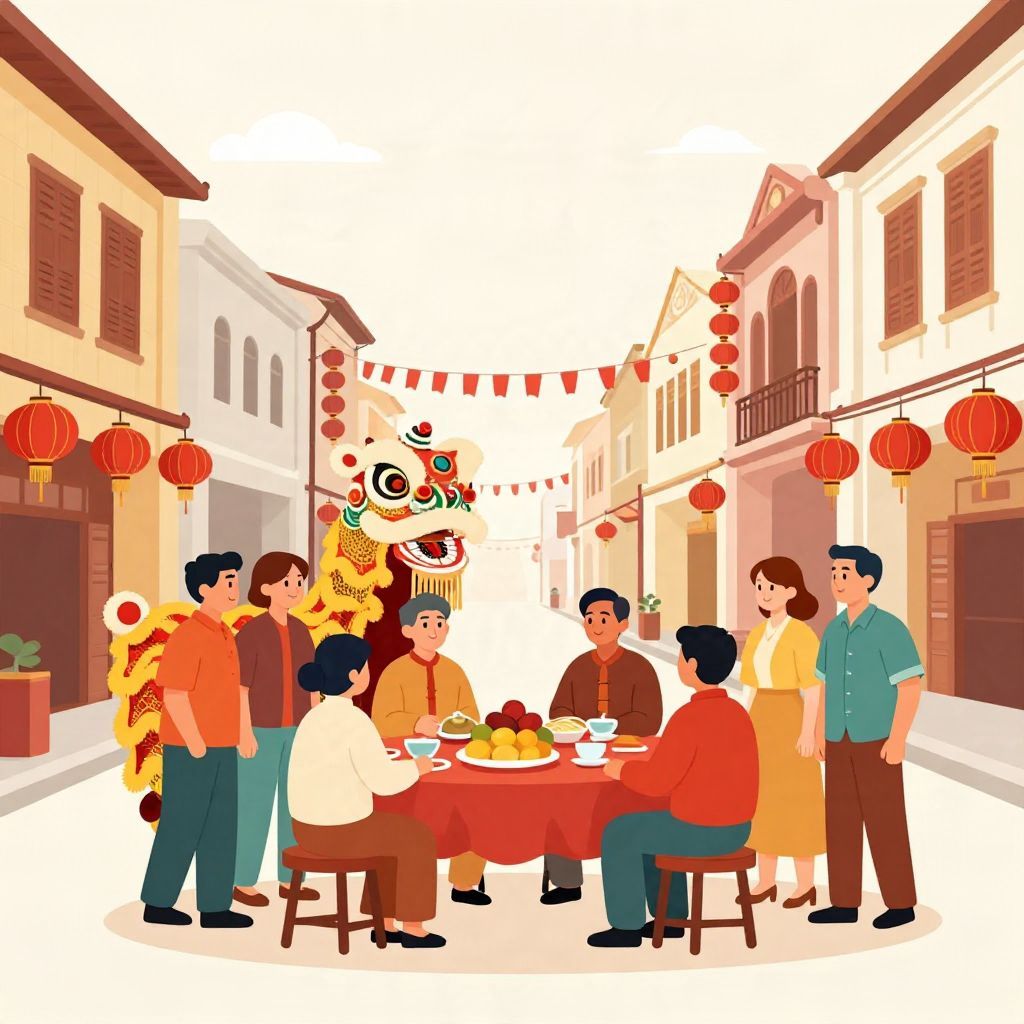
Do Filipinos celebrate Lunar New Year? Yes, but not all Filipinos do, and the holiday is celebrated in different ways depending on family background, region, religion, and personal tradition. In the Philippines, Lunar New Year is most visible among Filipino Chinese communities, especially in urban centers such as Manila and Cebu, though it has also become a wider public observance.
Historically, the answer reflects centuries of migration, trade, and cultural exchange in the archipelago. What many people call “Lunar New Year” in the Philippines is closely tied to Chinese New Year traditions, but the modern celebration also includes public festivities, official holidays, and Filipino adaptations.
Do Filipinos Celebrate Lunar New Year?
Yes. Filipinos do celebrate Lunar New Year, but primarily through Filipino Chinese traditions rather than as a universal national custom. The holiday is officially recognized in the Philippines, and celebrations range from family reunions and temple visits to street parades, dragon dances, and business rituals meant to bring luck and prosperity.
Why Lunar New Year Exists in the Philippines
The celebration has deep historical roots in Chinese migration to the Philippines. Chinese merchants were present in the islands long before Spanish colonization, and their communities grew under Spanish rule despite periods of restriction and discrimination. Over time, these communities preserved Lunar New Year customs, which later spread into broader Filipino public life.
Early Chinese presence and trade
Chinese traders were active in the Philippine archipelago for centuries before the arrival of the Spanish in the 1500s. They exchanged ceramics, silk, metal goods, and other products for local resources. This long commercial relationship helped establish Chinese communities in port areas, especially in and around Manila.
When the Spanish colonial government formalized rule in the 16th and 17th centuries, Chinese migrants became economically important but politically vulnerable. They were often confined to specific districts and subjected to controls, yet their presence remained essential to urban commerce. That history laid the groundwork for enduring Chinese cultural traditions, including New Year observances.
From community ritual to public holiday
For much of Philippine history, Lunar New Year was mainly a community celebration within Chinese Filipino households and associations. In the 20th and 21st centuries, however, it became more visible in the national calendar. The Philippine government later designated Lunar New Year as a special non-working day, reflecting both the size of the Chinese Filipino population and the holiday’s broader cultural significance.
How Filipinos Celebrate Lunar New Year
Celebrations vary widely, but the most common practices include family gatherings, ancestor remembrance, temple visits, red decorations, gift giving, and festive meals. In many cities, public celebrations also feature lion and dragon dances, firecrackers or symbolic noise-making, and street events organized by Filipino Chinese groups and local governments.
Common traditions in the Philippines
- Family reunions: Relatives gather for meals and blessings.
- Red envelopes: Money gifts are given to children or younger family members in some households.
- Lucky foods: Noodles, dumplings, rice cakes, and other symbolic dishes are served in some communities.
- Temple visits: Families may pray for health, luck, and prosperity.
- Public performances: Lion dances and cultural shows appear in Chinatown districts and shopping centers.
These customs are not identical in every Filipino family. Some are specifically Chinese Filipino, while others have been adapted into a more general festive style. In practice, Lunar New Year in the Philippines is both a heritage celebration and a public cultural event.
Where it is most visible
The holiday is especially prominent in Manila’s Binondo, often described as the world’s oldest Chinatown, where celebrations draw large crowds. Other urban centers with Chinese Filipino communities also mark the day with ceremonies, promotions, and performances. In these spaces, Lunar New Year is not only a private family observance but also a visible part of city life.
Is Lunar New Year the Same as Chinese New Year?
In the Philippine context, the two terms often overlap, but they are not exactly the same. “Lunar New Year” is a broader term that can refer to New Year celebrations based on lunar or lunisolar calendars across East and Southeast Asia. “Chinese New Year” is the most common form in the Philippines because the strongest local tradition comes from Chinese Filipino communities.
Why the terminology matters
Using “Lunar New Year” can be more inclusive, since similar New Year celebrations are observed in other Asian cultures. In the Philippines, however, the holiday’s historical foundation is Chinese. The broader term has become more common in official and public language, especially in multicultural settings, but the customs themselves remain rooted in Chinese tradition.
How Filipino History Shaped the Holiday
The celebration of Lunar New Year in the Philippines cannot be separated from the country’s long history of migration and cultural blending. Chinese settlers, local Filipino communities, Spanish colonial authorities, American-era modernization, and contemporary urban culture all influenced how the holiday developed and how visible it became.
Spanish colonial era
During Spanish rule, the colonial state often viewed Chinese migrants with suspicion, even while relying on them economically. Chinese communities survived through trade, intermarriage, conversion in some cases, and the formation of local institutions. Over generations, some customs blended with Filipino practices, while others remained distinct.
American period and modern nationhood
Under American rule and in the early decades of the independent republic, Chinese Filipino identity continued to evolve. Schools, associations, and businesses helped preserve cultural traditions. As the Philippines became more urban and commercially connected, Lunar New Year gained greater public visibility, especially in business districts where Chinese Filipino entrepreneurs were influential.
Contemporary multicultural Philippines
Today, the holiday is part of a broader Filipino pattern of celebrating multiple traditions. The Philippines is predominantly Christian, but it is also culturally diverse. Many Filipinos participate in Lunar New Year festivities as neighbors, coworkers, customers, or friends, even if they do not observe the holiday as a family tradition.
Who Celebrates It Most?
The strongest and most direct celebrations come from Filipino Chinese families and institutions. At the same time, many non-Chinese Filipinos join public festivities, attend Chinatown events, or enjoy the holiday atmosphere. So while not every Filipino celebrates Lunar New Year at home, the holiday has become familiar to many people across the country.
Different levels of participation
- Family observance: Chinese Filipino households may follow traditional customs closely.
- Community celebration: Associations, schools, and temples organize events.
- Public participation: Other Filipinos attend parades, shop in Chinatown, or join city festivities.
- Official recognition: The holiday appears on the national calendar as a special non-working day.
This layered pattern is important. It shows that the holiday is not a single, uniform national ritual, but a cultural practice with both ethnic and civic dimensions.
Common Misconceptions About Lunar New Year in the Philippines
One common misconception is that all Filipinos celebrate Lunar New Year in the same way. In reality, participation depends on background and community. Another misconception is that the holiday is purely “foreign.” In historical terms, it has been part of Philippine urban life for centuries and is now deeply woven into the country’s multicultural identity.
It is not a universal Filipino holiday
Most Filipinos do not treat Lunar New Year as their main New Year celebration. The Gregorian New Year on January 1 is the national civil New Year, and many families focus on Christmas and other Christian observances. Lunar New Year is therefore important, but not dominant, in the national calendar.
It is not only about commerce
Although businesses often promote Lunar New Year sales and events, the holiday has genuine religious, familial, and ancestral meaning for many participants. Its commercial visibility should not obscure its historical and cultural depth.
Why the Celebration Matters Historically
Lunar New Year in the Philippines is significant because it reveals how cultures endure and adapt. The holiday survived colonial restrictions, changed through urban growth, and expanded from a community tradition into a recognized part of national life. It is a clear example of how Filipino history has been shaped by contact with China and by the blending of traditions.
Just as important, the holiday shows that Filipino identity has never been singular. The Philippines has long been a crossroads of Austronesian, Spanish, Chinese, American, and other influences. Lunar New Year is one of the most visible reminders of that layered past.
Conclusion
So, do Filipinos celebrate Lunar New Year? Yes, many do, but especially through Filipino Chinese traditions and public celebrations in places with strong Chinese Filipino communities. The holiday is historically rooted, culturally meaningful, and now widely recognized across the country, even if it is not observed in the same way by every Filipino.
If you want to compare how the holiday is observed in other cultures, you may also be interested in how Koreans celebrate Lunar New Year and how Chinese communities celebrate Christmas.