
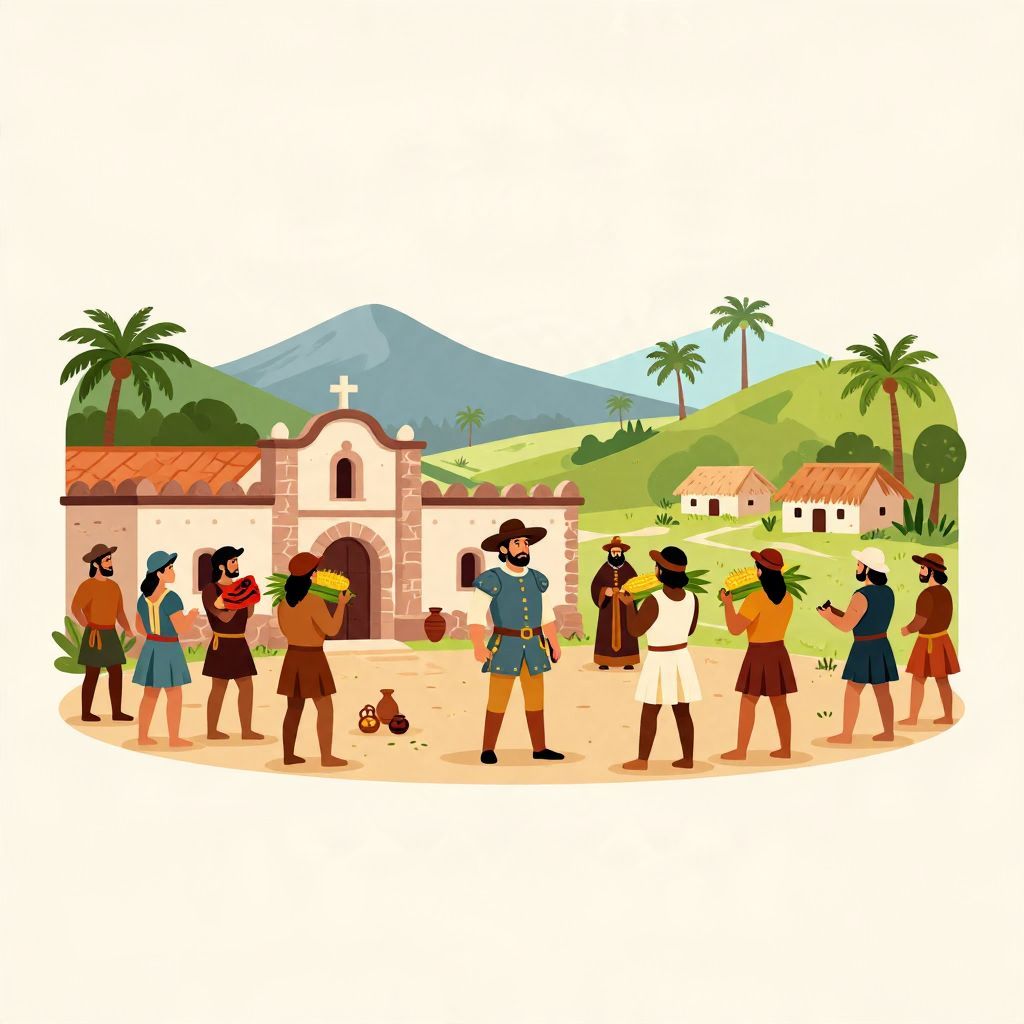
The encomienda system is one of the most important labor systems to understand in APUSH because it shaped early Spanish colonization in the Americas. It was not simply a land grant; it was a legal arrangement that gave Spanish settlers the right to demand tribute and labor from Indigenous communities in exchange for supposed protection and Christian instruction.
In practice, the system became a major tool of exploitation in the Spanish Empire. It helped Spain extract wealth from conquered peoples while also transforming Indigenous societies, colonial economies, and debates over empire, religion, and human rights.
What Was the Encomienda System in APUSH?
The encomienda system was a Spanish colonial labor arrangement established in the early 1500s in which the Crown granted a colonist, or encomendero, the right to collect tribute and labor from Indigenous people in a specific area. In theory, the encomendero was supposed to protect and Christianize them; in reality, it often became a system of forced labor and abuse.
Origins of the Encomienda System
The encomienda system grew out of Spanish practices developed during the Reconquista, when Christian rulers in Iberia rewarded supporters with rights over conquered lands and peoples. After Spain began colonizing the Caribbean and mainland Americas in the late 15th and early 16th centuries, the Crown adapted this model to the new empire.
Why Spain Created It
Spain needed a way to reward conquistadors, organize colonial rule, and extract wealth from newly conquered territories. The monarchy also wanted to maintain control by avoiding a fully independent aristocracy in the Americas. The encomienda offered a compromise: private Spaniards gained labor and tribute, while the Crown retained ultimate authority.
Early Colonial Context
The system first appeared in the Caribbean after Columbus’s voyages and expanded on the mainland after conquests such as Hernán Cortés’s defeat of the Aztec Empire in 1521 and Francisco Pizarro’s conquest of the Inca Empire in the 1530s. These conquests left Spain with enormous Indigenous populations under its control and a strong demand for labor in mining, agriculture, and settlement.
How Did the Encomienda System Work?
Under the encomienda system, an encomendero did not officially own the land or the Indigenous people on it. Instead, he received the right to demand tribute—often in the form of food, textiles, gold, or labor—from local communities. In exchange, he was expected to provide military protection and instruction in Christianity.
In Theory vs. In Practice
Spanish law presented the system as a reciprocal relationship, but the reality was usually coercive. Indigenous people were compelled to work in mines, fields, and workshops under harsh conditions. Because tribute demands were heavy and oversight was weak, many communities suffered population loss, displacement, hunger, and violence.
Who Benefited?
- Spanish colonists gained labor and tribute without having to build a fully paid workforce.
- The Crown used the system to stabilize conquest and reward service.
- Missionaries hoped it would support conversion to Christianity.
- Indigenous communities generally bore the burden and experienced severe exploitation.
Why the Encomienda System Matters in APUSH
In APUSH, the encomienda system is important because it shows how European colonization depended on labor exploitation, not just exploration or settlement. It also helps explain the early Spanish colonial economy, the decline of Indigenous populations, and the moral and legal debates that emerged over conquest and empire.
Connection to the Columbian Exchange
The encomienda developed alongside the Columbian Exchange, which brought new diseases, crops, animals, and people into contact across the Atlantic. Disease was especially devastating for Indigenous societies, and population collapse made forced labor systems even more destructive. The combination of conquest, disease, and coercion reshaped the Americas.
Connection to Spanish Colonial Society
The system helped create a rigid colonial hierarchy. At the top were Spanish-born officials and settlers; beneath them were creoles, mixed-race populations, and Indigenous peoples. The encomienda reinforced racial and social inequality that became a lasting feature of Spanish America.
Encomienda, Repartimiento, and Slavery: What Is the Difference?
Students often confuse the encomienda with slavery or later labor systems. While the encomienda was not identical to chattel slavery, it could function in similarly coercive ways. Over time, Spain tried to limit abuses by replacing or modifying it with other systems, especially the repartimiento.
Encomienda vs. Slavery
In slavery, people are legally treated as property. Under encomienda, Indigenous people were not supposed to be owned as property. However, the distinction mattered less in daily life when labor was forced, tribute was extracted, and violence was common. Many historians therefore describe the encomienda as a system of coerced labor that blurred the line between tribute and enslavement.
Encomienda vs. Repartimiento
The repartimiento was a later labor draft system in which Indigenous communities were required to provide labor for limited periods. It was intended to reduce the worst abuses of encomienda, but it still relied on colonial coercion. In many regions, replacing one system with another did not eliminate exploitation; it only changed its form.
Key Historical Debates and Reforms
The encomienda system sparked some of the earliest major debates about the ethics of colonization in the Americas. Spanish clergy, officials, and critics argued over whether conquest was just and whether Indigenous peoples had rights that the empire must respect.
Bartolomé de las Casas and Criticism of Abuse
One of the most famous critics was Bartolomé de las Casas, a Dominican friar who condemned the mistreatment of Indigenous peoples. He argued that conquest and forced labor were morally wrong and incompatible with Christian teaching. His writings helped shape later reform efforts, though his views were also part of broader debates within the Spanish Empire.
The New Laws of 1542
In response to criticism, the Spanish Crown issued the New Laws in 1542. These laws aimed to restrict the hereditary transfer of encomiendas and reduce Indigenous exploitation. Enforcement was uneven, however, and colonial elites often resisted reforms. The laws reveal that the Crown recognized the system’s abuses, even if it could not fully control them.
Long-Term Consequences of the Encomienda System
The encomienda system did not last in its original form everywhere, but its effects were profound and lasting. It helped Spain establish control over vast territories, yet it also contributed to demographic collapse, social inequality, and a colonial economy built on coerced labor.
Impact on Indigenous Communities
For Indigenous peoples, the system often meant overwork, tribute burdens, cultural disruption, and loss of autonomy. Combined with epidemic disease and warfare, encomienda accelerated the collapse of many local communities. Survivors adapted in different ways, including negotiation, resistance, migration, and legal appeals to colonial authorities.
Impact on the Colonial Economy
The encomienda supported mining and agricultural production in the early colonial period. Over time, Spanish America developed more complex labor arrangements, including wage labor, debt peonage, African slavery in some areas, and repartimiento drafts. But the basic pattern remained: colonial wealth depended on unequal access to labor.
Impact on Spanish Rule
The system also exposed a central tension in the Spanish Empire: the Crown wanted wealth and expansion, but it also claimed a duty to govern justly and convert Indigenous peoples. That tension produced legal reforms, missionary efforts, and ongoing conflict between imperial ideals and colonial realities.
How to Remember the Encomienda System for APUSH
A useful way to remember the encomienda system is to think of it as a Spanish colonial labor-tribute system disguised as protection and conversion. It was one of the earliest and clearest examples of how European empires extracted wealth from Indigenous populations in the Americas.
Quick APUSH Takeaways
- It began in the early 1500s under Spanish colonial rule.
- It gave Spaniards the right to collect tribute and labor from Indigenous communities.
- It was justified as protection and Christianization.
- In practice, it often became forced labor and exploitation.
- It contributed to Indigenous suffering, colonial wealth, and reform debates in Spain.
So, what was the encomienda system? In APUSH terms, it was a foundational Spanish colonial labor system that reveals how conquest, religion, and economic exploitation worked together in the early Americas. If you want to compare it with other colonial labor arrangements, you may also find the headright system useful for understanding how land and labor were organized in colonial societies.