
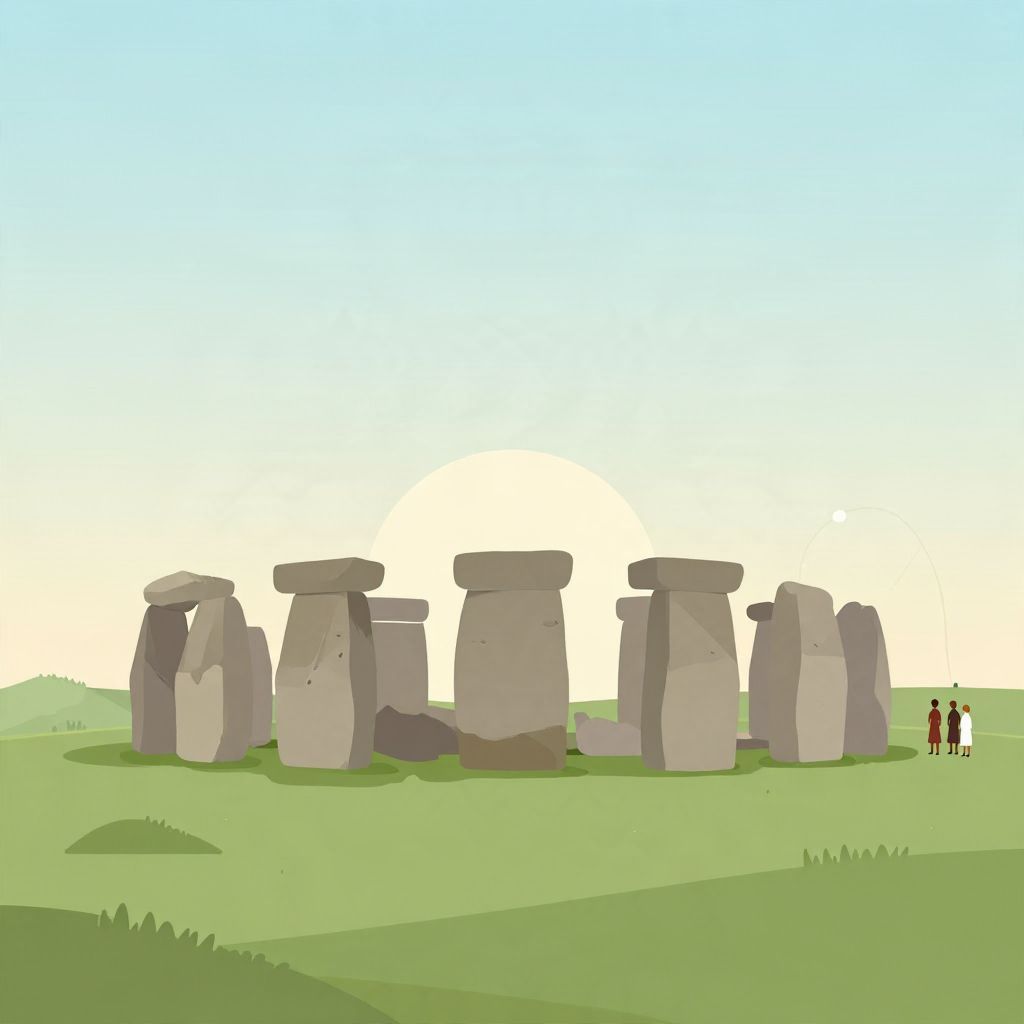
Is Stonehenge a Wonder of the World? The short answer is: not in the official ancient sense, but it is widely regarded as one of the world’s most remarkable prehistoric monuments. Its fame comes from its scale, mystery, engineering, and survival across millennia, not from inclusion in the original Seven Wonders of the Ancient World.
To answer the question properly, it helps to separate popular admiration from historical classification. Stonehenge is a UNESCO World Heritage Site and a global icon of prehistoric Britain, but whether it counts as a “wonder” depends on which list or tradition you mean.
Is Stonehenge a Wonder of the World?
Stonehenge is not one of the original Seven Wonders of the Ancient World, which were classical monuments listed by Greek writers in antiquity. However, it is often called a “wonder of the world” in the broader, modern sense because of its age, scale, and enduring cultural significance. In that informal sense, the description is well deserved.
What Stonehenge Is, and Why It Matters
Stonehenge is a prehistoric stone circle on Salisbury Plain in Wiltshire, England. It was built in stages over many centuries, beginning around 3000 BCE and continuing into the late Neolithic and early Bronze Age. Its builders left no written explanation, which is one reason it has attracted so much speculation and fascination.
The monument is not a single ring of stones but a complex ceremonial landscape. Archaeologists have found evidence of earthworks, cremation burials, timber structures, and processional routes around the site. Stonehenge matters because it shows that prehistoric communities in Britain could organize large-scale construction, move enormous stones, and invest heavily in ritual or social purposes that are still only partly understood.
Why Stonehenge Is Not One of the Original Seven Wonders
The original Seven Wonders of the Ancient World were a classical Greek list created to celebrate remarkable monuments known to Mediterranean travelers and writers. Stonehenge does not appear on that list because it was not part of the Greek and Roman world, and it was far outside the geographic horizon of the ancient authors who compiled those wonders.
Those ancient wonders included structures such as the Great Pyramid of Giza and the Hanging Gardens of Babylon. Stonehenge is much older than some of them and far more mysterious in modern imagination, but it belongs to a different historical tradition. It is a prehistoric monument, not a classical one.
The difference between “ancient wonder” and “world wonder”
- Ancient Wonder: usually refers to the Greek-Roman list of seven monuments from antiquity.
- World Wonder: a broader modern phrase used for extraordinary landmarks from any era or region.
- Stonehenge: fits the second category, not the first.
The Evidence Behind Stonehenge’s Construction
Archaeology, not legend, provides the strongest evidence for Stonehenge’s history. Excavations and scientific dating show that the site developed in phases. The earliest major feature was an earthwork enclosure, followed by the placement of the famous sarsen stones and smaller bluestones. The monument was altered, reused, and reinterpreted over generations.
The large upright stones, called sarsens, were transported from the Marlborough Downs, roughly 20 miles away. The smaller bluestones came from much farther away, from west Wales, over 100 miles distant. This long-distance movement remains one of the most impressive achievements associated with the site.
What archaeologists can say with confidence
- Stonehenge was built in stages over many centuries.
- It dates mainly to the late Neolithic and early Bronze Age.
- Its builders used sophisticated planning and labor organization.
- The site was important for ritual, burial, and possibly astronomical observation.
How Stonehenge Was Built
Stonehenge’s construction required practical engineering as well as social coordination. The stones had to be quarried, shaped, transported, and set upright in carefully arranged positions. Some stones were fitted with mortise-and-tenon joints, a technique more often associated with woodworking, showing that the builders understood how to stabilize large structures.
Scholars have proposed several methods for moving the stones: sledges, rollers, rafts, and combinations of human labor and waterways. No single method is certain for every stone, but the consensus is that the builders relied on organized collective effort rather than any lost advanced technology. This is one reason Stonehenge is so remarkable: it was created by prehistoric people using available tools and ingenuity.
Why the engineering is impressive
- The stones are very large, some weighing many tons.
- Transporting them over long distances required planning.
- The layout shows careful alignment and repeated redesign.
- The monument survived in a landscape later used for farming and settlement.
What Was Stonehenge For?
No single explanation has been proven. The most careful historical answer is that Stonehenge likely served multiple purposes over time. It may have been a ceremonial center, a place connected to burial and ancestor veneration, and a site used to mark seasonal or celestial events. These ideas are based on archaeological evidence, not on written records from the builders themselves.
One reason the site remains controversial is that prehistoric monuments often had layered meanings. A structure that began as a ritual place could later become a burial ground, a gathering site, or a symbol of group identity. Stonehenge probably changed function as the communities around it changed.
Common interpretations, with caution
- Astronomical alignment: Some stones align with the summer solstice sunrise and winter solstice sunset.
- Ritual center: The monument may have been used for ceremonies or religious gatherings.
- Burial landscape: Human remains found nearby suggest funerary significance.
- Social monument: It may also have expressed power, identity, and cooperation.
Stonehenge and the Solstices
Stonehenge is famous for its relationship to the solstices, especially the summer solstice sunrise. The alignment is real and has been observed for a long time, though scholars debate how central astronomy was to the monument’s original purpose. The alignment may have been meaningful symbolically, ritually, or practically, rather than serving as a simple calendar in the modern sense.
It is important not to overstate this evidence. Stonehenge was not a “computer” or a precise observatory in the modern meaning of those words. Still, the builders clearly understood the sky well enough to incorporate celestial patterns into the monument’s design.
Myths, Legends, and Popular Misunderstandings
Because Stonehenge lacks written records from its builders, later generations filled the gap with stories. Medieval writers sometimes linked it to giants, magic, or legendary figures such as Merlin. These are fascinating parts of cultural history, but they are not historical evidence for the monument’s origin.
Modern myths have also grown around Stonehenge, including claims that it was built by aliens or by a lost super-civilization. There is no credible archaeological support for those ideas. The real story is more interesting: Stonehenge was built by prehistoric people with skill, organization, and a strong cultural purpose that we can partially reconstruct.
Stonehenge’s Place in World Heritage
Stonehenge is often described as a wonder because it has become a symbol of human creativity and endurance. It is recognized internationally as part of the Stonehenge, Avebury and Associated Sites World Heritage landscape. That status reflects not only the monument itself but also the wider prehistoric environment around it.
Its global importance comes from several factors: its age, its survival, its architectural sophistication, and its ability to inspire curiosity across cultures. Few ancient sites are as instantly recognizable, and even fewer remain so mysterious after centuries of study.
So, Is Stonehenge a Wonder of the World?
Yes, if you mean a monument that inspires wonder across the world. No, if you mean one of the original Seven Wonders of the Ancient World. Stonehenge belongs to a different category: a prehistoric masterpiece whose importance lies in what it reveals about early human societies, belief, labor, and landscape.
That distinction matters. Calling Stonehenge a “wonder” is not just a compliment; it is a recognition that prehistoric people achieved something extraordinary without writing, iron tools, or modern machinery. If you want to explore how Stonehenge compares with other famous landmarks, see what the Seven Wonders of the World were and how later generations defined greatness in architecture and history.
Stonehenge is a wonder in the broad historical sense, even if it is not one of the classical Seven Wonders. Its true significance lies in the evidence it preserves: a monument built by ancient communities who transformed stone, landscape, and ritual into something that still commands attention thousands of years later.