
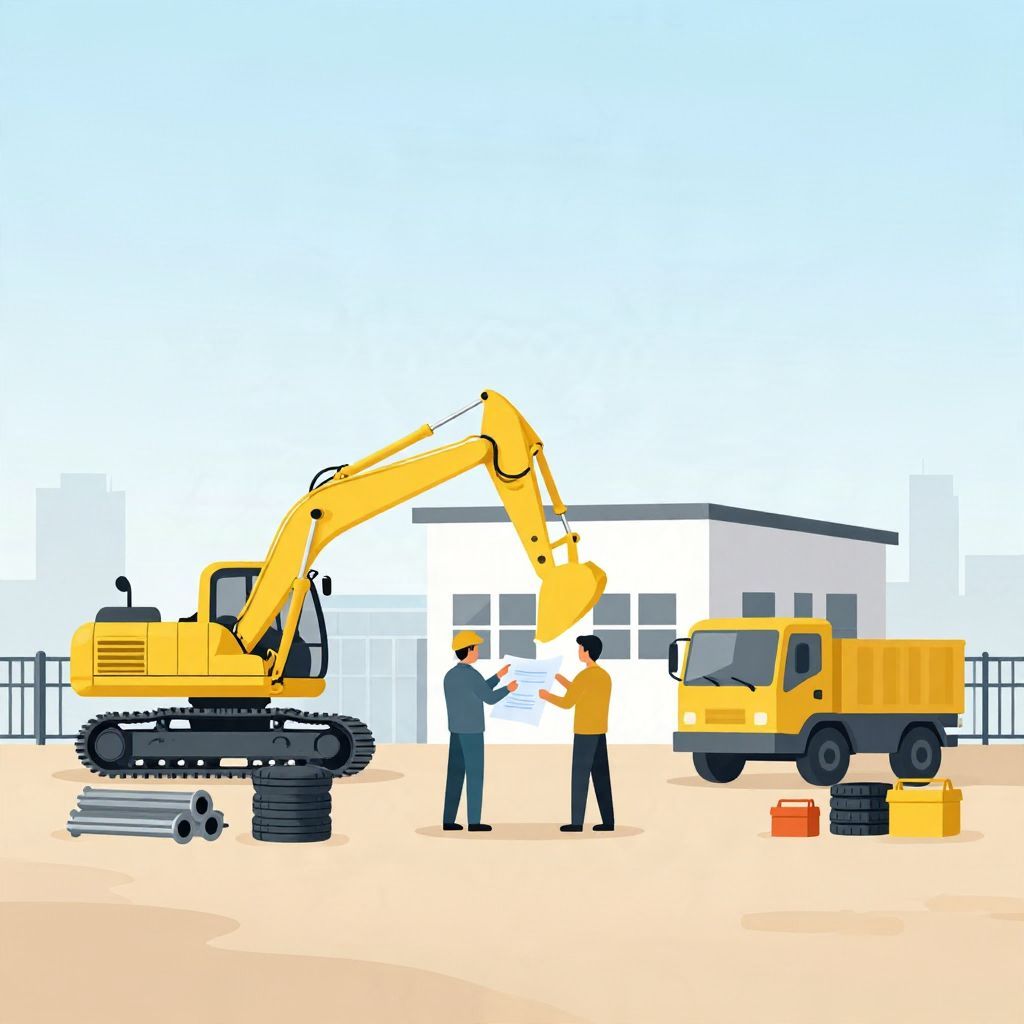
How was Teckaya Construction Equipment founded? The short answer is that it was established as a modern construction-equipment business to serve the growing demand for machinery, tools, and site-support services in India’s infrastructure and building sector. Like many newer industrial firms, its origin is tied less to a single dramatic founding moment than to a practical business response to market need.
Because Teckaya Construction Equipment is a relatively recent company and not a long-documented historical institution, its founding story is best understood through the broader context of India’s construction boom, the rise of equipment leasing and supply firms, and the entrepreneurial decisions that shaped the company’s early development.
How Was Teckaya Construction Equipment Founded?
Teckaya Construction Equipment was founded as a commercial response to the expanding needs of construction projects for reliable machinery, equipment supply, and related services. Rather than emerging from an old industrial dynasty or a state-backed program, it appears to have developed as a private-sector enterprise aimed at supporting contractors and infrastructure work in a fast-growing market.
In historical terms, that makes Teckaya part of a wider pattern seen across modern India: small and mid-sized firms forming to meet demand created by roads, housing, commercial construction, and industrial development. Its founding was shaped by entrepreneurship, market opportunity, and the practical requirements of construction work.
The Historical Setting Behind the Company’s Founding
To understand why Teckaya Construction Equipment was founded, it helps to look at the environment in which such firms emerged. Over the late twentieth and early twenty-first centuries, India experienced rapid urban growth, major public-works programs, and a steady increase in private construction. This created demand not only for builders, but also for companies that could supply, maintain, and sometimes rent out specialized equipment.
Construction today depends on a network of businesses beyond the contractor itself. Equipment suppliers, dealers, service providers, and logistics firms all make large projects possible. Teckaya’s founding fits into this ecosystem, where a company can grow by solving a specific operational problem: how to get the right machinery to the right site at the right time.
Why construction-equipment firms became important
- Construction projects grew larger and more technically demanding.
- Contractors needed access to machinery without always buying every asset outright.
- Maintenance, replacement parts, and after-sales support became essential.
- Infrastructure expansion created recurring demand for dependable suppliers.
These conditions encouraged the creation of firms like Teckaya. In that sense, the company’s founding was not an isolated event, but part of a broader economic transformation.
The Likely Causes of Teckaya’s Creation
The founding of Teckaya Construction Equipment can be explained through several overlapping causes. First, there was market demand: construction firms needed dependable access to equipment. Second, there was a business opportunity: a specialized supplier could build trust by offering quality machinery and service. Third, there was the wider growth of infrastructure and industrial activity, which made the sector attractive to entrepreneurs.
Many modern construction-equipment companies begin this way. Founders often identify gaps in supply, service, or affordability and build a business around those gaps. Teckaya’s origin likely followed that practical logic, even if the exact internal decisions of its founders are not widely documented in public historical sources.
Business conditions that encouraged founding
- Infrastructure expansion increased the need for equipment.
- Urbanization created more housing and commercial projects.
- Specialization made equipment-focused firms more valuable.
- Reliability concerns pushed contractors toward trusted suppliers.
These factors help explain why the company could be founded and sustained. The construction sector rewards firms that can reduce downtime and improve efficiency, so a company built around equipment supply had clear economic purpose.
What We Can Say About the Founding Story
Unlike older industrial companies with long archival histories, Teckaya Construction Equipment does not appear to have a widely published founding narrative with a fixed public date, dramatic origin story, or famous founder figure that is firmly established in standard historical references. That means any precise claim about the exact day, original location, or personal biography of the founders should be treated cautiously unless supported by company records or official filings.
What can be said with confidence is that the company belongs to a modern generation of Indian construction businesses created to serve a growing and increasingly technical sector. Its foundation reflects entrepreneurship in a market shaped by infrastructure demand, industrial growth, and the need for specialized support services.
Why caution matters in company history
Business origin stories are often simplified in marketing materials. A company may describe itself as “founded” in a certain year, but historians look for corroborating evidence such as incorporation records, early advertisements, trade listings, or contemporaneous reports. Without those, it is better to describe the founding in general terms than to invent a precise narrative.
Key Events in the Early Development of a Company Like Teckaya
While the exact milestones of Teckaya’s earliest years may not be broadly documented in historical literature, the typical development of a construction-equipment firm follows a recognizable sequence. This sequence helps explain how such a company moves from founding to stability.
- Initial formation: the business is established to meet a specific market need.
- Supplier relationships: the company builds connections with manufacturers and distributors.
- Market entry: it begins serving contractors, builders, or project managers.
- Service expansion: it may add maintenance, spare parts, or rental support.
- Reputation building: reliability and responsiveness become key advantages.
For a company in this field, early success usually depends less on publicity and more on operational trust. Contractors return to suppliers who deliver equipment on time and keep projects moving.
How the Construction Sector Shaped Teckaya’s Early Growth
Teckaya’s founding should also be seen in relation to the broader construction economy. In India, the demand for roads, bridges, industrial facilities, housing, and urban infrastructure has created steady opportunities for equipment firms. As projects grew more complex, the market favored businesses that could provide not just machines, but practical support.
This environment likely influenced Teckaya’s early strategy. A company in this sector must balance inventory, service quality, pricing, and customer relationships. Founding a construction-equipment business is therefore not simply about selling products; it is about entering a competitive service economy built around deadlines and technical reliability.
What made the sector attractive to founders
Construction equipment is capital-intensive, but it can also be resilient because infrastructure demand tends to persist across economic cycles. Even when individual projects slow, the need for maintenance, replacement, and project support remains. That durability makes the sector appealing to entrepreneurs who can manage costs and logistics effectively.
Teckaya’s Place in Modern Business History
Historically, Teckaya Construction Equipment belongs to the newer wave of specialized Indian enterprises that grew alongside liberalization, private investment, and expanding infrastructure needs. It is not a colonial-era industrial house or a state-owned giant, but a contemporary company shaped by market specialization.
That matters because modern business history is often made up of such firms: not famous on a national scale, but essential to the functioning of the economy. Companies like Teckaya illustrate how industrial growth depends on smaller, focused businesses that support larger construction networks.
Why these companies matter historically
- They help translate national infrastructure plans into physical projects.
- They create local employment and technical service roles.
- They make machinery more accessible to contractors of different sizes.
- They reflect the rise of specialized private enterprise in modern India.
What Is Known and What Remains Unclear
From a historian’s perspective, the most responsible answer is a balanced one. Teckaya Construction Equipment was founded as a private business serving the construction sector, likely in response to growing demand for equipment and related services. However, unless official company records or reliable public documentation are available, details such as the exact founding date, named founders, and first office location should not be stated with certainty.
That uncertainty does not weaken the historical significance of the company. Instead, it shows how many modern firms are best understood through economic context rather than dramatic founding legends. Their history is real, but it is often recorded in business documents rather than in widely known public narratives.
Conclusion
Teckaya Construction Equipment was founded as a practical response to the needs of a growing construction economy. Its origin reflects entrepreneurship, infrastructure expansion, and the rising importance of specialized equipment suppliers in modern India. In historical terms, the company is part of a larger story about how private firms adapt to changing industrial demand and help turn development plans into built reality.