
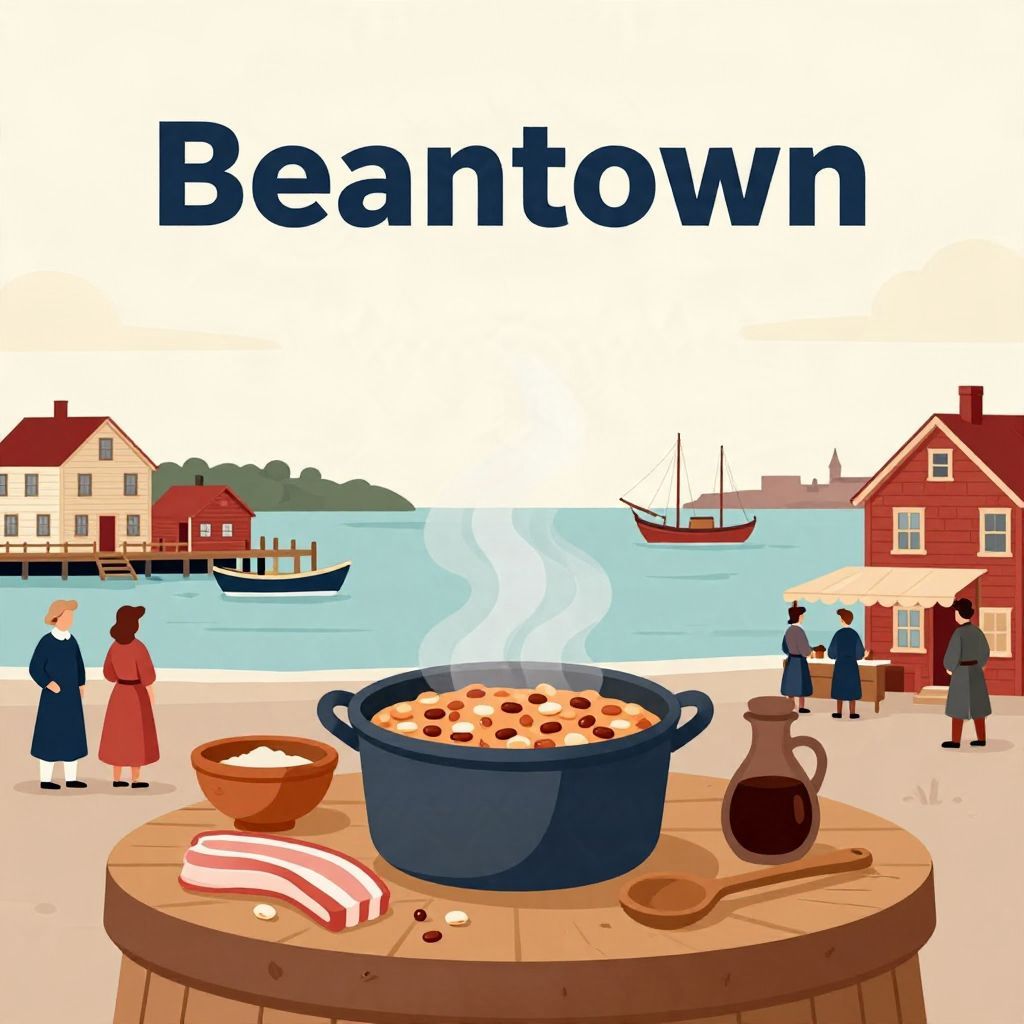
Why is Boston called Beantown? The short answer is that the nickname comes from Boston’s long association with baked beans, especially the molasses-sweetened bean dishes that became part of New England cooking. The name is not an official title and did not begin as a formal civic slogan. It grew out of local food traditions, regional identity, and a long habit of outsiders and residents using “beans” as a shorthand for Boston.
Over time, “Beantown” became a familiar, affectionate nickname for the city. Its exact origin is a little hazy, but the historical explanation is rooted in colonial-era cooking, Boston’s role in a bean-heavy New England diet, and the city’s later embrace of the label in popular culture and tourism.
Why is Boston called Beantown?
Boston is called Beantown because beans became strongly associated with the city through New England food traditions, especially baked beans cooked with molasses. The nickname likely emerged in the 19th century and was popularized by local and outside usage, rather than by one single event. It reflects Boston’s culinary identity more than any official naming decision.
The food history behind the nickname
The most important reason for the nickname is simple: beans were a staple in New England cooking. In colonial and early American households, beans were inexpensive, filling, and easy to store. In Boston and across Massachusetts, they fit well with local trade patterns, available ingredients, and the region’s taste for slow-cooked meals.
Baked beans and New England kitchens
Boston’s best-known bean dish is baked beans, traditionally cooked with molasses or maple syrup and often flavored with salt pork. This style of cooking became especially associated with New England. Molasses was widely available through Atlantic trade, and it helped turn plain beans into a distinctive regional dish. Over time, the dish became so closely linked with Boston that the city itself began to inherit the association.
It is important to note that beans were not unique to Boston. Many communities ate them. What made Boston stand out was the strength of the association, reinforced by local customs, markets, and the city’s image as a center of New England life.
Beans as a practical colonial food
In the 17th and 18th centuries, Boston households relied on foods that were economical and durable. Beans met those needs. They could be dried, stored through winter, and cooked in large pots. In a city shaped by maritime trade and a growing urban population, beans were part of a practical diet, not just a symbolic one.
That practicality matters because nicknames often grow from everyday habits. A city becomes “the city of X” when a food, product, or custom becomes widely recognized as part of its identity. Boston’s bean reputation developed in exactly that way.
How the nickname likely developed
The precise first use of “Beantown” is difficult to pin down. Historians generally treat it as a nickname that emerged gradually rather than being invented on a single date. By the 19th century, Boston was already being linked to baked beans in newspapers, jokes, and popular speech. The term “Beantown” likely grew from this broader association.
Local pride and outside teasing
Nicknames often begin as teasing before becoming a badge of pride. Boston’s bean association may have started partly as an outsider’s joke about New England food habits. But Boston residents, like people in many cities, eventually adopted the label themselves. Once a nickname becomes familiar enough, it can shift from mockery to affection.
This is one reason “Beantown” has lasted. It is playful, memorable, and tied to a real local tradition. Unlike some city nicknames that are purely promotional, this one has a strong cultural basis.
Boston’s place in New England identity
Boston has long been seen as the cultural and political center of New England. Because of that, a nickname tied to a regional food could easily attach to the city itself. Boston was not just any town that ate beans; it was the region’s most famous city, so the food association became a shorthand for the whole place.
In this sense, “Beantown” reflects more than cuisine. It also reflects Boston’s role as a symbol of New England, where plain, hearty foods were often celebrated as part of a distinct regional character.
What role did molasses and trade play?
Molasses helped make Boston’s bean tradition especially distinctive. In the colonial period, Boston was deeply connected to Atlantic trade networks, including the Caribbean. Molasses was a common byproduct of sugar production and was widely used in New England cooking. Its presence in baked beans helped create the sweet, dark version of the dish that became so closely linked to the city.
Trade, taste, and regional cooking
Boston’s port economy gave residents access to ingredients that shaped local cuisine. Molasses was not unique to Boston, but the city’s trading connections made it especially available. Combined with beans and pork, it created a dish that was affordable, flavorful, and regionally recognizable.
So while the nickname “Beantown” sounds simple, it rests on larger historical forces: colonial trade, household economy, and the development of a distinctive New England food culture.
When did “Beantown” become widely known?
There is no single agreed-upon moment when Boston officially became “Beantown.” The nickname appears to have gained wider recognition in the 19th and early 20th centuries, as print culture, tourism, and sports helped spread local labels. By then, Boston had become famous enough that a food-based nickname could travel far beyond the city itself.
- Colonial era: Beans were already a common household food in New England.
- 19th century: Boston’s bean association became more visible in popular speech and writing.
- 20th century: “Beantown” became a familiar nickname in tourism, journalism, and sports culture.
Because the nickname developed gradually, historians are cautious about treating any one story as definitive. The best-supported explanation is cumulative: Boston’s food traditions made the name plausible, and repeated use made it durable.
Popular myths and what historians think
Like many city nicknames, “Beantown” has attracted simplified origin stories. Some versions imply that Boston was uniquely obsessed with beans or that the nickname came from one famous event. Those claims are usually overstated. The historical record supports a broader explanation: the nickname emerged from a real culinary association, not from a single dramatic moment.
Not an official nickname from city leaders
Boston did not receive the name from a government proclamation or an official branding campaign. It was a popular nickname, shaped by everyday speech. That makes it historically interesting, because it shows how local identity often develops from common habits rather than formal institutions.
Not just a tourist slogan
Although “Beantown” later became useful in tourism and marketing, it was not invented solely for promotion. The label worked because it already had cultural meaning. Visitors could understand it quickly, and residents could recognize the local joke behind it.
Why the nickname stuck
Some nicknames fade, but “Beantown” endured because it was vivid, harmless, and tied to a real tradition. It also fit Boston’s broader image: old, distinctive, proud of its history, and a little self-aware. The city has often been associated with tradition, and a food nickname suited that image well.
Boston’s sports teams, newspapers, and cultural institutions also helped keep the nickname alive. Once a city becomes widely known by a label, repeated use in media can make it feel natural, even if few people know the exact origin.
A nickname with regional meaning
“Beantown” also works because it points to New England as a whole. The dish most associated with Boston is really a regional food, and the nickname therefore carries a sense of place that goes beyond the city limits. It suggests heritage, continuity, and a distinctly New England way of life.
What Boston’s nickname tells us about history
The story of Beantown shows how history can live in ordinary things. A nickname that sounds casual today actually reflects centuries of trade, household cooking, and regional identity. Boston was called Beantown because beans mattered in the city’s daily life and because that food became a symbol of the city itself.
In other words, the nickname is not just about beans. It is about how a city becomes known through the habits of its people, the ingredients they used, and the stories others told about them. For more on the broader context of early American life, see why colonists came to America and related background on early American history.