
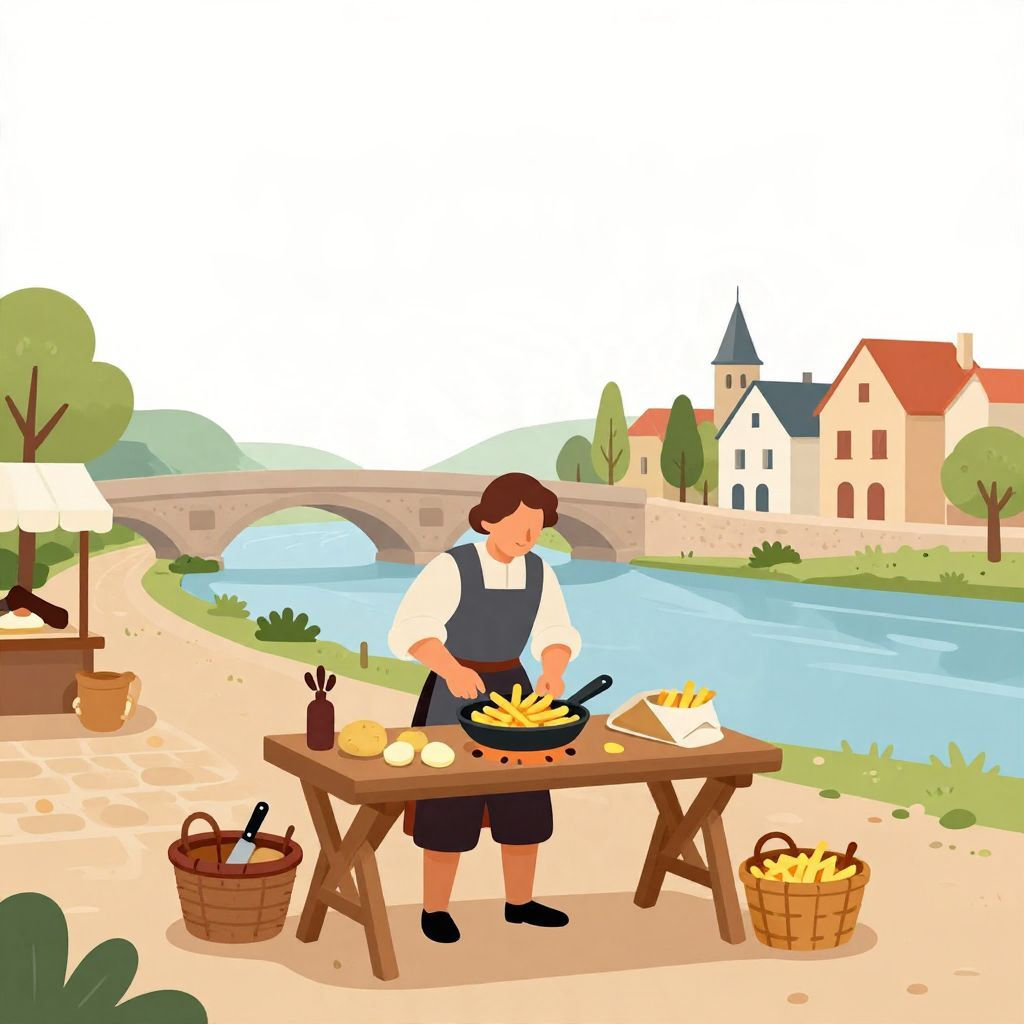
Where did French fries originate? The short answer is that they most likely began in the region of the Southern Netherlands—especially what is now Belgium—sometime in the late 17th or 18th century, though the exact origin is debated. The familiar fried potato stick is a later development, and the name “French fries” reflects international labeling more than a simple place of birth.
The history of French fries is tied to the spread of the potato in Europe, changing food habits, and national food traditions that developed long after the dish itself.
Where Did French Fries Originate?
French fries are generally traced to the Southern Netherlands, particularly present-day Belgium, where people likely began frying small pieces of potato in fat by the late 1600s or 1700s. The evidence is not absolute, but most historians agree the dish was popularized there before spreading to France, Britain, and eventually the United States.
The Historical Background of Fried Potatoes
The potato arrived in Europe first
French fries could not exist before the potato itself became established in Europe. Native to the Andes of South America, the potato was introduced to Europe in the 16th century after Spanish contact with the Americas. For a long time, Europeans treated it cautiously, and it took generations before it became a common food in many regions.
By the 17th century, potatoes were increasingly grown in parts of western Europe, especially in areas where they could be used as a cheap, filling staple. That made them a practical food for towns, villages, and riverside communities where fish had long been a major part of the diet.
Why frying mattered
Frying in fat or oil was already a familiar cooking method in Europe. Once potatoes were widely available, people experimented with preparing them in different ways: boiled, mashed, baked, and fried. The idea of cutting potatoes into strips or small pieces and frying them likely emerged gradually rather than through a single invention moment.
This is important because the modern French fry is not the same as every early fried potato dish. Early versions may have been thinner, shorter, or more irregular than today’s standardized fast-food fries. The core idea, however, was the same: potatoes cooked in hot fat until crisp on the outside and soft inside.
Why Belgium Is Often Named as the Origin
The Meuse Valley tradition
One of the most common Belgian origin stories says that people in the Meuse Valley, especially around Namur, fried potatoes when rivers froze in winter and fish was unavailable. According to this tradition, they substituted potatoes cut into fish-like shapes. It is a vivid story, but historians treat it cautiously because the written evidence is late and the tale may have been shaped by national pride.
Even so, Belgium has a strong claim because fried potatoes became deeply embedded in its food culture. By the 18th and 19th centuries, vendors selling fried potatoes were part of everyday urban life in Belgian towns. This makes Belgium not necessarily the place where frying potatoes first happened, but a very plausible place where the dish became culturally established.
Early written references are limited
One reason the origin remains disputed is that ordinary food history is often poorly documented. Poor and working-class foods rarely left detailed records. Recipes were not always written down, and street food left even fewer traces. As a result, historians rely on indirect evidence: cookbooks, local customs, trade patterns, and later descriptions of older eating habits.
That means the question “Where did French fries originate?” has a careful answer rather than a single provable one. The strongest historical case points to the Southern Netherlands, but the exact first fryer, first town, and first date are unknown.
How the Dish Spread Beyond the Low Countries
From local food to regional favorite
Once fried potatoes became popular in the Low Countries, they spread through neighboring regions where similar tastes and ingredients already existed. In France, fried potatoes gained attention in urban food culture, especially in Paris, where street vendors sold them to a growing city population. By the 19th century, fried potatoes were well known in French-speaking areas on both sides of the border.
The dish also traveled with migration, trade, and military movement. As people moved across Europe and across the Atlantic, they carried food habits with them. That helped the fried potato become more widely recognized, though local versions continued to differ in shape, thickness, seasoning, and serving style.
The American connection
French fries became especially associated with the United States in the 20th century, but the food itself had older European roots. American soldiers encountered “French fries” in Europe during and after World War I, which helped popularize the English-language name. Later, fast-food chains standardized the dish into the thin, salted fries now familiar worldwide.
In that sense, the American story is not about inventing French fries but about making them into a global mass-market food. Industrial food production, frozen fries, and fast-food service transformed a regional dish into an international staple.
Why Are They Called “French” Fries?
The name is not the same as the origin
The word “French” in French fries does not prove that the dish originated in France. The name likely became common in English because “French” was used loosely to describe a style of cutting or cooking, or because English speakers encountered the dish through French-speaking regions. Naming history can be messy, especially with foods that spread across borders.
There is also a broader linguistic point: food names often reflect the route by which a dish became popular, not the place where it was first created. A dish can be named after one country while originating in another, especially in border regions where languages and cuisines overlap.
Similar dishes in other places
Fried potatoes appeared in more than one European culinary tradition, so it is possible that several communities developed similar dishes independently. That does not erase Belgium’s likely role, but it does mean the history is not as simple as one inventor and one exact moment. Food history often develops through parallel experimentation rather than a single breakthrough.
What Historians Can Say with Confidence
- The potato came to Europe from the Americas in the 16th century.
- Frying was already a known cooking technique in Europe.
- Fried potato dishes likely emerged in the Southern Netherlands, especially present-day Belgium, by the late 17th or 18th century.
- The exact first place, first cook, and first date cannot be proven with certainty.
- The name “French fries” became widespread later and does not settle the question of origin.
That combination of evidence is why historians usually answer the question with caution: French fries probably originated in Belgium or the broader Southern Netherlands, but the dish developed gradually and was later adopted and renamed in different places.
The Lasting Historical Significance of French Fries
French fries may seem like an ordinary modern food, but they reveal a great deal about world history. They reflect the Columbian Exchange, the movement of crops between continents, the growth of urban street food, and the way national cuisines are often built after the fact. A simple fried potato carries the history of empire, trade, migration, and changing tastes.
They also show how food becomes part of identity. Belgians often regard fries as a national specialty, while the English-speaking world tends to associate them with France or with fast food culture. The dish’s history is therefore not only culinary but also cultural, shaped by memory, marketing, and national storytelling.
So, where did French fries originate? Most likely in the Southern Netherlands, especially present-day Belgium, where fried potatoes became established long before they became a global fast-food item. The exact origin remains uncertain, but the historical evidence points to a Belgian regional tradition rather than a uniquely French invention. If you are interested in how everyday foods traveled and changed over time, this story belongs alongside the broader history of the potato and the rise of modern European cuisine.