
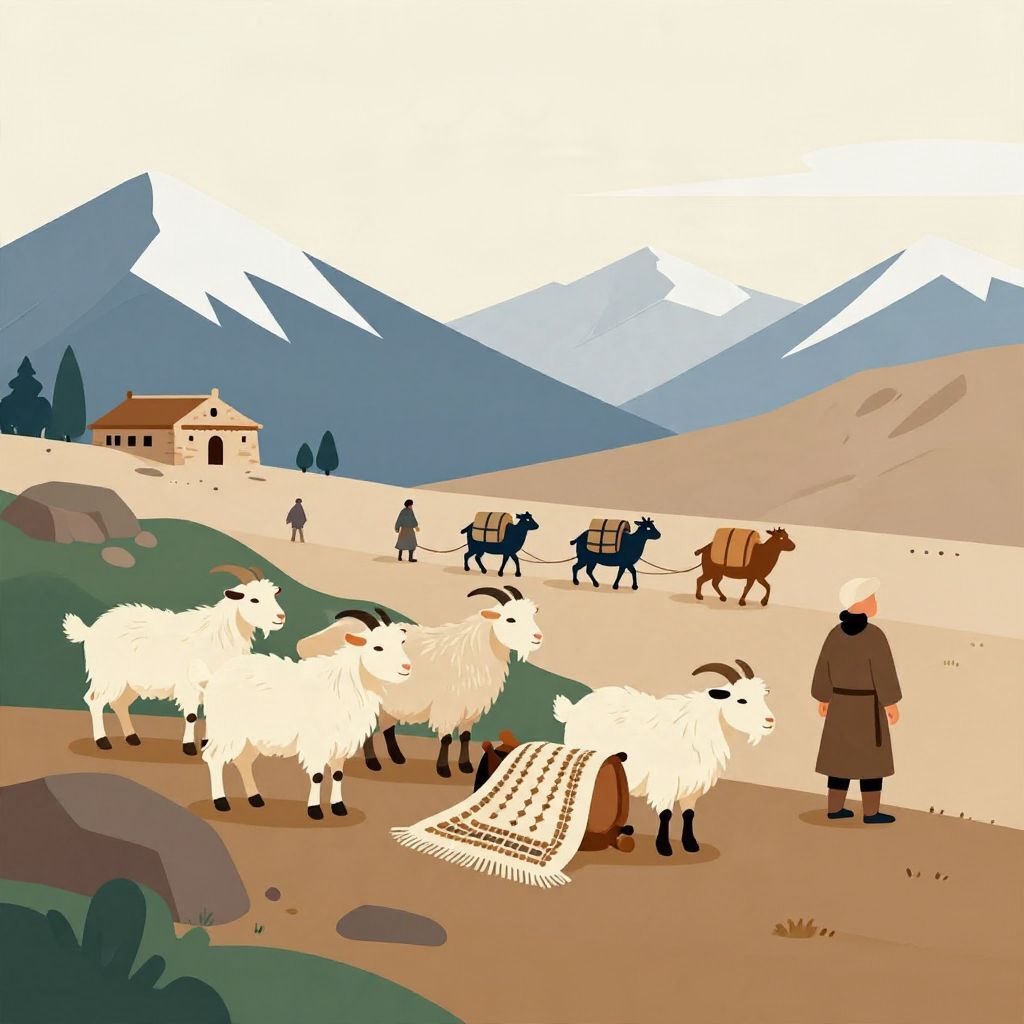
Where does cashmere come from? The answer is both geographic and historical: cashmere is the fine undercoat of cashmere goats, animals native to the cold mountain regions of Inner Asia, especially the Tibetan Plateau, Mongolia, and surrounding areas. For centuries, people in these high, harsh climates collected the soft winter undercoat and turned it into warm cloth, long before cashmere became a luxury fabric in global fashion.
Its history connects pastoral life, long-distance trade, and changing tastes in South Asia, Central Asia, and Europe. The name “cashmere” later became associated with the region of Kashmir, but the fiber itself did not originate there alone; it was produced across a much wider mountainous zone.
Where Does Cashmere Come From?
Cashmere comes from the soft, insulating undercoat of cashmere goats, especially those raised in cold, dry highlands of Inner Asia. Historically, the fiber was gathered by nomadic and semi-nomadic herders in regions such as Tibet, Mongolia, Ladakh, and Kashmir, then spun into cloth that was prized for its warmth, lightness, and rarity.
The animal source: cashmere goats
Cashmere is not made from sheep wool, even though the two are sometimes confused. It comes from a goat breed or group of goat populations adapted to severe winter climates. These goats grow a coarse outer coat and, beneath it, a very fine downy undercoat that is shed in spring. That undercoat is the raw material for cashmere fiber.
The quality of the fiber depends on fineness, length, and how carefully it is separated from the coarser guard hairs. Because only a limited amount can be collected from each goat each year, cashmere has always been relatively scarce. That scarcity helped shape its value in both local and international markets.
The geographic heartland
The historical heartland of cashmere production lies in the cold uplands of Inner Asia. The Tibetan Plateau and the surrounding steppe and mountain zones provided the conditions that made the fiber useful in the first place: long, freezing winters and short summers. In those environments, goats naturally developed dense undercoats to survive.
Kashmir became especially important because it sat at a crossroads of trade between South Asia, Central Asia, and the Himalayan world. Over time, the region’s name became attached to the fabric in many languages, even though the goats and the fiber were not exclusive to Kashmir itself.
How Did Cashmere Become a Historical Luxury?
Cashmere became a luxury because it combined practical usefulness with rarity and skilled craftsmanship. In the early modern period, especially from the late 18th and 19th centuries, fine shawls from Kashmir gained fame in elite markets. European demand transformed a regional textile tradition into a global luxury good.
Early textile traditions in Kashmir
Textile production in Kashmir has a long history, but the exact origins of cashmere weaving are difficult to pin down with certainty. What is clear is that by the medieval and early modern periods, Kashmir was known for exceptionally fine shawls. Local artisans used hand-spun yarn and intricate weaving or embroidery techniques to create textiles admired for their softness and elaborate designs.
These shawls were not simply decorative. In South Asian court culture, they were valuable gifts, status symbols, and markers of refinement. Their reputation spread through trade and diplomacy, helping create the prestige later attached to “cashmere” in Europe and beyond.
Trade routes and cultural exchange
Cashmere’s history is tied to the movement of goods across mountain passes and caravan routes. Merchants carried raw fiber, yarn, and finished shawls between Himalayan valleys, Central Asian markets, and the Indian subcontinent. This exchange allowed techniques, patterns, and commercial practices to circulate widely.
The spread of cashmere also reflects a broader historical pattern: textiles often traveled farther than the communities that made them. A fabric could acquire new meanings in different places. In Kashmir, it was part of local craft life; in Persian, Mughal, and later European settings, it became associated with status, elegance, and luxury consumption.
Why Is It Called “Cashmere”?
The word “cashmere” comes from “Kashmir,” the region in the western Himalayas. As European merchants and travelers encountered the famous shawls of the area, the regional name became attached to the textile. Over time, “cashmere” came to mean both the fiber and the fabric made from it.
This naming history can be misleading. The term suggests a single place of origin, but the fiber itself was produced across a broader ecological zone. Kashmir was crucial as a center of weaving and prestige, yet the goats that supplied the undercoat lived in many cold regions across Inner Asia.
From place name to textile term
Language often preserves the route by which a product became famous. In this case, a regional name turned into an international textile label. That shift happened as trade expanded and as European consumers learned to associate Kashmir with exceptionally fine shawls.
By the 19th century, “cashmere” had entered global fashion vocabulary. The term could refer to imported shawls, then to the fiber itself, and eventually to garments made from the fiber. This evolution shows how commerce can reshape language as well as taste.
Historical Development of Cashmere Production
Cashmere production developed over centuries rather than appearing at a single moment. Its history can be understood in a few broad stages: pastoral collection of the fiber, regional textile craftsmanship, elite patronage, and later industrial adaptation. Each stage changed how cashmere was valued and distributed.
- Pastoral origins: Herders in cold Inner Asian regions collected the soft undercoat from goats adapted to winter climates.
- Regional craftsmanship: Artisans in Kashmir and neighboring areas spun and wove the fiber into shawls and cloth.
- Elite demand: South Asian courts and later Persian and European consumers prized the textiles as luxury goods.
- Global expansion: Modern trade and manufacturing spread cashmere products far beyond their original production zones.
South Asian and Mughal influence
Under the Mughal Empire and related South Asian court cultures, fine textiles held major political and ceremonial importance. Shawls could be diplomatic gifts, signs of favor, or markers of rank. Kashmir’s textile traditions flourished in this environment, where craftsmanship and courtly taste reinforced each other.
It is important not to overstate a single imperial “invention” of cashmere. Rather, the Mughal period helped elevate and circulate an already existing textile tradition. The empire’s wealth and networks increased demand, while skilled artisans refined the production of patterned shawls.
European fascination in the 18th and 19th centuries
By the late 18th century, cashmere shawls had become highly fashionable in Europe. Travelers, colonial officials, and merchants brought examples back from South Asia, where they were admired for their softness and exotic prestige. European consumers often valued them as symbols of sophistication and empire.
This demand had lasting effects. European workshops began imitating Kashmiri designs, and later industrial production tried to reproduce the feel of the original fabric. Even so, authentic cashmere remained associated with fine fiber, careful processing, and the long history of Himalayan and Inner Asian herding.
What Makes Cashmere Historically Significant?
Cashmere matters historically because it shows how environment, labor, trade, and fashion interact. A material that began as a practical adaptation to cold climates became a luxury good through human skill and global exchange. Its story links nomadic pastoralism with court culture and modern consumer markets.
Labor and craftsmanship
Cashmere has always required labor-intensive processing. The fiber must be collected, cleaned, separated, spun, and woven or knitted. Historically, much of this work was done by hand. That labor gave the fabric its value and also tied it to specialized communities of producers and artisans.
In many historical settings, textile labor was gendered and socially organized in specific ways. While the exact division of labor varied by region and period, the making of cashmere depended on knowledge passed through households, workshops, and craft communities. Its beauty was inseparable from that hidden work.
Environment and adaptation
The history of cashmere is also a history of adaptation to climate. Goats in cold mountainous regions developed the undercoat that humans later valued. Herders selected and managed animals within landscapes shaped by altitude, drought, and winter cold. In that sense, cashmere is a product of both nature and human management.
This environmental background helps explain why cashmere is not evenly distributed across the world. It emerged where the right animals, the right climate, and the right pastoral traditions came together. That combination gave the fiber its distinctive place in history.
Modern Cashmere and Its Historical Legacy
Today, cashmere is produced in several countries, including Mongolia, China, India, and others in the broader Inner Asian region. Modern manufacturing has expanded supply, but the historical geography of cashmere still matters. The fiber remains tied to the cold highlands where cashmere goats thrive best.
At the same time, the word “cashmere” still carries the prestige built over centuries. Modern consumers may think first of sweaters and scarves, but the fabric’s reputation comes from a much older world of mountain herding, artisanal weaving, and long-distance trade.
What the history of cashmere tells us
The story of cashmere is not just about a textile. It is about how a local material can become globally famous through trade, taste, and imperial exchange. It is also a reminder that names can simplify complex origins. Kashmir gave the fabric its famous label, but the fiber itself belongs to a wider historical and geographic world.
So, where does cashmere come from? Historically, it comes from the undercoat of goats raised in the cold highlands of Inner Asia, and from the craft traditions that turned that fiber into prized cloth, especially in Kashmir. Its journey from mountain pasture to luxury fashion is a long history of environment, labor, and exchange. If you are interested in related textile histories, you may also want to explore the history of silk trade and the Mughal Empire.