
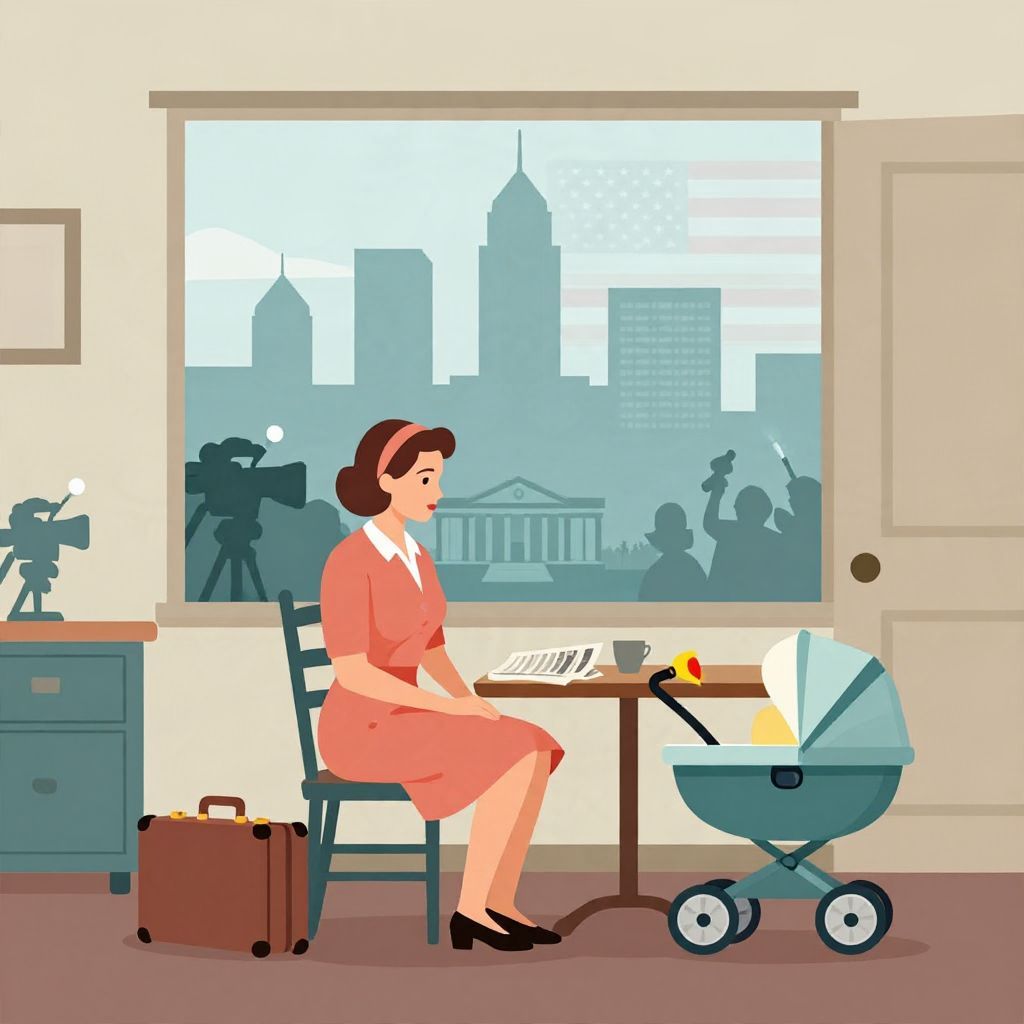
Lee Harvey Oswald’s wife was Marina Oswald Porter. After the assassination of President John F. Kennedy in November 1963, she was taken into protective custody, questioned extensively, and became one of the most closely watched private citizens in America. She was not charged with any crime, but her life was permanently altered by the event and by her connection to one of the most infamous figures in U.S. history.
What happened to her after Dallas is a story of fear, scrutiny, reinvention, and survival. It also shows how the Kennedy assassination affected not only national politics, but the lives of people who were near the center of the tragedy.
What happened to Lee Harvey Oswald’s wife?
Marina Oswald was left a widow after Lee Harvey Oswald was killed on 24 November 1963, two days after President Kennedy’s assassination. She was held and interviewed by authorities, later testified before the Warren Commission, and eventually rebuilt her life under a different name. She later remarried, became Marina Oswald Porter, and lived privately in the United States.
Who was Marina Oswald?
Marina Prusakova was born in the Soviet Union in 1941. She married Lee Harvey Oswald in 1961 after meeting him in Minsk, where he had lived after defecting to the USSR. The marriage linked an American defector and a young Soviet woman, making their family unusual even before the assassination thrust them into public attention.
A brief background before 1963
By the time the Oswalds returned to the United States in 1962, they had two young daughters, and Marina was living in a country she was still learning to navigate. She spoke limited English and depended heavily on Lee for money, housing, and daily life. That dependence became especially important after his arrest and death.
The immediate aftermath of the assassination
The day after President Kennedy was shot in Dallas, Lee Harvey Oswald was arrested and charged with the murder of police officer J. D. Tippit and later with the assassination of Kennedy. Before any trial could begin, Jack Ruby fatally shot Oswald on 24 November 1963. Marina, suddenly widowed at age 22, was left with two children and no clear support system.
Protective custody and questioning
Authorities feared that Marina might also be in danger or might have information relevant to the case. She was placed under protective custody and questioned by law enforcement and federal investigators. The government wanted to know what she had seen, what her husband had said, and whether she had any knowledge of his plans. There is no solid evidence that she knew in advance of the assassination.
Her interviews were difficult. She was grieving, isolated, and still adjusting to life in the United States. In addition, she had to interpret events through a language barrier and under enormous pressure. Historians generally treat her as a witness whose testimony was important but limited by her circumstances.
How Marina Oswald became part of the Warren Commission investigation
Marina Oswald testified before the Warren Commission, the presidential panel created to investigate Kennedy’s assassination. Her statements helped establish parts of Lee Oswald’s personal history, behavior, and movements before November 1963. She described his political views, his temper, and the instability in their marriage, all of which became part of the official record.
What her testimony did and did not prove
Marina’s testimony was valuable, but it did not settle every question about the assassination. She could speak to her husband’s personality and household life, not to every aspect of his actions outside the home. Because of that, her words became one piece of a much larger investigation rather than a final answer to all controversies surrounding the case.
Her role in the investigation also made her a public figure against her will. Reporters, researchers, conspiracy theorists, and curious readers all wanted to know what she knew. That attention followed her for decades.
What happened to her after 1963?
After the immediate shock of the assassination, Marina Oswald tried to build a stable life for herself and her daughters. She remained in the United States, eventually leaving the intense spotlight that had surrounded her in the 1960s. Over time, she remarried and became known as Marina Oswald Porter. She chose a quieter existence and largely avoided public controversy.
Marriage, family, and a new identity
Marina later married Kenneth Porter, and the couple made their life in the United States. Her children grew up away from the Soviet Union and away from the direct center of the assassination story. The name change symbolized more than a new marriage; it marked an effort to separate her own identity from the violence and notoriety attached to Lee Harvey Oswald.
That separation was never complete. Her first husband’s name remained one of the most recognizable in modern American history, and any public mention of Marina inevitably brought the assassination back into view. Still, she managed to live far more privately than many people expected after 1963.
Why her life became so closely watched
Marina Oswald was watched so closely because she stood at the intersection of several major Cold War anxieties. Her husband had defected to the Soviet Union, returned to America, and was accused of killing the president. In the tense political climate of the early 1960s, that background made her seem important to intelligence agencies, journalists, and the public alike.
Cold War suspicion
Her Soviet origins fueled speculation, some of it responsible and much of it exaggerated. During the Cold War, Americans were deeply suspicious of communist influence, espionage, and foreign infiltration. Marina became entangled in those fears even though there is no credible evidence that she participated in a conspiracy to kill Kennedy.
This is an important distinction: historical evidence supports the conclusion that she was a young widow caught in a political storm, not a proven co-conspirator. Later conspiracy theories often tried to turn her into something more, but those claims go beyond the evidence.
How historians view Marina Oswald today
Most historians treat Marina Oswald Porter as a tragic witness to history rather than a central actor in the assassination itself. Her testimony is considered useful for understanding Lee Harvey Oswald’s home life, personality, and movements, but not definitive on every disputed issue. She remains important because she humanizes a story that is often discussed only in terms of politics and conspiracy.
Evidence versus speculation
There have been many theories about whether Marina knew more than she admitted. Some writers have suggested she concealed information; others have argued she was manipulated by investigators or by public pressure. The historical record, however, does not support confident claims that she had advance knowledge of the assassination. The safest conclusion is that she was a limited witness under extraordinary strain.
Her experience also illustrates a broader historical pattern: when a major political crime occurs, the families of those involved can become collateral victims. Marina did not choose the role history assigned her, but she had to live with it.
Timeline of what happened to Lee Harvey Oswald’s wife
- 1941 — Marina Prusakova is born in the Soviet Union.
- 1961 — She marries Lee Harvey Oswald in Minsk.
- 1962 — The Oswald family returns to the United States.
- 22 November 1963 — President Kennedy is assassinated in Dallas.
- 24 November 1963 — Lee Harvey Oswald is killed by Jack Ruby.
- Late 1963–1964 — Marina is questioned, protected, and testifies before the Warren Commission.
- Later years — She remarries, becomes Marina Oswald Porter, and lives privately in the United States.
Historical impact of her story
Marina Oswald’s life after 1963 mattered because it shaped public understanding of the assassination and its aftermath. She became a key witness in the official investigation, a target of public curiosity, and a symbol of how a single political murder could disrupt private lives. Her story also reveals the limits of historical certainty: even close witnesses may know only part of the truth.
In the end, what happened to Lee Harvey Oswald’s wife was not a sensational mystery so much as a human tragedy. She survived the assassination, raised her children, remarried, and tried to move on, while the world continued to debate the meaning of the event that changed her life forever.