
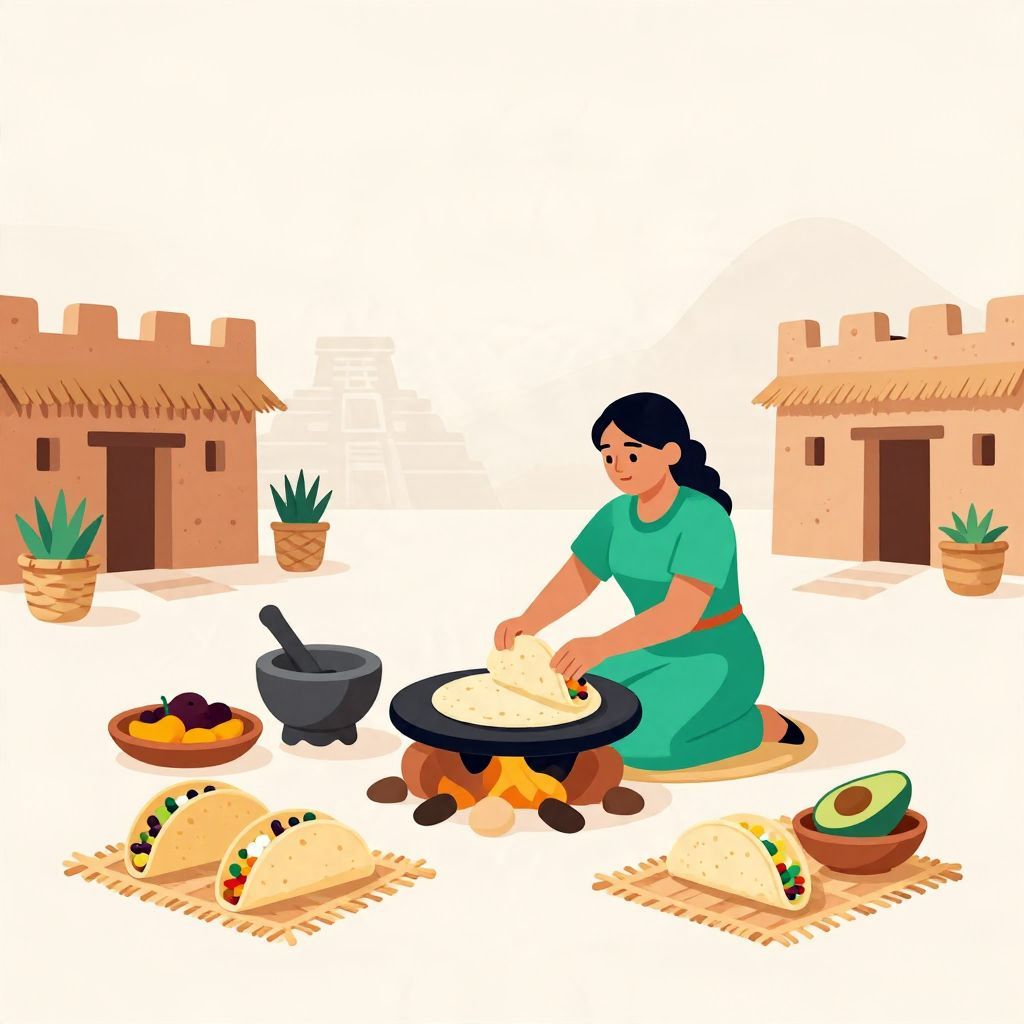
Where did tacos originate? The short answer is that tacos are generally traced to pre-Columbian Mexico, where Indigenous peoples used tortillas as edible vessels for fillings long before the Spanish arrived. The modern taco, however, developed over centuries, shaped by regional ingredients, colonial change, and urban street food culture.
Because tacos evolved gradually, there is no single inventor or exact birth date. What historians can say with confidence is that the taco is deeply rooted in Mexican foodways and became one of the country’s most recognizable culinary traditions.
Where Did Tacos Originate?
Tacos originated in Mexico, with their deepest roots in Indigenous Mesoamerican cuisine. Long before the modern taco had a name, people in central and southern Mexico ate tortillas with fish, beans, chiles, insects, and other fillings. The taco as we know it today emerged from this older practice of wrapping food in corn tortillas and later took shape in colonial and modern Mexico.
The Indigenous Roots of the Taco
The taco did not appear out of nowhere in the modern era. Its foundation lies in the long history of maize cultivation in Mesoamerica, where corn was transformed into tortillas, tamales, atoles, and many other staple foods. Tortillas made it easy to carry and eat food by hand, which made them ideal for workers, travelers, and farmers.
Corn, tortillas, and portable meals
In pre-Hispanic societies, tortillas were already serving a role similar to the taco shell or wrap. Archaeological and ethnohistorical evidence shows that Indigenous communities in the region used flat corn cakes to hold or accompany fillings. The exact word “taco” is later, but the culinary idea is much older.
These early tortilla-based meals were practical. They were portable, inexpensive, and adaptable to local ingredients. In that sense, the taco grew from everyday life rather than from royal kitchens or elite dining rooms.
What did early taco-like foods contain?
Fillings varied by region and season. Common ingredients included:
- Beans
- Chiles
- Fish and other seafood
- Squash and vegetables
- Turkey and other game
- Insects such as grasshoppers in some areas
These combinations reflect the rich agricultural and ecological diversity of pre-Columbian Mexico. The taco was not a single fixed recipe; it was a flexible way of eating.
When Did the Word “Taco” Appear?
The history of the word “taco” is less certain than the history of the food itself. Scholars generally agree that the term became common in Mexico during the colonial or early modern period, but its exact linguistic origin is debated. It may have developed from everyday speech referring to a plug, wad, or bundle, which fits the idea of food wrapped or folded in a tortilla.
Why the name matters
It is important to separate the name from the practice. People were eating tortilla-based meals long before the word “taco” became widespread. That means the dish’s origin is best understood as a culinary tradition rather than a single named invention.
How Spanish Colonization Changed Taco History
The Spanish conquest of Mexico in the 16th century transformed local food systems, but it did not erase them. Instead, Indigenous cooking traditions adapted to new ingredients introduced from Europe and elsewhere. Pork, beef, chicken, cheese, onions, and wheat became part of Mexican cuisine over time, and some of these ingredients eventually appeared in taco fillings.
Fusion without replacement
Colonial food history is often described as a fusion, but that word can hide power imbalances. Indigenous people did not simply “mix” cuisines on equal terms; they adapted under colonial rule while preserving core techniques and ingredients. The tortilla remained central, and the taco continued to reflect local preference, labor, and survival.
In many regions, the taco became a way to combine older Mesoamerican food traditions with newer colonial ingredients. This helped the dish remain familiar while also evolving.
When Did the Modern Taco Take Shape?
The modern taco developed most clearly in 19th-century and early 20th-century Mexico, especially in cities and mining regions where working people needed affordable, fast meals. Street vendors sold tacos as convenient food for laborers, travelers, and city dwellers. This period helped turn the taco from a broad tortilla-based practice into the recognizable dish known today.
Street food and urban life
As Mexican cities expanded, street food became more visible and more important. Tacos were easy to prepare, inexpensive, and customizable. Vendors could fill tortillas with different meats, beans, and salsas depending on region and availability. This flexibility helped tacos spread across social classes.
By the late 19th and early 20th centuries, tacos were increasingly identified as a distinctly Mexican food, even though their roots were much older. The dish’s popularity grew alongside rail travel, urban migration, and changing labor patterns.
Regional Taco Traditions in Mexico
There is no single “original taco” because tacos developed differently across Mexico. Regional styles reflect local ingredients, climate, and history. Some tacos are associated with central Mexico, while others come from coastal, northern, or southern traditions.
Examples of regional diversity
- Mexico City: street tacos with varied meats, salsas, and garnishes
- Northern Mexico: flour tortillas became more common in some areas because wheat agriculture was stronger there
- Coastal regions: fish and seafood tacos developed from access to marine ingredients
- Oaxaca and southern regions: tacos often reflect Indigenous ingredients, herbs, and local cooking styles
This regional diversity is one reason tacos are difficult to define narrowly. The taco is both a specific food and a broad category of tortilla-based eating.
How Did Tacos Spread Beyond Mexico?
Tacos spread beyond Mexico through migration, trade, and cultural exchange, especially in the 20th century. Mexican migrants carried their food traditions into the United States and elsewhere, where tacos adapted to new ingredients and tastes. Over time, they became a global dish.
The taco in the United States
In the United States, tacos became more widely known in border regions and cities with Mexican communities. As they spread, they changed. Hard-shell tacos, ground beef versions, and heavily standardized restaurant styles became common in some places, especially in the mid-20th century. These forms are popular, but they are not the oldest or most traditional versions.
This is an important distinction for historical accuracy: the international taco boom is part of taco history, but it is not the same thing as the dish’s origin.
Myths and Misconceptions About Taco Origins
Because tacos are so popular, many origin stories circulate online and in casual conversation. Some are harmless simplifications, but others blur the historical record. The most common misconception is that tacos were invented by one person or at one exact moment. That is not supported by historical evidence.
What historians can say with confidence
- Tacos originated in Mexico, not in Europe or the United States.
- Their roots go back to Indigenous Mesoamerican food traditions.
- The modern taco evolved gradually over centuries.
- Regional variation is part of taco history, not a modern accident.
What remains uncertain is the precise moment the word “taco” was first used in a culinary sense. That uncertainty does not weaken the larger historical picture; it simply reflects how everyday foods often develop outside formal records.
Why Taco Origins Matter
Understanding where tacos originated helps explain more than one popular dish. It reveals how Indigenous food systems shaped modern Mexican cuisine, how colonial change altered but did not erase older traditions, and how ordinary people created durable food practices through daily life. Tacos are a reminder that history is not only made by rulers and wars, but also by what people cook, carry, and eat.
So, where did tacos originate? They originated in Mexico, from Indigenous Mesoamerican tortilla-based eating traditions, and they became the modern taco through centuries of cultural change. For readers interested in food history more broadly, it is also worth exploring related origin stories such as where sushi originated and where French fries originated.