
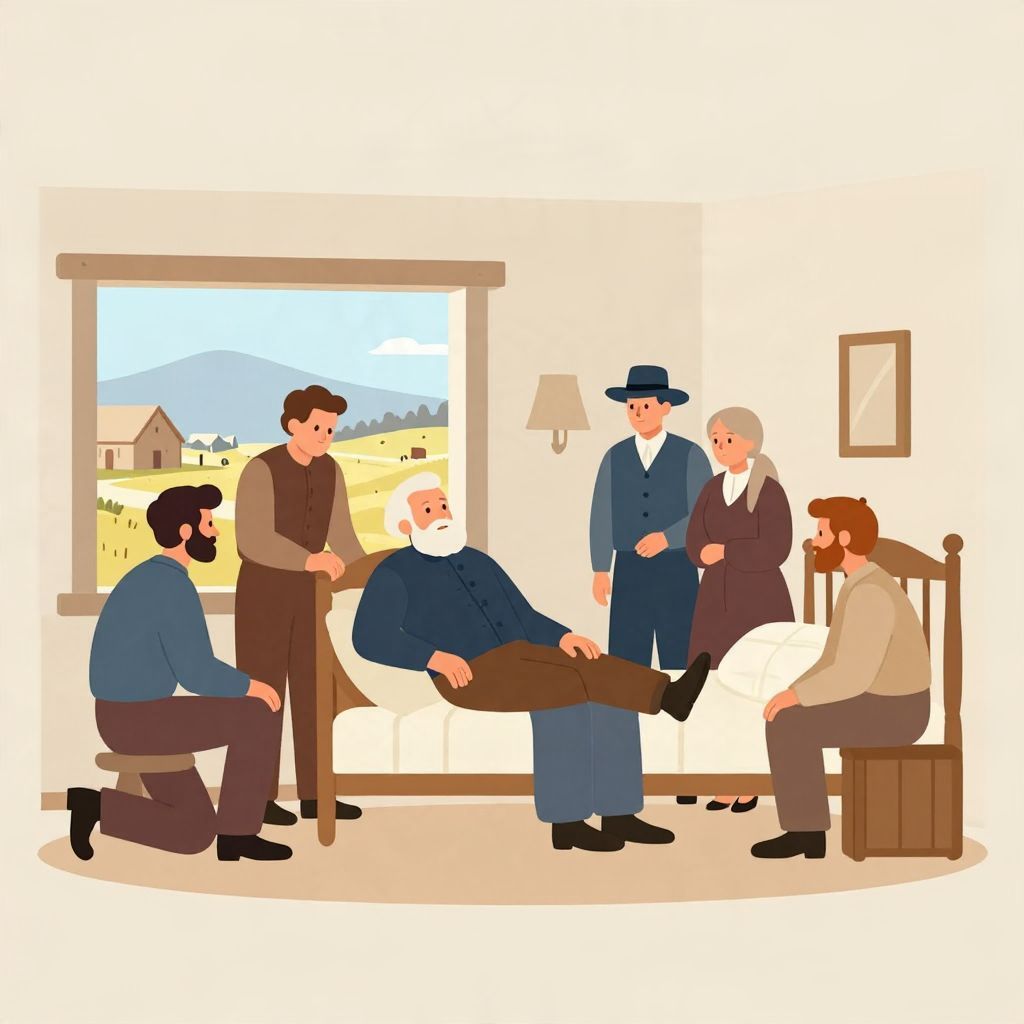
How did Brigham Young die? The short answer is that he died of natural causes in Salt Lake City, Utah, on August 29, 1877, at the age of 76. Contemporary accounts and later historical summaries generally describe his death as the result of a severe intestinal illness, often identified as peritonitis or a related abdominal infection, following a period of declining health.
Young was one of the most influential leaders in 19th-century Mormon history, and his death marked the end of an era for the Latter-day Saint movement in the American West. Understanding how he died also helps explain the final years of his leadership, his health problems, and the transition that followed in the church and Utah Territory.
How did Brigham Young die?
Brigham Young died of natural causes in 1877 after a serious illness that affected his abdomen and digestive system. Historical accounts generally point to peritonitis or complications from intestinal inflammation as the immediate cause, though 19th-century medical records were not always precise. He died at home in Salt Lake City after a period of worsening health, rather than from violence, accident, or assassination.
What is known about his final illness?
By the mid-1870s, Young was aging and increasingly frail. He had long carried the burdens of church leadership, territorial politics, and migration-era administration, and his health had declined over time. In his last days, he suffered from a painful abdominal condition that left him weak and unable to recover. Because medical diagnosis in the 1870s was limited, historians rely on family reports, church records, and newspaper accounts rather than modern clinical certainty.
Likely medical cause
The most common historical explanation is peritonitis, an inflammation of the lining of the abdominal cavity, often caused by infection or a ruptured internal organ. Some sources describe “cholera morbus” or other stomach and bowel disorders in the language of the time, but those terms were broad and sometimes imprecise. What is clear is that his death followed an acute abdominal illness that proved fatal.
Why the exact diagnosis is uncertain
19th-century doctors did not have modern imaging, antibiotics, or standardized diagnostic categories. As a result, official descriptions often used general terms for severe digestive or abdominal disease. Historians therefore tend to speak cautiously: the evidence supports a natural death from a serious intestinal or abdominal infection, but not a definitive modern diagnosis.
What happened in Brigham Young’s last days?
Young spent his final days in Salt Lake City, surrounded by family and church associates. He had remained active in leadership despite age and illness, but by late August 1877 his condition deteriorated rapidly. He died at his residence on August 29, 1877, ending a career that had shaped the settlement of Utah and the institutional development of The Church of Jesus Christ of Latter-day Saints.
A brief timeline of the end
- Early 1877: Young continued to oversee church and territorial affairs while in declining health.
- Late August 1877: He suffered a severe abdominal illness and became critically ill.
- August 29, 1877: He died in Salt Lake City at age 76.
- After his death: Church leadership passed into a new phase, eventually centered on the Quorum of the Twelve Apostles and later church presidents.
Why was Brigham Young’s death historically important?
Young’s death mattered because he had been the dominant figure in Mormon life in the Intermountain West for more than three decades. He was not only a religious leader but also a political organizer, colonizer, and administrator. His passing created a major leadership transition and signaled the end of the most personal, centralized phase of his rule.
The end of a powerful leadership era
As president of the church and territorial leader, Young had guided the Saints through migration, settlement, conflict with federal authorities, and the building of a new regional society. After his death, the church continued to grow, but leadership became less dependent on a single towering personality. That shift mattered for both church governance and the broader history of Utah.
Effects on Utah Territory
Young’s death also had political significance. He had been closely associated with the territorial order that developed in Utah after the Mormon migration from the Midwest. His absence changed the balance of authority in local politics and church administration, even though the institutions he helped build remained strong.
Was Brigham Young assassinated or poisoned?
No reliable historical evidence supports the claim that Brigham Young was assassinated or poisoned. Such ideas occasionally appear in rumor, polemical writing, or sensational retellings, but they are not supported by the main historical record. The best evidence indicates that he died from illness, not foul play.
Why rumors sometimes appear
Young was a controversial figure in his own lifetime. He was admired by followers and criticized by opponents, especially because of his religious authority, political influence, and advocacy of plural marriage in the Latter-day Saint community. Controversial leaders often attract legends after death, but historians distinguish those stories from documented evidence.
Who was Brigham Young?
Brigham Young was born in 1801 in Vermont and became one of the central leaders of early Mormonism after joining the movement in the 1830s. He succeeded Joseph Smith as leader of the Latter-day Saints after Smith’s death in 1844 and later directed the migration to the Great Basin. In Utah, he served as both a church president and a dominant civic figure.
His place in 19th-century American history
Young’s life intersected with major themes of the 19th-century United States: religious revivalism, westward migration, frontier settlement, and conflict over plural marriage and federal authority. His death therefore belongs not only to Mormon history but also to the broader story of American expansion and religious pluralism.
What should readers remember about his death?
The most accurate answer is simple: Brigham Young died naturally in Salt Lake City on August 29, 1877, after a serious abdominal illness. The exact modern medical label is uncertain, but the historical record does not suggest violence or mystery. His death closed a defining chapter in the history of the Latter-day Saint movement and the development of Utah.
For readers interested in related history, it can also be useful to explore broader topics such as the history of the Latter-day Saints and the history of Utah Territory, both of which help explain why Brigham Young’s life and death were so consequential.