
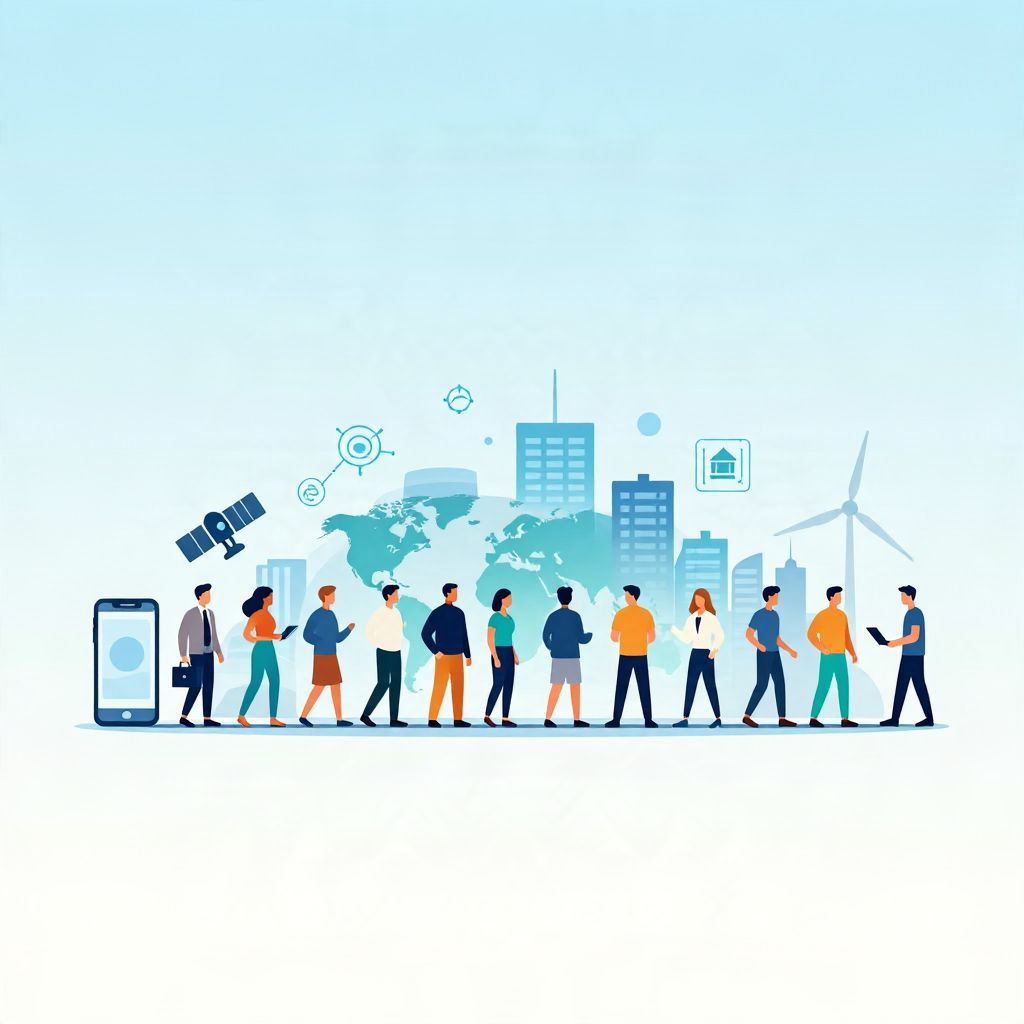
The question “What is the 21st century?” sounds simple, but it opens onto a major historical shift in how people measure time and understand the modern world. The 21st century is the current century of the Common Era, beginning on 1 January 2001 and ending on 31 December 2100.
It is more than a date range. Historians use the term to describe an era shaped by digital technology, globalization, climate concerns, new geopolitical tensions, and rapid social change. Its meaning comes from both chronology and the distinctive character of the age.
What Is the 21st Century?
The 21st century is the hundred-year period from 1 January 2001 to 31 December 2100. It is called the “21st” century because the first century ran from year 1 to year 100, so each later century is counted one step ahead of the years it contains.
Why Does the 21st Century Start in 2001, Not 2000?
This is one of the most common points of confusion. In the Gregorian calendar, there was no year zero, so the first century began with year 1. By that system, the 20th century ended on 31 December 2000, and the 21st century began on 1 January 2001. The year 2000 was the final year of the 20th century, even though many people celebrated it as a symbolic new era.
The calendar logic behind the numbering
The century count follows the same pattern as the way we count decades and ages: the first ten years are years 1 through 10, the second decade is 11 through 20, and so on. That means the 21st century includes years 2001 through 2100, not 2000 through 2099. The same logic applies to millennia, which is why the third millennium also began in 2001.
How Did the Idea of Centuries Develop?
Centuries are a way of organizing time, not a natural division built into history itself. They became useful because they help people compare long stretches of change, especially in politics, technology, and culture. The system depends on the calendar in use, and in much of the world today that means the Gregorian calendar, introduced in 1582 and later adopted widely across the globe.
From Roman timekeeping to modern dating
The modern numbering of years grew out of Christian-era dating systems used in medieval Europe. Over time, these systems became standard in international administration, science, commerce, and diplomacy. As global exchange expanded, the century became a practical historical label, even for societies with different local calendars and traditions.
What Defines the 21st Century Historically?
Historians usually describe the 21st century as an era of accelerated interconnection. Digital communication, mobile devices, social media, satellite networks, and global supply chains have made the world feel smaller and faster. At the same time, the century has been marked by inequality, migration, environmental stress, and political instability in many regions.
Major features of the age
- Digital transformation: the spread of the internet, smartphones, cloud computing, and artificial intelligence.
- Globalization: deeper economic, cultural, and political connections across borders.
- Security and conflict: wars, terrorism, cyber conflict, and new forms of surveillance.
- Climate and environment: rising concern about warming temperatures, extreme weather, and sustainability.
- Social change: shifting debates over identity, rights, gender, and citizenship.
Why Is the 21st Century So Often Seen as a Turning Point?
The early 2000s did not begin from a blank slate. They inherited the late 20th century’s globalization, consumer culture, and technological innovation. But several developments gave the new century a distinct historical character. The attacks of 11 September 2001 reshaped international politics, security policy, and public debate. The rise of social media changed how people communicate, organize, and consume news. Economic crises, especially the 2008 financial crash, exposed weaknesses in global systems.
Events that shaped the century’s early decades
- 2001: the September 11 attacks and the start of the “War on Terror.”
- 2003–2011: wars in Iraq and Afghanistan transform global politics.
- 2008: the global financial crisis spreads through interconnected markets.
- 2010s: smartphones and social media become everyday tools worldwide.
- 2020: the COVID-19 pandemic disrupts health systems, economies, and schooling globally.
How Has Technology Changed Life in the 21st Century?
Technology is one of the clearest markers of the 21st century. The internet existed before 2001, but it became far more central to daily life afterward. Search engines, online retail, streaming media, GPS navigation, and digital banking changed how people work, shop, learn, and socialize. By the 2010s, smartphones had made constant connectivity normal for billions of people.
From information age to platform age
Earlier digital life was often centered on websites and desktop computers. In the 21st century, large technology platforms came to mediate communication, entertainment, and commerce. This created convenience and access, but also new concerns about privacy, misinformation, monopoly power, and the influence of algorithms on public life.
What Makes the 21st Century Different from the 20th Century?
The 20th century was shaped by world wars, industrial mass production, decolonization, and the Cold War. The 21st century has inherited those legacies but operates in a different environment. Power is more diffuse, communication is faster, and many challenges cross borders: climate change, pandemics, cyber threats, migration, and financial instability cannot be solved by one state alone.
Continuity and change
It is important not to exaggerate a clean break between centuries. Many institutions, inequalities, and conflicts from the 20th century continued into the 21st. What changed was the speed and scale of connection. Information now travels instantly, markets react globally, and local events can become worldwide within hours.
Is the 21st Century the “Modern Era”?
In everyday speech, people often treat the 21st century as synonymous with “modern,” but historians are more cautious. “Modern” can mean different things depending on context. In history, the modern era usually began much earlier, often linked to the 15th to 18th centuries depending on the region and the subject. The 21st century is better described as the current century or the contemporary period.
Why historians avoid oversimplifying labels
Historical period names are useful shorthand, but they can hide complexity. A person living in the 21st century may use advanced digital tools while also facing conditions shaped by older social structures, colonial legacies, or long-standing political conflicts. The century is new, but many of its problems are rooted in the past.
How Do Different Calendars Affect the Meaning of the 21st Century?
Not every society organizes time in the same way. The Gregorian calendar is the international standard in business and diplomacy, but many cultures also use religious or local calendars for festivals, record-keeping, and identity. That means “the 21st century” is a global reference point, yet not the only way people understand historical time.
Global time, local time
For example, Islamic, Hebrew, Chinese, and other calendar systems have their own year counts and historical rhythms. Still, the Gregorian century is widely used in academic writing and international affairs because it provides a shared framework. This makes the 21st century both a technical time unit and a practical global label.
What Will the 21st Century Be Remembered For?
It is too early to define the full historical legacy of the 21st century, because it is still unfolding. But several themes already stand out: the rise of digital life, the struggle to manage climate change, the reordering of global power, and the tension between connectivity and fragmentation. Future historians may see it as a century of extraordinary innovation paired with deep uncertainty.
In short, the 21st century is the hundred-year span from 2001 to 2100, but historically it also names the age we are living through: a time of digital transformation, global interdependence, and major political and environmental challenges. For more on the early years of this era, see what happened in 2013 and an introduction to the historical present.