
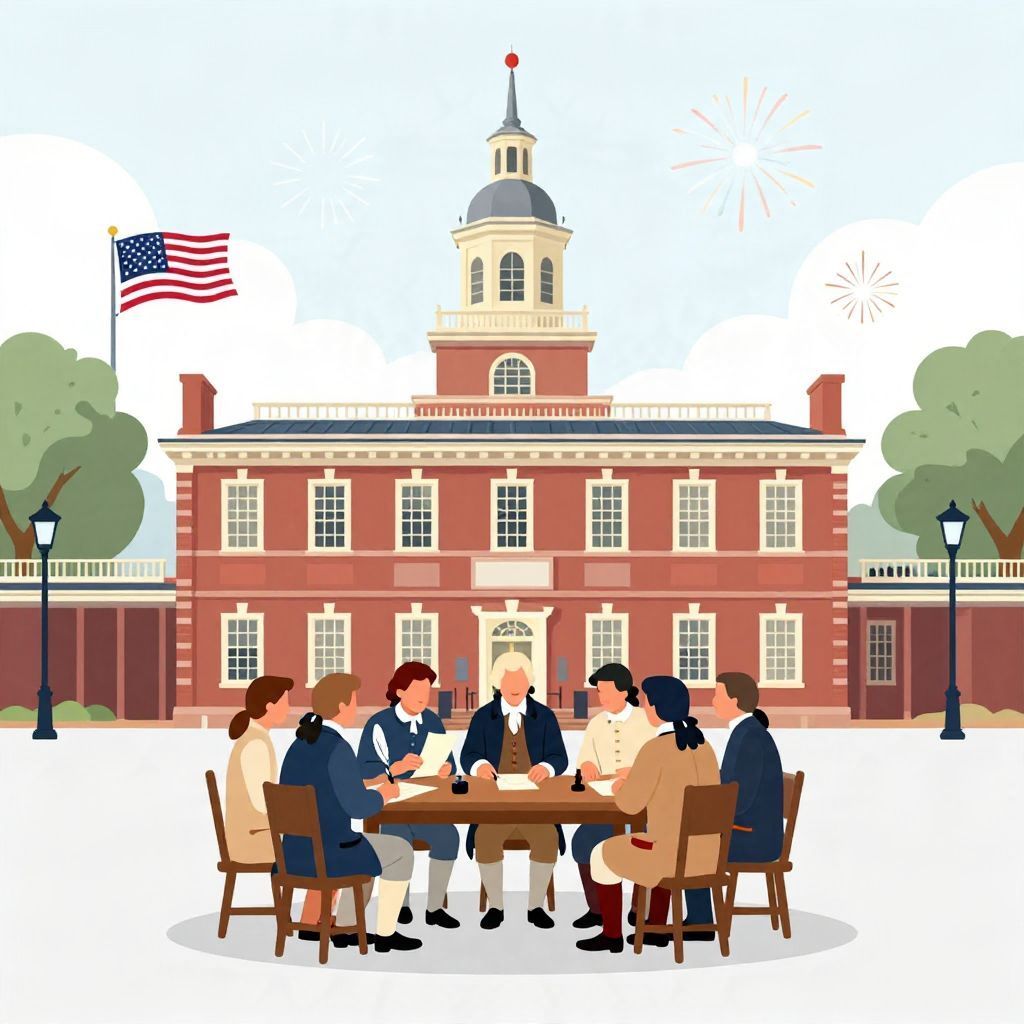
When is America’s birthday? In the most common historical sense, it is July 4, 1776, the day the Continental Congress approved the Declaration of Independence. That date marks the birth of the United States as an independent nation, even though the break with Britain was a process that unfolded over months and years.
The answer is simple on the surface, but the history behind it is richer. Americans celebrate a single day, yet the nation’s creation involved war, political debate, and a gradual shift from British colonies to a new republic.
When Is America’s Birthday?
America’s birthday is July 4, 1776, because that is when the Continental Congress formally adopted the Declaration of Independence. This is the date most Americans mean when they refer to the nation’s “birthday,” even though independence was declared by representatives of the colonies and later secured through years of war and diplomacy.
Why July 4, 1776, Became the National Birthday
July 4 is celebrated because the Declaration of Independence gave the new nation its public birth certificate. The document announced that the thirteen colonies were no longer subject to King George III and explained the political principles behind separation, including natural rights and government by consent. It was a declaration of independence, not the end of the Revolutionary War, but it became the symbolic starting point of the United States.
Why not July 2?
Some historians note that July 2, 1776 was the day Congress voted to approve independence itself, after Richard Henry Lee’s resolution. John Adams even thought July 2 might be remembered as the great anniversary of American liberty. But the final text of the Declaration was adopted on July 4, and that is the date printed on the document and later embraced by the public.
Why not August 2?
Most delegates did not sign the Declaration on July 4. Many signed later, and the best-known parchment copy was eventually signed on August 2, 1776. That date matters to historians, but it did not become the national holiday because the political act of declaring independence had already occurred on July 4.
The Road to Independence
America’s birthday cannot be understood without the imperial crisis that preceded it. For years before 1776, tensions grew between Britain and its North American colonies over taxation, representation, trade regulation, and parliamentary authority. Events such as the Stamp Act, the Boston Massacre, and the Intolerable Acts helped convince many colonists that reconciliation with Britain was becoming impossible.
From protest to revolution
At first, many colonists wanted rights within the British Empire, not full separation. Over time, however, armed conflict changed the political landscape. Fighting began in 1775 at Lexington and Concord, and by the time Congress debated independence in 1776, many Americans believed that war and monarchy could no longer coexist with their vision of self-government.
Thomas Paine and the case for independence
Public opinion also shifted because of revolutionary writing. Thomas Paine’s Common Sense, published in early 1776, argued forcefully that monarchy was unnatural and that America should become independent. The pamphlet did not create the revolution by itself, but it helped make independence seem both practical and morally necessary.
What Happened on July 4, 1776?
On July 4, the Continental Congress approved the final text of the Declaration of Independence in Philadelphia. The document was largely drafted by Thomas Jefferson, with revisions by John Adams, Benjamin Franklin, and others. It announced that “these United Colonies are, and of Right ought to be Free and Independent States,” a statement that transformed a rebellion into a claim of nationhood.
The Declaration’s purpose
The Declaration served several purposes at once. It explained to the world why the colonies were separating from Britain, it justified the break in political and philosophical terms, and it helped unite the colonies around a common cause. In that sense, America’s birthday is not just about a date; it is about the moment the colonies claimed a new identity.
Not everyone agreed immediately
Independence was not universally welcomed. Loyalists remained attached to Britain, and some colonists were cautious about the risks of rebellion. The new nation was born amid uncertainty, military danger, and disagreement about what independence would mean in practice.
How the Date Became a Holiday
Celebrations of July 4 began early, but the holiday took time to develop into the national observance known today as Independence Day. In the late 18th and early 19th centuries, communities marked the anniversary with speeches, parades, cannon fire, dinners, and fireworks. The day gradually became a shared civic ritual, especially as the young republic looked for symbols of national unity.
From local celebration to national tradition
By the early 1800s, July 4 was already an important patriotic occasion. Over time, it became associated with the ideals of liberty, republican government, and American identity. Congress later recognized Independence Day as a federal holiday, making the date even more firmly established in national memory.
What America’s Birthday Really Means
Calling July 4 America’s birthday is historically useful, but it is also symbolic. Nations are not born in the same way people are. The United States emerged through a sequence of political decisions, war, and institution-building. July 4 marks the public declaration of independence, not the instant all the structures of a nation were complete.
A nation in formation
After 1776, the United States still had to win the Revolutionary War, create state governments, write the Articles of Confederation, and later replace them with the Constitution. In other words, the country’s “birthday” is the beginning of a long process, not the end of it.
Different possible meanings of “founded”
Some people ask whether America was founded in 1776, 1787, or 1788. The answer depends on what “founded” means. If the question is about independence, July 4, 1776 is the best answer. If the question is about the constitutional government, then 1787–1788 matters more. Historians often distinguish between the birth of the nation and the later creation of its federal system.
Timeline of America’s Birth
Here is a simple chronology of the key steps leading to America’s birthday:
- 1775 – Armed conflict begins at Lexington and Concord.
- Early 1776 – Revolutionary sentiment grows, especially after Thomas Paine’s Common Sense.
- July 2, 1776 – Congress votes for independence.
- July 4, 1776 – Congress adopts the Declaration of Independence.
- August 2, 1776 – Many delegates sign the parchment copy of the Declaration.
- 1783 – Britain recognizes American independence in the Treaty of Paris.
Historical Significance of July 4
July 4 matters because it captures the moment when the American Revolution became a statement of national purpose. The Declaration’s language about equality, rights, and government by consent has shaped political debate ever since, even though the nation at the time did not fully live up to those ideals. That tension is part of the document’s enduring power.
Ideals and contradictions
The Declaration proclaimed universal principles, but slavery remained legal in much of the new nation, and many women, Native peoples, and free Black Americans were excluded from political rights. Historians often point out that America’s birthday celebrates an ideal as much as a reality. The country was born with promises that later generations would continue to argue over and expand.
So, When Is America’s Birthday?
In everyday and historical usage, America’s birthday is July 4, 1776. That is the date the Declaration of Independence was adopted and the date Americans celebrate as Independence Day. If you want the shortest accurate answer, that is it. If you want the fuller historical answer, it was the beginning of a revolutionary process that continued through war, treaty, and nation-building.
For more on the nation’s origins, see when the USA was founded and explore two rights in the Declaration of Independence.