
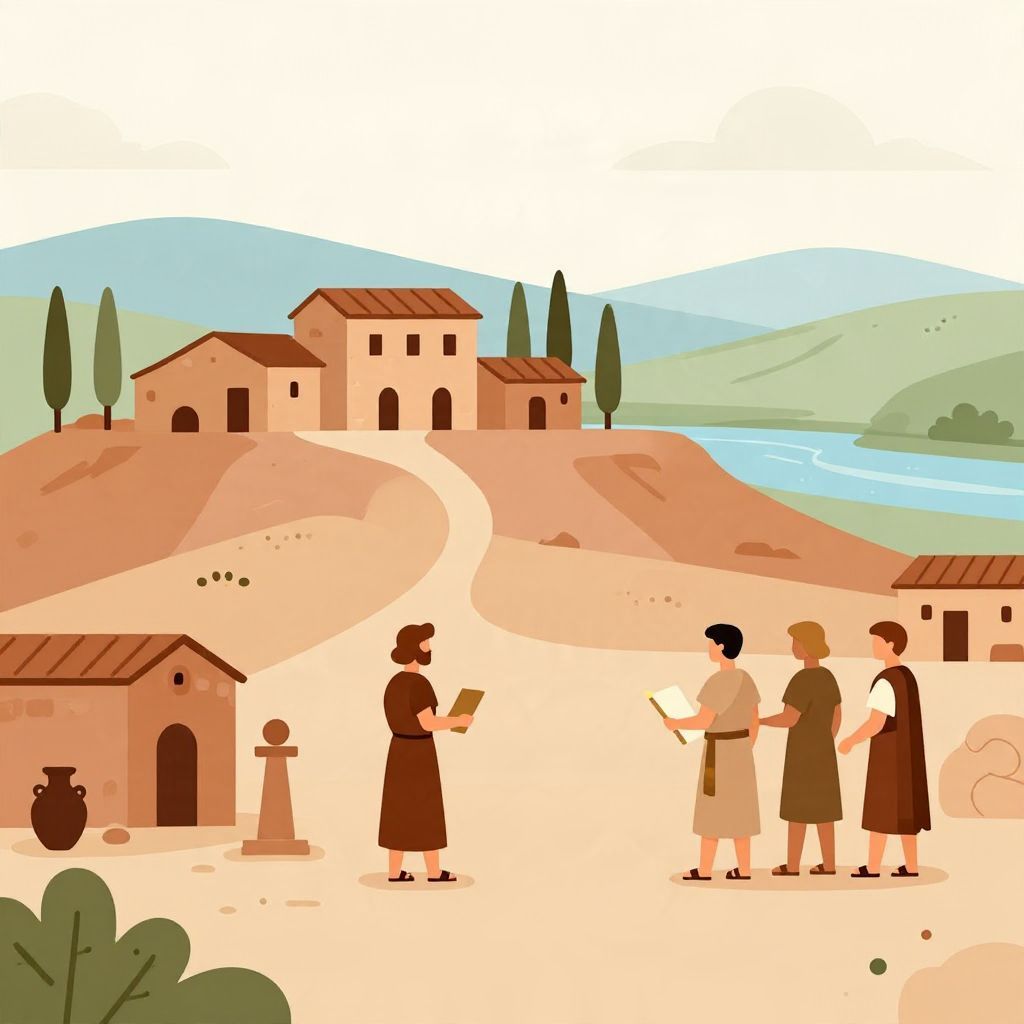
Where did Latin originate? The short answer is that Latin began in central Italy, especially the region around Rome and Latium, where the ancient Latins lived. It was not invented all at once by a single person; it developed gradually as one of several Italic languages spoken in the Italian peninsula.
Over time, Latin became the language of Rome, then the language of an expanding republic and empire, and eventually the ancestor of the Romance languages spoken across much of Europe and beyond.
Where Did Latin Originate?
Latin originated in Latium, the small region of west-central Italy around the lower Tiber River, including the area of ancient Rome. It emerged among the Latin-speaking peoples of the Italian peninsula during the first millennium BCE, probably by the early centuries of that period, and became dominant as Rome grew in power.
The Geographic Home of Early Latin
Latium was the homeland of the Latins, an Italic-speaking people who lived in and around the hills and plains near Rome. This was a strategic location: close to the sea, connected by river routes, and positioned among other communities such as the Sabines, Etruscans, and other Italic groups. Latin was therefore born in a multilingual landscape, not in isolation.
The earliest form of Latin was tied to the city of Rome and its surroundings. As Rome expanded, its language expanded with it. That is why Latin is often associated with the Roman Empire, even though its roots are older than the empire itself.
What Kind of Language Was Latin?
Latin belonged to the Italic branch of the Indo-European language family. This means it was related, though not identical, to other ancient languages of Italy such as Oscan and Umbrian. These languages were spoken by neighboring peoples and show that ancient Italy was linguistically diverse long before Latin became dominant.
Latin was not the only language in ancient Italy
Before Rome’s rise, several languages coexisted on the peninsula. Etruscan, for example, was spoken in parts of central Italy and was not an Indo-European language. Greek was also present in southern Italy and Sicily through colonization. Latin’s success came not from being the only language in the region, but from Rome’s political and military expansion.
When Did Latin First Appear?
Scholars usually place the earliest development of Latin in the early first millennium BCE, though the language almost certainly existed in spoken form before it appears in surviving inscriptions. The earliest written evidence of Latin is fragmentary and limited, but by around the 7th to 6th centuries BCE, recognizable Latin was already being used in inscriptions.
Because spoken language leaves no direct fossil record, the exact moment Latin “began” cannot be pinned down precisely. What historians can say is that Latin developed gradually from earlier Indo-European speech in central Italy and became visible in writing during the archaic period of Roman history.
Early evidence of Latin
- Archaic inscriptions show early forms of Latin in use before the classical period.
- Religious and legal formulas preserved older vocabulary and grammar.
- Public inscriptions reveal how Latin was used in civic and political life as Rome developed.
How Latin Developed in Ancient Rome
Latin changed as Rome changed. In the city’s early centuries, it was a local language spoken by a small community. As Rome came into contact with neighboring peoples, Latin absorbed words, styles, and influences from other languages, especially Etruscan and Greek. This process is normal in language history: languages evolve through contact, trade, war, migration, and administration.
By the time of the Roman Republic, Latin had become the language of government, law, and public life in Rome. Later, as Rome conquered Italy and then much of the Mediterranean world, Latin spread beyond its original homeland. It became the language of soldiers, administrators, settlers, merchants, and eventually millions of people across the empire.
Why Rome mattered so much
Latin did not spread simply because it was “better” than other languages. It spread because Rome became powerful. Political authority, military conquest, urban growth, and citizenship all encouraged the use of Latin. In many places, local languages survived for centuries, but Latin gained prestige and practical value as Roman rule deepened.
Latin and the Roman Empire
During the Roman Empire, Latin became one of the most influential languages in history. It was the main language of the western empire and the language of Roman law, military command, and much official writing. In the eastern Mediterranean, Greek remained dominant in many areas, so the empire was not linguistically uniform.
Latin also developed different forms. Educated writers used a highly standardized literary Latin, while ordinary people spoke forms of Vulgar Latin, the everyday language that varied by region. Over centuries, these spoken varieties changed into the Romance languages, including Italian, French, Spanish, Portuguese, Romanian, and others.
What Evidence Do Historians Use?
Historians and linguists study Latin through inscriptions, manuscripts, comparative linguistics, and archaeological context. They compare Latin with related languages to reconstruct older forms and trace how sounds, grammar, and vocabulary changed. This evidence supports the view that Latin emerged in central Italy rather than being imported from elsewhere in a single event.
There are also older theories and myths about Latin’s origin. Some ancient writers linked Rome’s language to heroic founders or divine origins, but these are cultural stories, not historical explanations. Modern scholarship treats Latin as a natural historical development within the Italic-speaking world.
What we can say with confidence
- Latin originated in Latium, around Rome in central Italy.
- It was part of the Italic language family.
- It developed gradually during the first millennium BCE.
- Rome’s rise turned a regional language into an imperial one.
How Latin Became So Important After Rome
Even after the Western Roman Empire fell in the 5th century CE, Latin did not disappear. It remained the language of the Church, scholarship, law, and administration in much of Europe. Medieval and early modern writers continued to use it for theology, science, diplomacy, and education. In that sense, Latin outlived the empire that helped spread it.
At the same time, spoken Latin continued changing in different regions. Those regional changes created the Romance languages, which preserved Latin’s basic structure while developing their own identities. So when people ask where Latin originated, they are also asking about the roots of a whole linguistic family that shaped European history.
Why the Origin of Latin Still Matters
Latin’s origin matters because it helps explain how language and power work together in history. A language that began in one small region of Italy became a central tool of empire, religion, law, and literature. Its story shows how local speech can become global influence through conquest, administration, and cultural prestige.
It also reminds us that ancient civilizations were interconnected. Latin did not emerge in a vacuum; it developed among neighboring peoples, borrowed from contact with other cultures, and changed as Rome changed. Its origin in Latium is the starting point of a much larger historical story.
So, where did Latin originate? In the end, the answer is clear: Latin began in central Italy, in the region of Latium around Rome, where the ancient Latins spoke an Italic language that gradually became the language of Rome and, later, much of the Western world. If you want to explore the language’s later history, see what language the Romans spoke and why Latin is called a dead language.