
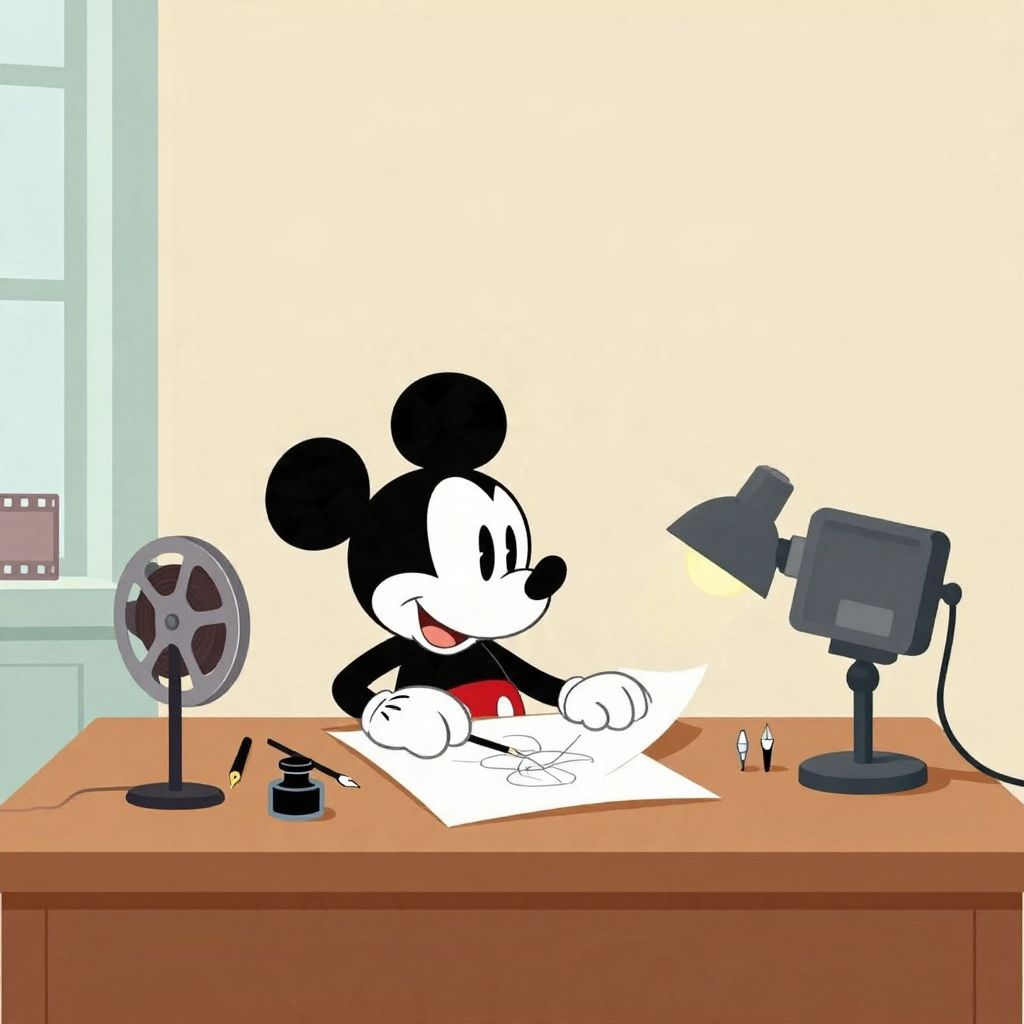
When was Mickey Mouse created? The short answer is that Mickey Mouse was created in 1928, with his first public appearance in the animated short Steamboat Willie on November 18, 1928. That date is the one most often used in histories of animation because it marked Mickey’s debut before a wide audience.
However, Mickey did not appear fully formed overnight. He developed through several earlier sketches and test films in 1928, and his creation is tied to the creative partnership between Walt Disney and animator Ub Iwerks.
When Was Mickey Mouse Created?
Mickey Mouse was created in 1928. His first released cartoon, Steamboat Willie, premiered on November 18, 1928, and that is generally treated as Mickey’s official birthday. Earlier versions of the character existed in development before that release, but 1928 is the historically accepted date for Mickey’s creation as a cultural icon.
The Origin of Mickey Mouse in 1928
Mickey Mouse emerged during a difficult moment for Walt Disney. Disney had lost the rights to his earlier successful character, Oswald the Lucky Rabbit, after a business dispute. In response, he and animator Ub Iwerks created a new character that could belong to Disney’s studio. The result was Mickey Mouse, a character designed to be flexible, appealing, and easy to animate.
Why Mickey Was Created
Mickey was not invented as a random mascot. He was created because Disney needed a new star after losing Oswald. The new character had to be original, marketable, and distinctive enough to stand apart from other animated figures of the era. Mickey’s cheerful personality and simple design helped him succeed quickly.
Who Created Mickey Mouse?
The creation of Mickey Mouse is usually credited to Walt Disney and Ub Iwerks. Disney helped shape the character’s personality and commercial direction, while Iwerks is widely recognized as the main artist behind Mickey’s early visual design and animation. Historians generally treat Mickey as a collaborative creation rather than the work of one person alone.
Timeline of Mickey Mouse’s Creation
The story of Mickey Mouse can be understood as a short sequence of developments in 1928. The exact dates matter because they show how quickly the character evolved from an idea into a global figure.
- Early 1928: Disney loses the rights to Oswald the Lucky Rabbit.
- Spring 1928: Disney and Iwerks begin developing a new character.
- Mid-1928: Early Mickey designs and test animations are produced.
- May 1928: A silent test film, often associated with Plane Crazy, is created.
- November 18, 1928: Steamboat Willie is released and becomes Mickey’s breakthrough debut.
Early Experiments Before Steamboat Willie
Before the famous 1928 debut, Mickey appeared in earlier forms. One of the earliest test cartoons, Plane Crazy, was made in 1928 but not immediately released to the public. These early versions show that Mickey’s creation was a process, not a single moment. The character was refined through animation tests, story ideas, and visual adjustments before becoming the version audiences remember.
Why Steamboat Willie Matters
Steamboat Willie is important because it introduced Mickey Mouse to the public in a major way and helped establish synchronized sound as a powerful tool in animation. The short film’s success made Mickey famous and turned him into the face of the Disney studio. That is why November 18, 1928, is often treated as Mickey’s official birth date.
Was Steamboat Willie Mickey’s First Appearance?
Not exactly, depending on how “first appearance” is defined. Mickey was created earlier in 1928, and some early films featuring him were produced before Steamboat Willie. But Steamboat Willie was the first widely released and widely celebrated Mickey cartoon. For most historical and popular purposes, that is the key debut.
Mickey Mouse’s Early Design and Personality
Mickey’s early appearance was quite different from the more polished version known today. He originally had a more angular body, simpler facial features, and a more mischievous personality. Over time, the character became softer, friendlier, and more standardized as Disney refined his image for audiences and merchandising.
How Mickey Changed Over Time
The evolution of Mickey Mouse reflects the development of animation itself. In the late 1920s, cartoon characters were still being shaped by experimentation. Mickey’s design became more rounded and expressive in later years, which made him easier to animate and more appealing to viewers. This shift also helped him function as a long-term brand character rather than just a one-time film figure.
Historical Context: Animation in the Late 1920s
Mickey Mouse was created during a turning point in film history. Silent cartoons were giving way to sound films, and studios were competing to find new ways to attract audiences. Disney recognized that animation could become more than a novelty if it combined strong characters, music, and timing. Mickey’s rise was part of that broader transformation in entertainment.
Why Mickey’s Creation Was So Important
Mickey did more than save one studio. He helped define modern animated storytelling. His success showed that an animated character could become a cultural symbol, appear in films, and later expand into comics, merchandise, television, and theme parks. In that sense, Mickey’s creation in 1928 had consequences far beyond the film industry.
Common Misconceptions About Mickey Mouse’s Creation
Because Mickey became so famous, several myths and simplifications grew around his origin. It is worth separating fact from popular memory.
- Myth: Mickey Mouse was invented in one day.
Fact: He developed through several sketches and test films in 1928. - Myth: Walt Disney alone designed Mickey.
Fact: Disney and Ub Iwerks both played major roles. - Myth: Mickey’s first appearance was the same as his creation.
Fact: The character was created earlier in 1928, but Steamboat Willie made him famous.
Why the Date Still Matters Today
The question “When was Mickey Mouse created?” remains popular because Mickey is one of the most recognizable characters in modern history. His 1928 debut marks the beginning of a major chapter in American popular culture and animation history. It also helps historians trace how entertainment, technology, and branding came together in the early twentieth century.
Conclusion
Mickey Mouse was created in 1928, and his best-known public debut came with Steamboat Willie on November 18, 1928. While the character evolved through earlier development work, that date remains the standard historical answer. Mickey’s creation was not only the birth of a famous cartoon figure, but also a milestone in the history of animation and mass culture. For more related history topics, see HistoryOrg and this related article.