
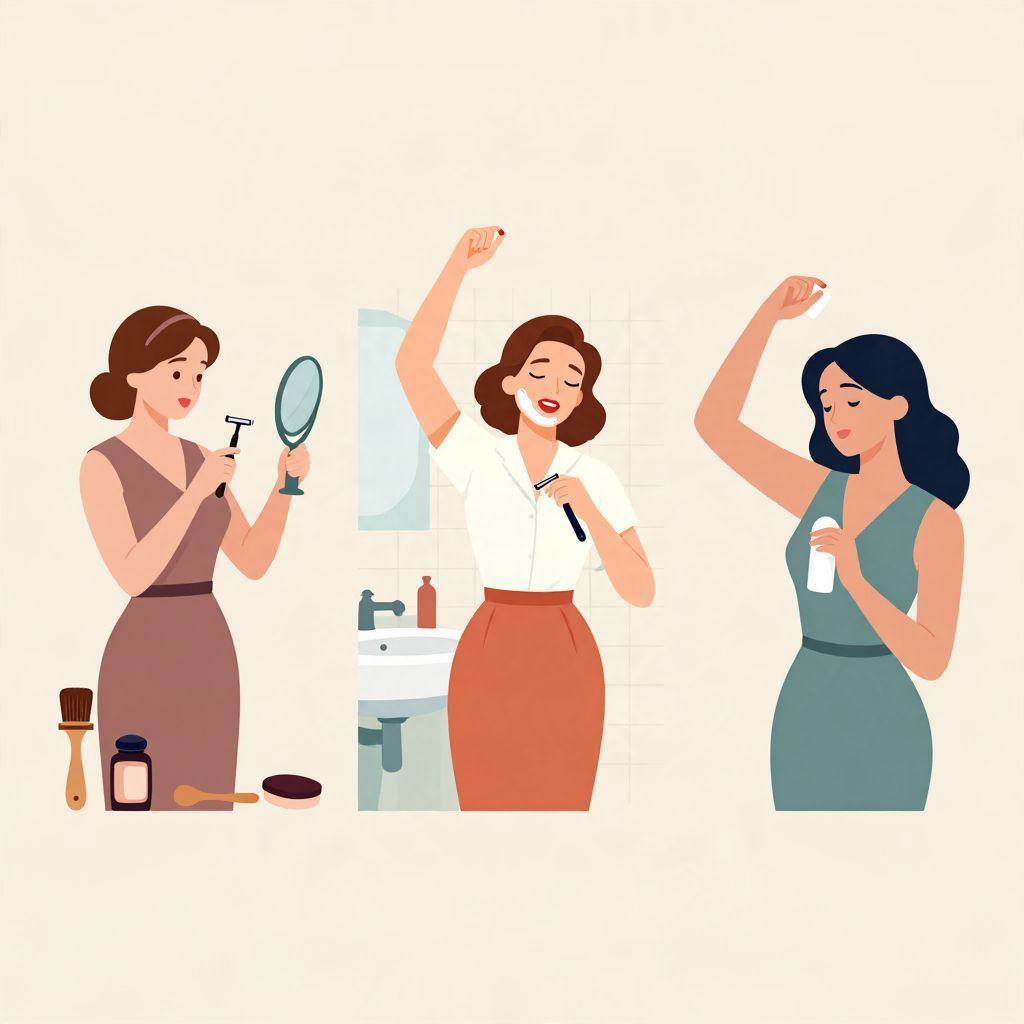
When did women start shaving their armpits? The short answer is that it became a common beauty practice in the early 20th century, especially in the United States, and it spread rapidly after the 1910s and 1920s. Before that, some women removed underarm hair occasionally, but it was not a widespread social expectation in most Western societies.
The history of underarm shaving is less about ancient custom than about modern advertising, changing fashion, and new ideas about femininity. What looks like a timeless grooming habit is actually a relatively recent cultural shift, shaped by sleeveless clothing, mass-market razors, and beauty campaigns that taught women to see body hair as undesirable.
When did women start shaving their armpits?
Women began shaving their armpits as a mainstream beauty practice in the 1910s, with the custom becoming much more common in the 1920s and 1930s. The trend emerged first in the United States and then spread to other countries through fashion, magazines, and advertising. It was not an ancient norm, but a modern one.
A brief timeline of underarm shaving
The history of women’s armpit shaving is best understood as a sequence of cultural changes rather than a single invention. Different groups of women adopted the practice at different times, but the broad timeline is clear.
- Before the 1900s: Body hair removal existed in some cultures, but underarm shaving was not a widespread expectation for most women in Europe and North America.
- 1900s: Fashion began moving toward more revealing women’s clothing, especially shorter sleeves and lighter fabrics.
- 1915: A major turning point in the United States, when advertising for women’s razors began targeting underarm hair removal.
- 1920s: Sleeveless evening dresses and the flapper style helped normalize shaved underarms among middle- and upper-class women.
- 1930s–1940s: The practice became even more common as razor marketing expanded and Hollywood imagery reinforced smooth, hairless skin as ideal.
- Post-World War II: Underarm shaving became a standard expectation in many Western beauty cultures, though never universal.
Why did the practice take off in the early 1900s?
Three major forces made underarm shaving popular: new clothing styles, mass advertising, and the rise of consumer beauty culture. As women’s fashion exposed more of the body, companies saw an opportunity to sell razors by presenting body hair as a problem that needed solving.
1. Fashion changed first
In the late 19th century, women’s clothing usually covered the underarms. High collars, long sleeves, and layered garments meant armpit hair was rarely on public display. By the early 20th century, however, evening wear and summer fashions increasingly featured sleeveless or short-sleeved designs. Once the underarm became visible, it became a new focus for grooming norms.
2. Advertising created a market
One of the most important moments came in the 1910s, when razor companies began marketing to women. Instead of simply selling a tool, advertisers sold a social ideal. They framed underarm hair as unfeminine, unhygienic, or embarrassing, even though those claims were cultural rather than scientific. This kind of advertising helped transform a personal choice into a social expectation.
3. Beauty culture became more commercial
During the early 20th century, beauty routines increasingly became tied to products, magazines, and modern consumer identity. Women were encouraged to manage their appearance through specialized goods: powders, creams, depilatories, and razors. Underarm shaving fit neatly into this new market because it was simple, repeatable, and easy to advertise.
What happened in 1915?
In the United States, 1915 is often cited as the key year when underarm shaving entered mainstream marketing. That year, a women’s razor campaign explicitly promoted the removal of underarm hair, linking the practice to sleeveless dresses and social confidence. This did not mean every woman immediately shaved, but it marked the start of broad commercial pressure to do so.
That advertising mattered because it connected grooming to modern femininity. The message was not only “this is fashionable,” but also “this is what polished women do.” Once that idea entered magazines and department-store culture, the practice spread quickly among women who wanted to match the new ideal.
Did women shave their armpits before the 20th century?
Yes, some women did remove underarm hair before the 20th century, but not in the modern mass-market sense. Hair removal has a long history across many civilizations, and people have used tweezers, pumice, wax, thread, and early depilatory mixtures for centuries. Still, the evidence does not support the idea that underarm shaving was a universal or dominant practice among women in earlier periods.
Ancient and premodern hair removal
In ancient Egypt, Greece, and Rome, body hair removal could be associated with cleanliness, status, or aesthetics, especially among elites. However, the methods and meanings varied widely. Some women removed body hair from multiple areas, but the historical record does not show a continuous, universal tradition of women shaving armpits in the way modern beauty culture later encouraged.
Religious, regional, and class differences
Across history, grooming customs depended on religion, region, and social class. In many places, underarm hair was simply not a major social issue because clothing covered it. In others, body hair removal was practiced selectively, often by wealthier people who had access to time and tools. The modern expectation that women should shave their armpits is therefore best understood as a product of 20th-century consumer culture rather than a timeless rule.
How Hollywood and magazines reinforced the trend
Once underarm shaving entered advertising, film and print media helped spread it further. Hollywood stars, fashion photography, and women’s magazines presented smooth skin as elegant and modern. Because celebrities and models wore sleeveless gowns, the absence of visible body hair became part of the visual language of glamour.
This mattered because beauty standards often spread through repetition. The more women saw hairless underarms in ads and on screen, the more the image seemed normal. Over time, what began as a marketed preference became a social norm, especially in urban and middle-class settings.
Was underarm shaving always common in every country?
No. The practice spread unevenly. It became especially common in the United States and parts of Western Europe in the first half of the 20th century, but adoption varied by country, class, religion, and generation. In some societies, underarm shaving became standard later; in others, it remained less important or more personal than public expectations suggested.
Even within one country, not all women adopted the practice at the same time. Older women, rural communities, and women outside fashion-centered circles often followed different grooming habits. That is why it is more accurate to speak of a trend than a universal historical turning point.
What does this history tell us about beauty standards?
The history of women shaving their armpits shows that beauty norms are not fixed or natural; they are historically produced. A practice that now seems ordinary was popularized through advertising at a specific moment when fashion, commerce, and gender expectations aligned. In that sense, underarm shaving is a useful example of how consumer culture can reshape everyday behavior.
It also shows how quickly a new standard can feel timeless once it becomes familiar. Within a few decades, many women came to regard shaved underarms not as a new custom but as a basic part of personal grooming. That shift happened because marketing repeatedly linked body hair removal with cleanliness, sophistication, and femininity.
So, what is the best historical answer?
If you want the clearest date-based answer, women started shaving their armpits as a mainstream practice in the 1910s, especially after 1915, and it became widely normalized in the 1920s and 1930s. Earlier examples existed, but the modern habit grew out of 20th-century advertising and fashion rather than ancient tradition.
In short, women did not “always” shave their armpits. The custom became common when sleeveless fashion, consumer razors, and modern beauty ideals converged in the early 1900s. For more on how everyday habits change over time, related history topics often pair well with studies of fashion, advertising, and women’s social history.