
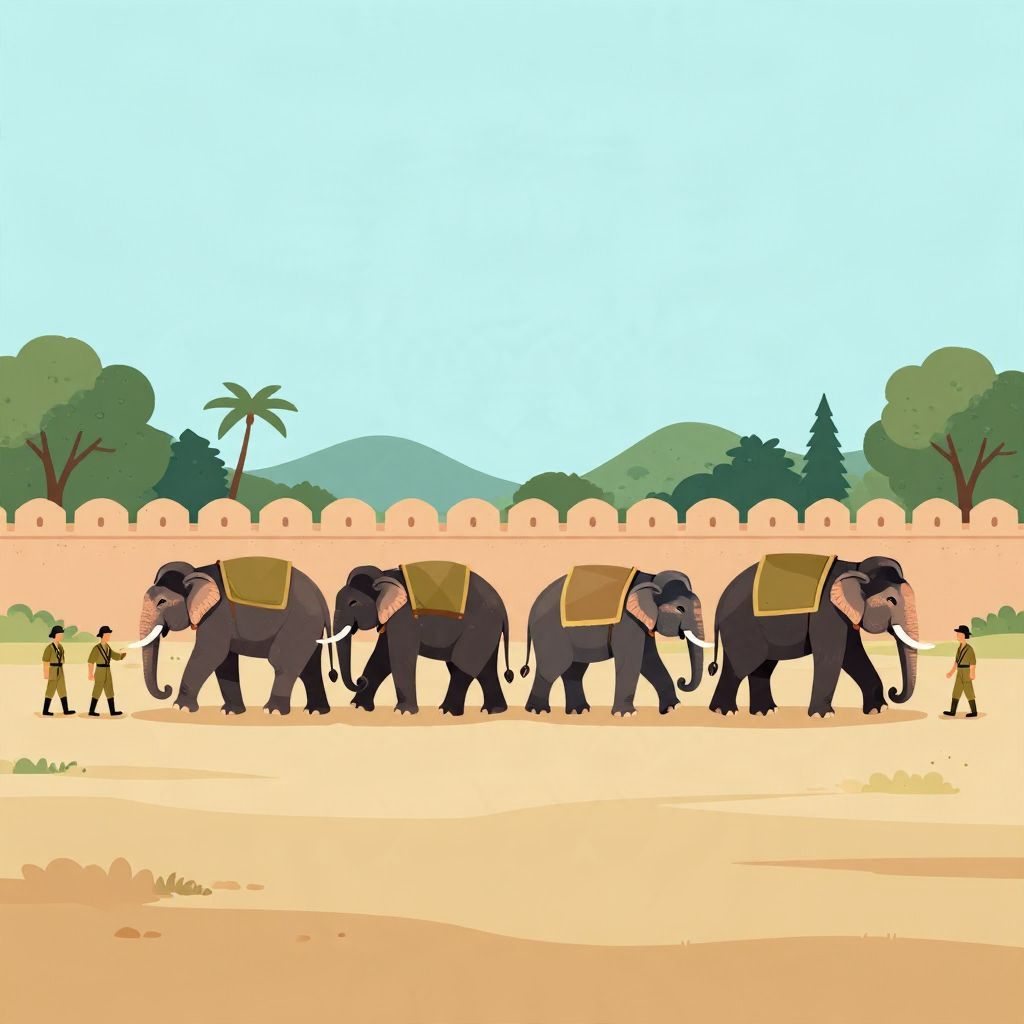
What is an elephant walk? The phrase can mean different things depending on context, but historically it most often refers to a ceremonial or symbolic procession in which elephants are led or paraded, especially in South and Southeast Asian cultures. In modern English, it can also describe a crowded, slow-moving group movement, or appear in military slang for aircraft taxiing in close formation.
Because the term is used in several ways, the best answer depends on whether you mean cultural history, military usage, or everyday speech. Its origins are rooted in older traditions of elephants as powerful animals of state, religion, and spectacle.
What is an elephant walk?
An elephant walk is usually a procession or coordinated movement involving elephants, especially in ceremonial settings. In historical and cultural usage, it often describes a public display of elephants linked to kingship, religion, festivals, or prestige. In modern slang, it can also mean any slow, tightly packed line of people or vehicles.
Where did the idea of an elephant walk come from?
The idea grew from the long historical relationship between humans and elephants in Asia and parts of Africa. For centuries, elephants were not just animals; they were symbols of power, wealth, and sacred authority. When rulers or religious communities led elephants in procession, the event became a visible expression of status and control.
Elephants in ancient and medieval societies
In ancient India, elephants were central to warfare, royal ceremony, and religious imagery. They appeared in court life as living emblems of royal authority and were often decorated for public display. Similar traditions developed in Sri Lanka, Myanmar, Thailand, Cambodia, and other regions where elephants were domesticated or captured for elite use.
These processions were not casual entertainments. They could mark coronations, temple festivals, diplomatic visits, or royal hunts. In many cases, the elephant walk was part of a larger ritual order that linked the ruler to divine favor and social hierarchy.
Religious and symbolic meanings
In Hindu and Buddhist traditions, elephants carried deep symbolic meaning. The elephant was associated with wisdom, strength, memory, and auspiciousness. The god Ganesha, one of the best-known Hindu deities, has an elephant head and is widely revered as a remover of obstacles. In Buddhist art and legend, elephants also appear as signs of spiritual power and royal legitimacy.
Because of these associations, an elephant procession could be more than a display of wealth. It could signal blessings, legitimacy, or the sacred role of a ruler or temple institution. The movement of elephants through streets or temple grounds made those ideas visible to the public.
How was an elephant walk used historically?
Historically, an elephant walk usually meant a formal parade or procession. Elephants might carry royal figures, temple objects, musicians, or attendants. They might be led by handlers on foot, arranged in order, and decorated with cloth, paint, bells, or ornaments. The event emphasized discipline, spectacle, and hierarchy.
Royal processions and court display
In many kingdoms, elephants were part of state ceremony. A ruler riding an elephant projected authority in a way that horses or carts could not. The animal’s size and rarity made it an ideal symbol of command. Processions involving elephants also demonstrated the ruler’s ability to command labor, animal training, and resources.
Such displays were especially important in premodern states, where public ceremony helped communicate political power. A carefully arranged elephant walk could reinforce the idea that the ruler stood above ordinary life and maintained order over both people and nature.
Temple festivals and public religion
Elephant processions also became common in temple festivals. In South India and Sri Lanka, for example, elephants have long played a role in religious pageantry. They may carry sacred images, participate in parades, or stand as honored participants in festival life. The ceremonial movement of the elephants helps transform a religious event into a shared public experience.
These festivals were often tied to seasonal cycles, local patronage, and devotional practice. The elephant walk, in this context, was not merely decorative. It was part of a living religious tradition that blended spectacle, worship, and community identity.
Did the phrase always mean a ceremonial parade?
No. The phrase has broadened over time. In modern English, “elephant walk” can describe any slow, dense, or awkwardly coordinated movement, usually because elephants are associated with heavy, deliberate steps. This figurative use is separate from the older ceremonial sense, though it draws on the same image of elephants moving in formation.
Military slang and modern usage
One modern specialized meaning appears in military aviation, where an “elephant walk” describes a large number of aircraft taxiing closely together before takeoff. The term suggests a long line of big machines moving in a compact, deliberate group, much like elephants in a parade. This usage is modern and technical, not ancient.
Because of this, people sometimes encounter the phrase without any connection to elephants as animals in history or religion. In that context, it is a metaphor for scale, coordination, and mass movement.
Why were elephants so important in history?
Elephants mattered because they were rare, powerful, and difficult to control. Domesticated or trained elephants required specialized knowledge, long-term care, and significant resources. That made them valuable to rulers and elites. Their sheer size also made them useful in war, transport, and ceremonial display.
War, prestige, and administration
Before modern military technology, elephants could be used in battle to intimidate enemies and break formations. Even when their military effectiveness varied, their psychological impact was significant. A ruler who possessed elephants could signal military strength and access to distant trade networks or forest regions where elephants were acquired and trained.
In administration and court culture, elephants also represented the state’s reach. Managing them required keepers, trainers, food supplies, and secure spaces. A ceremonial elephant walk therefore reflected not only tradition but also the organizational capacity of the polity behind it.
How did colonialism and modernity change elephant walks?
European colonial expansion altered many elephant traditions. In some regions, colonial authorities regulated or appropriated royal and religious ceremonies. In others, elephants were increasingly used for logging, transport, or exhibition rather than court ritual. The symbolic role of the elephant did not disappear, but it changed shape under new political and economic conditions.
At the same time, modern nationalism and heritage tourism helped preserve or revive some ceremonial elephant processions. In places such as Thailand and Sri Lanka, elephant festivals and royal pageantry became linked to cultural identity, tradition, and public memory. What had once been a courtly or religious practice could now also function as a heritage performance for local audiences and visitors.
What should readers understand about the term today?
Today, “elephant walk” is best understood as a flexible phrase with layered meanings. Historically, it evokes ceremonial elephant processions tied to kingship, religion, and public spectacle, especially in South and Southeast Asia. In modern usage, it can also mean a slow, crowded movement or a military aircraft formation.
The historical core of the phrase lies in the ancient prestige of elephants themselves. Wherever elephants were trained, displayed, or paraded, they carried meanings far beyond animal movement. They represented authority, sacred order, and the ability of humans to organize nature into ritual and power.
So, if you are asking what an elephant walk is in history, the most accurate answer is this: it is a ceremonial procession involving elephants, rooted in older traditions of royal and religious display, later expanded into figurative and technical modern uses. For readers interested in related topics, the history of elephants in warfare and Hindu festival traditions offer useful context for understanding why elephants became such enduring symbols of power and devotion.