
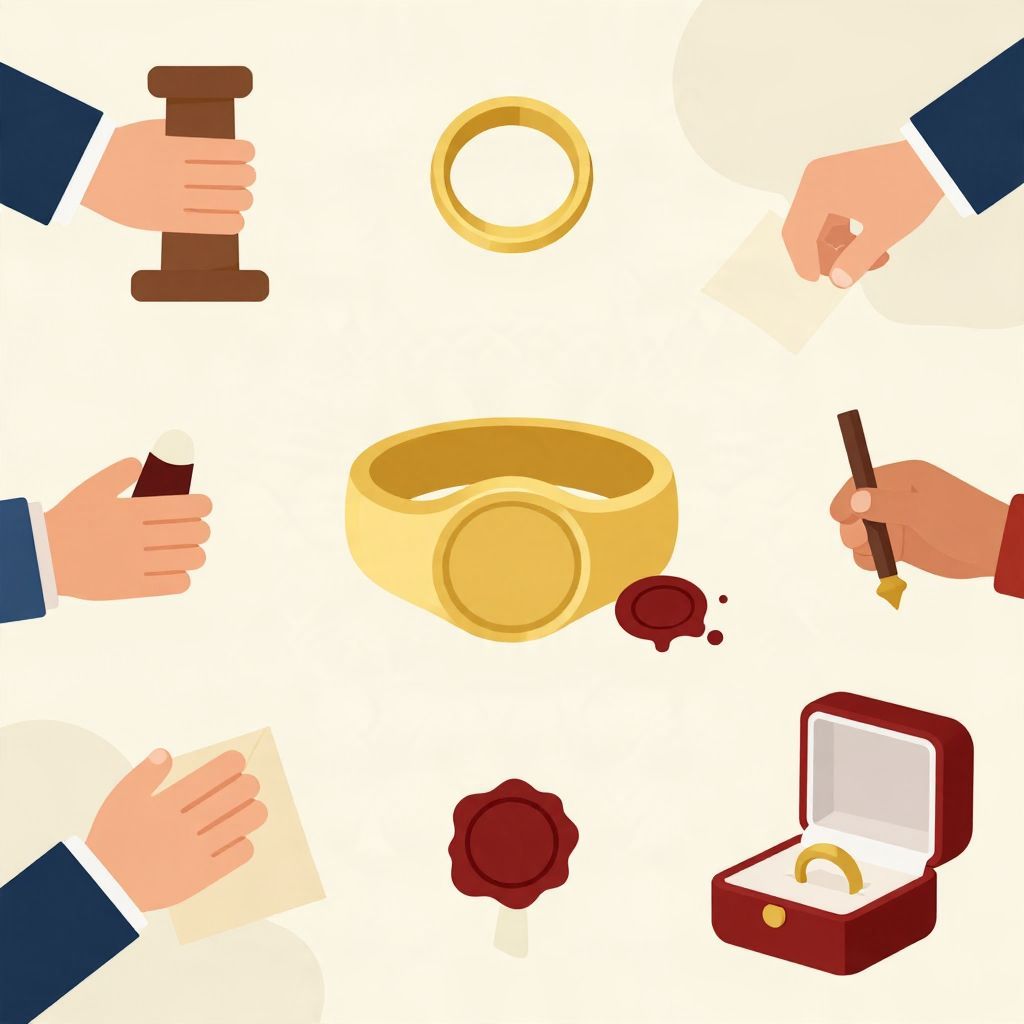
A signet ring is a ring engraved with a unique design—traditionally a family crest, monogram, symbol, or seal—used to mark documents and prove identity. For much of history, it was both a practical tool and a symbol of authority, status, and continuity across generations.
Its story stretches from the ancient Near East to modern ceremonial jewelry. Although today signet rings are often worn for heritage or style, their origins lie in a world where sealing wax, clay, and personal authority mattered deeply in government, trade, and private life.
What Is a Signet Ring?
A signet ring is a ring bearing an engraved face that creates a recognizable impression in wax, clay, or another soft material. Historically, that impression functioned like a signature. The ring identified its owner, authenticated letters or orders, and helped prevent forgery. In many societies, only elites, officials, or trusted household heads possessed one.
The Origins of the Signet Ring
Signet rings emerged from ancient sealing practices in the Near East and Mediterranean world, where rulers, merchants, and administrators needed a reliable way to secure goods and validate messages. The basic idea is very old: instead of writing a name by hand, a person pressed a carved seal into clay or wax to leave a distinctive mark.
Ancient Mesopotamia and Egypt
Long before signet rings became common in Europe, seals were used in Mesopotamia and Egypt. Cylinder seals, especially in Mesopotamia from the 4th millennium BCE onward, were rolled across clay tablets and containers. In Egypt, scarabs and other seal forms served similar purposes. These early seals were not always rings, but they established the principle of personal authentication.
From seals to rings
By the Bronze Age and Iron Age, portable seals set into rings became increasingly practical. A ring was easy to wear, hard to misplace, and immediately associated with its owner. This made it ideal for rulers, officials, and wealthy households. The engraved face could be pressed into wax or clay, creating a repeatable mark that functioned as a personal emblem.
How Did Signet Rings Work in History?
Historically, a signet ring worked by leaving an impression in soft sealing material. The design was usually carved in reverse so that the seal appeared correctly when stamped. The imprint could close a letter, secure a container, or authenticate a legal instrument. Because the pattern was unique, it served as a practical form of identity verification in premodern societies.
Materials and craftsmanship
Signet rings were made from gold, silver, bronze, iron, or other metals, depending on status and period. The engraved face might include a family crest, initials, a religious symbol, or a personal device. Skilled engravers had to cut the design carefully and in reverse, which made the ring a specialized object rather than ordinary jewelry.
Wax, clay, and authority
The seal itself mattered as much as the ring. In medieval and early modern Europe, wax seals on letters, charters, and wills were common. In earlier periods, clay seals were more typical. The seal did not merely close a document; it certified it. In a world with limited literacy and no modern identification systems, the signet ring was a powerful instrument of trust.
Signet Rings in the Ancient World
In classical antiquity, signet rings were widely used by elites across the Greek, Roman, and neighboring worlds. They were associated with citizenship, property, and authority. The ring could authorize transactions, secure correspondence, and reflect a person’s rank or social standing.
Greece and Rome
Greek and Roman signet rings often carried engraved gemstones such as intaglios, where the design was cut into the stone. Romans especially valued rings as markers of status. In the Roman Republic and Empire, the right to wear certain rings could signify citizenship or elite rank, though the exact rules changed over time. The ring was both a tool and a social signal.
Biblical and Near Eastern traditions
Signet imagery appears frequently in ancient Near Eastern and biblical traditions, where seals symbolize authority, legitimacy, and trust. These references reflect a broader historical reality: rulers and officials relied on seals to govern, administer property, and communicate across distance. The symbolic power of the seal often extended beyond its practical use.
Signet Rings in the Middle Ages
In medieval Europe, signet rings became central to aristocratic and administrative life. Kings, bishops, nobles, and some wealthy merchants used them to seal letters and documents. As written administration expanded, the need for reliable authentication grew, and the signet ring remained one of the most important personal instruments of authority.
Royal and noble use
Monarchs often used signet rings alongside larger seals or seal matrices. A royal signet could authorize correspondence or commands in the ruler’s name. Nobles and landowners used their own rings to mark legal papers and manage estates. Because the ring was tied to one person, it could stand in for a handwritten signature in many contexts.
Church and administration
Clerics and administrators also used seals, though the exact forms varied by region and office. In many medieval states, government became increasingly documentary, and seals were essential to bureaucracy. The signet ring fit this world perfectly: it was portable, personal, and difficult to imitate without access to the engraved design.
Security and inheritance
Because a signet ring could authorize documents, it had to be guarded carefully. Losing one could create serious problems, and destroying a ring could symbolize the end of a reign or office. In some families, signet rings were inherited, turning them into objects of memory and continuity as well as authority.
What Did a Signet Ring Mean Socially?
Historically, a signet ring meant more than ownership. It signaled rank, trust, and belonging. It could indicate that a person was entitled to issue orders, manage property, or represent a household or dynasty. In many societies, the ring was a visible sign that the wearer belonged to a governing or privileged class.
Identity and family lineage
Family crests and monograms made signet rings especially important in aristocratic cultures. They linked the wearer to ancestry, inheritance, and social memory. A ring could express not only an individual identity but also a family’s continuity across generations. That is one reason signet rings remained meaningful long after their practical legal role declined.
Masculinity, adulthood, and status
In some periods, signet rings were associated with male adulthood and public authority, though this was not universal. They could mark a young man’s entry into elite society or a family’s trust in him. At the same time, women in some cultures and periods also used seals and rings, especially when they held property or administrative responsibilities.
From Practical Seal to Symbolic Jewelry
As handwriting, printed forms, and modern legal systems developed, the practical need for signet rings gradually diminished. By the 18th and 19th centuries, many people still wore them, but often as heirlooms, fashion pieces, or symbols of family identity rather than essential tools of authentication.
Modern decline of sealing function
Paper-based bureaucracy, standardized signatures, and later official stamps reduced dependence on personal seals. In many places, signet rings ceased to be necessary for legal or commercial life. Yet they did not disappear. Instead, they shifted from everyday instruments of authority to objects of ceremony, memory, and style.
Survival in aristocratic and ceremonial culture
In Britain and parts of Europe, signet rings remained associated with hereditary families, schools, clubs, and institutions. Some are still worn today as markers of tradition. Modern versions may be engraved with initials, crests, or symbols, but they usually carry social or sentimental meaning rather than legal force.
Popular Myths and Common Misunderstandings
One common misconception is that every old ring with an engraving is a signet ring. In fact, a signet ring is defined by its sealing function or its historical connection to that function. Another misunderstanding is that signet rings were always used only by kings or nobles. While elite ownership was common, merchants, officials, and other trusted individuals also used them in many periods.
Not all seals were rings
It is also important to distinguish signet rings from other seals. Many societies used stamp seals, cylinder seals, or seal matrices that were not worn on the finger. The signet ring was one solution among several, valued for portability and personal association. Its form became especially influential because it combined utility with visible status.
Why Signet Rings Still Matter Today
Signet rings matter because they reveal how premodern societies handled identity, trust, and power. Before modern signatures and digital verification, people relied on objects that could be carried, recognized, and guarded. The signet ring was a compact technology of authority, one that linked craftsmanship, law, and social hierarchy.
Today, a signet ring is usually a symbolic heirloom or fashion accessory, but its history preserves a long record of how people authenticated messages and displayed rank. If you want to explore related historical symbols of power and identity, you may also enjoy reading about heraldry in medieval Europe and the history of seals and signatures.