
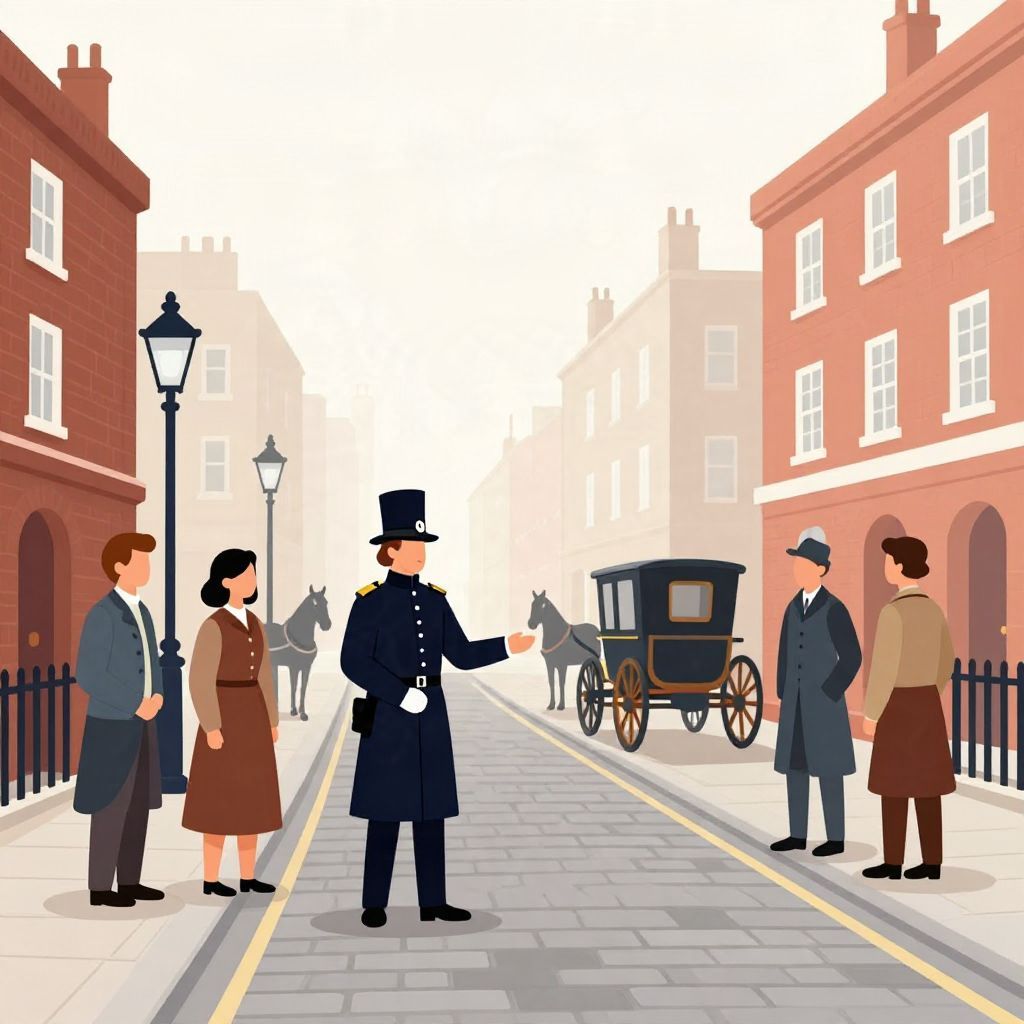
Why are police called cops? The short answer is that “cop” is an old slang term that most likely came from cop meaning “to seize” or “to catch,” especially in British and American criminal slang. Over time, the word became a common nickname for police officers, first in informal speech and later in everyday English.
The history of the term is less dramatic than many folk explanations, but it is a good example of how language changes through street slang, urban policing, and popular culture. The word did not begin as an official title; it emerged as a casual label for people who arrest or apprehend others.
Why Are Police Called Cops?
Police are called “cops” because the word likely developed from the verb to cop, meaning “to seize,” “to catch,” or “to grab.” In the 18th and 19th centuries, this slang was used in Britain and later in the United States, where it gradually came to mean a police officer. The term is informal, not official, and its exact path into common use is not perfectly documented.
The Most Likely Origin: “Cop” as a Verb Meaning “To Seize”
The strongest historical explanation is linguistic rather than institutional. In older English slang, cop could mean to take, capture, or arrest. That sense fits policing naturally: police officers seize suspects, and a “cop” becomes the person who does the seizing.
Language historians generally treat this as the most plausible origin because it appears in British and American slang traditions that predate the modern professional police force. The word was already useful in criminal and street speech before it became a widespread nickname for police.
How slang becomes a police nickname
Slang often begins in narrow social groups and then spreads outward. In this case, the word probably moved from criminal slang and urban speech into broader public use. Once newspapers, popular fiction, and everyday conversation picked it up, “cop” became a familiar shorthand for police officers.
This kind of change was common in the 19th century, when cities grew rapidly and police forces became more visible. As police became a regular part of urban life, people needed quick, informal words for them.
What “Cop” Does Not Most Likely Mean
There are several popular stories about the origin of “cop,” but many are weak or unsupported. The most famous false explanation is that “cop” stands for “constable on patrol.” That sounds neat, but it is a later backronym, not the historical source of the word.
Another common claim is that it comes from copper buttons on police uniforms, especially in Britain. This idea has some surface appeal, but it is generally considered less convincing than the “to seize” explanation. The term “cop” was in use as slang before this uniform-based explanation became popular.
Why the backronym story persists
People often prefer tidy origin stories, especially for everyday words. Acronyms and uniform details are easy to remember, so they spread quickly. But historical language does not always work that way. Many common words evolved gradually, and their origins are messy, regional, and poorly recorded.
How Policing History Helped the Word Spread
The rise of modern police forces in the 18th and 19th centuries helped make “cop” widely recognizable. Before then, law enforcement existed in different forms, but modern professional policing developed as cities expanded and governments tried to manage crime, disorder, and public safety more systematically.
In Britain, the Metropolitan Police was created in 1829 under Sir Robert Peel. In the United States, police departments developed city by city during the 19th century. As these institutions became more visible, slang terms for officers spread more easily through newspapers, theater, and everyday speech.
Urban life and informal language
Large cities encouraged fast-moving slang. People from different regions mixed together, and new words circulated quickly. “Cop” fit this environment well: it was short, sharp, and easy to use in speech. The word’s brevity helped it survive alongside more formal terms like “police officer,” “constable,” or “patrolman.”
British and American Usage of “Cop”
“Cop” became especially common in English-speaking countries, especially the United States and Britain. In both places, it was informal and sometimes slightly disrespectful, though not always strongly insulting. Over time, it became so familiar that many people use it without thinking about its slang origins.
Different regions also developed related expressions. For example, “copper” was used in Britain as a slang term for a police officer, and “cop” and “copper” have often been linked in popular discussion. But the relationship between the two is not simple, and scholars do not treat “cop” as merely a shortened form of “copper.”
Informal word, formal institution
The contrast between the word and the office is important. Police institutions are formal, legal, and bureaucratic. “Cop” is casual, street-level, and rooted in spoken language. That contrast is part of why the term has endured: it captures the everyday, human side of policing rather than the official one.
When Did “Cop” Become Common?
The exact moment “cop” became widespread is difficult to pin down, because slang often appears in speech long before it is written down. By the 19th century, the word was already familiar in English-language urban settings. By the early 20th century, it was firmly established in American English and widely understood in Britain as well.
Its popularity was reinforced by crime fiction, newspapers, vaudeville, film, and later television. Once entertainment media began using “cop” regularly, the word became even more embedded in public language.
From slang to standard casual speech
Many slang words disappear quickly, but “cop” endured because it was useful and widely understood. It was short enough for quick conversation, flexible enough for different contexts, and vivid enough to stick in memory. That combination helped it cross from slang into ordinary informal English.
Related Words and Meanings
The history of “cop” is part of a larger pattern in English, where policing terms often come from older words for catching, guarding, or watching. English has long borrowed and reshaped words to describe law, order, and authority.
- Police comes through French from the Latin politia, meaning civil administration or public order.
- Constable is much older and originally referred to a high-ranking officer in medieval contexts before becoming a local law-enforcement title.
- Cop is informal slang, probably tied to the idea of seizing or arresting.
These different words reflect different layers of history: medieval authority, early modern administration, and modern urban policing.
Why the Word Still Matters Today
“Cop” remains one of the most recognizable slang terms in English for a police officer. It appears in conversation, journalism, film, music, and literature. Because it is so common, people often assume it has an obvious official origin, but its real history is rooted in informal speech and gradual change.
The word also shows how language can preserve social attitudes. Depending on tone and context, “cop” can sound friendly, neutral, or critical. That flexibility is one reason it has lasted for so long.
Common Myths About the Word “Cop”
Several explanations are repeated so often that they can sound true, even when they are not well supported. The most common myths include:
- “Cop” stands for “constable on patrol.” This is a backronym, not the original source.
- It comes from copper buttons on uniforms. This is possible as a folk explanation, but it is not the strongest historical account.
- It was invented by police departments. There is no good evidence for that. It began as slang, not an official term.
The best historical answer remains the simplest: “cop” most likely grew from a slang verb meaning to seize or catch, and later became a nickname for police officers.
The Historical Takeaway
Police are called “cops” because English slang turned a word meaning “to seize” into a nickname for the people who arrest others. The term spread through British and American urban life in the 19th century and survived because it was short, vivid, and easy to use. For more on the broader history of law enforcement and public order, see what a police state is and the history behind the upside-down American flag.