
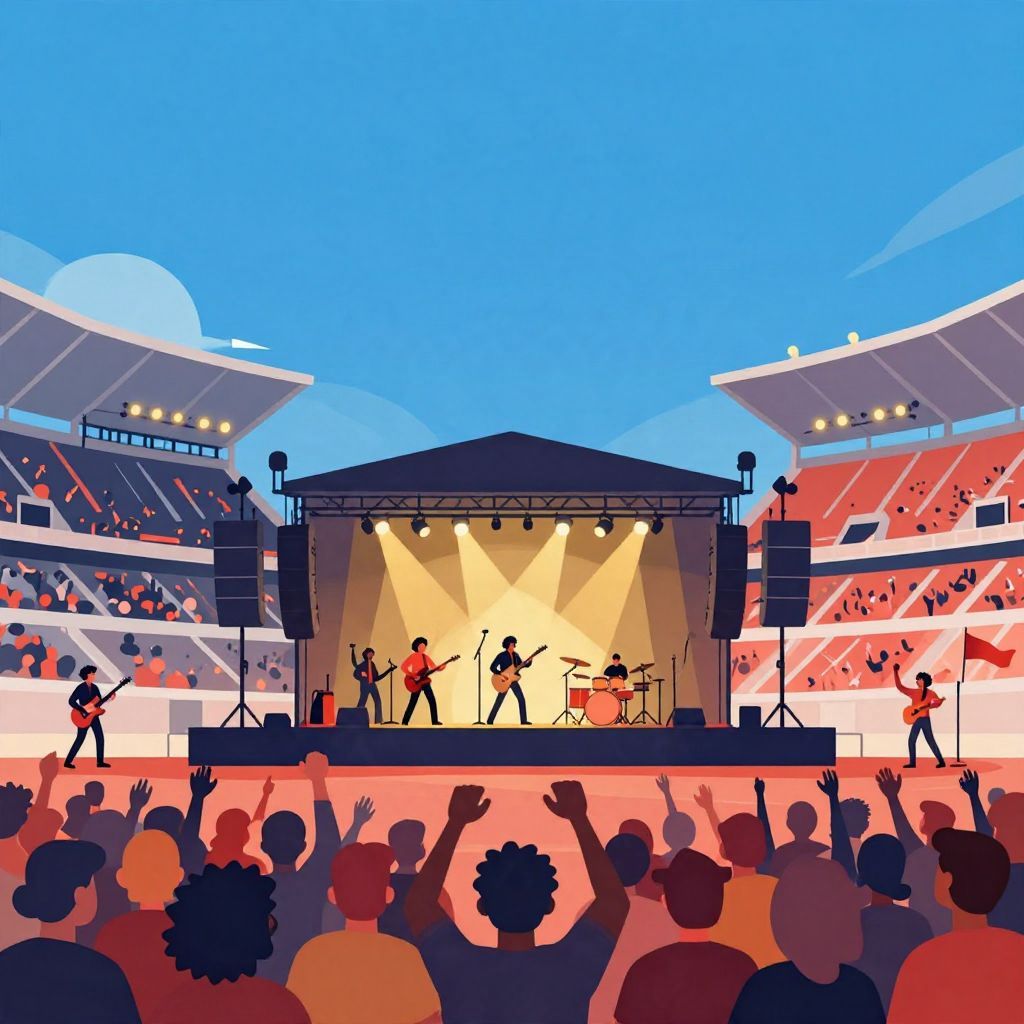
Live Aid was held in 1985, and the main concerts took place on 13 July 1985. It was a landmark global charity event organized to raise money for famine relief in Ethiopia, bringing together some of the biggest names in popular music on two continents at once.
The question “What year was Live Aid?” is often asked because the event became one of the defining cultural moments of the 1980s. Its scale, live satellite broadcast, and humanitarian purpose made it far more than a concert: it was a worldwide media event with lasting historical significance.
What year was Live Aid?
Live Aid took place in 1985, on 13 July 1985. The benefit concerts were held simultaneously at Wembley Stadium in London and John F. Kennedy Stadium in Philadelphia, with television and radio coverage reaching audiences around the world. The event was organized to raise funds for famine relief in Ethiopia and became one of the most famous charity concerts in history.
Why Live Aid happened in 1985
Live Aid emerged from a humanitarian crisis and a moment of intense public concern. In the early 1980s, Ethiopia was suffering from a devastating famine made worse by drought, war, displacement, and political instability. Television images of starvation shocked viewers in Britain, the United States, and beyond, helping create a surge of public pressure for action.
The event grew out of earlier musical fundraising efforts. In late 1984, Bob Geldof and Midge Ure organized Band Aid, which recorded “Do They Know It’s Christmas?” to raise money for famine relief. The success of that single helped inspire an even larger idea: a live, transatlantic concert that could mobilize global audiences in real time.
From Band Aid to Live Aid
Band Aid was a studio project, but Live Aid was designed as a spectacle of live performance and mass broadcasting. Its purpose was not only to raise money, but also to keep famine relief in the public eye. The choice of 1985 reflected both urgency and opportunity: the crisis was ongoing, and satellite television made a synchronized international event possible on an unprecedented scale.
Live Aid date and timeline
The core Live Aid concerts were held on Saturday, 13 July 1985. The timing was carefully planned so that performances in London and Philadelphia could be broadcast across time zones with minimal delay. The event ran for many hours, creating one of the longest and most ambitious live music broadcasts ever attempted.
Key moments in the timeline
- Late 1984: Band Aid is formed and records “Do They Know It’s Christmas?”
- Early 1985: Plans develop for a larger international concert.
- 13 July 1985: Live Aid takes place in London and Philadelphia.
- After July 1985: Fundraising and humanitarian debate continue, with attention focused on famine relief and aid delivery.
The event’s timeline matters because Live Aid was not a single local concert but a coordinated global broadcast. The staging, artist lineups, and satellite links all depended on careful planning. That technical achievement was part of what made the year 1985 historically important for popular culture and media history.
Where Live Aid was held
Live Aid was staged in two major venues: Wembley Stadium in London and John F. Kennedy Stadium in Philadelphia. These locations symbolized the event’s transatlantic reach. London connected the concert to the British charity movement that had launched Band Aid, while Philadelphia gave the event a major American platform.
There were also broadcasts and viewings in many other countries. The event depended on international television networks and satellite technology, which allowed viewers to watch performances from both stadiums as part of one shared global program. In historical terms, this was a major milestone in live mass communication.
Who organized Live Aid?
The most closely associated organizer was Bob Geldof, the Irish musician and activist who became the public face of the campaign. Midge Ure also played a crucial role in the original Band Aid project and in the broader effort to turn concern into action. Many other musicians, broadcasters, promoters, and technicians helped make the event possible.
Live Aid was not the work of one person alone. Its success depended on collaboration across the music industry, media organizations, and charitable networks. That cooperation was unusual on such a scale and helped make 1985 a turning point in the relationship between entertainment and humanitarian activism.
What happened during Live Aid?
Live Aid featured a long sequence of performances by major artists from the 1980s music scene. The concerts were designed to maintain momentum throughout the day, with acts alternating between the two venues. The event became famous not just for its charitable purpose, but for several memorable performances that entered popular memory.
Notable performances
- Queen delivered one of the most celebrated sets of the day at Wembley.
- U2 gained wider international attention through their performance.
- David Bowie, Elton John, Madonna, Paul McCartney, and many others appeared on the bill.
- At Philadelphia, artists such as Phil Collins performed and helped tie the two venues together.
Some performances became iconic because they were broadcast live to enormous audiences, creating a sense of shared cultural experience. This was one reason Live Aid became more than a fundraiser. It was also a defining moment in the history of televised music and celebrity culture.
How much money did Live Aid raise?
Live Aid raised a very large sum for famine relief, though exact totals varied depending on how the money was counted and when later donations were included. Contemporary reporting often cited tens of millions of pounds or dollars, and the broader fundraising campaign associated with Live Aid and related efforts brought in even more over time.
It is important to be careful with the figures. Different sources and accounting methods can produce different totals, especially when donations, ticket sales, broadcast contributions, and later transfers are considered. What is historically clear is that the event generated an extraordinary amount of money and attention for famine relief.
Historical significance of Live Aid
Live Aid mattered because it showed how global media could be used for humanitarian campaigning on a massive scale. In 1985, the event demonstrated that pop music, television, and charity could be linked in a way that reached millions of people almost instantly. It helped shape later benefit concerts and large-scale advocacy campaigns.
Its significance also lies in the way it changed public expectations. After Live Aid, audiences increasingly saw musicians and celebrities as potential agents of political or humanitarian influence. That development has had both praise and criticism. Supporters view Live Aid as a powerful example of global solidarity; critics have questioned whether celebrity-driven aid can oversimplify complex crises.
Positive legacy and criticism
Live Aid is often remembered for its generosity and ambition, but historians and commentators have also debated its limitations. Some have argued that it raised awareness effectively but did not fully address the political and economic causes of famine. Others note that the event helped normalize large-scale public fundraising and brought African suffering into global discussion, even if imperfectly.
The historical value of Live Aid lies partly in that tension. It was both a remarkable act of mobilization and a product of its time, shaped by 1980s media, politics, and ideas about aid. Understanding both the achievements and the criticisms gives a more accurate picture of why 1985 mattered.
Live Aid in the wider 1980s context
Live Aid belongs to a decade marked by expanding global media, rising celebrity activism, and growing awareness of international humanitarian crises. The 1980s also saw major debates over development, debt, Cold War politics, and the role of Western aid in Africa. Live Aid did not solve those issues, but it reflected a new willingness to use popular culture as a response to them.
The event also showed how quickly a cause could become global when supported by television and music stars. In that sense, Live Aid was a product of the age of satellite broadcasting, but it also helped define that age. It remains one of the clearest examples of a concert becoming a historical event.
Quick facts about Live Aid
- Year: 1985
- Main date: 13 July 1985
- Locations: Wembley Stadium, London, and John F. Kennedy Stadium, Philadelphia
- Purpose: Famine relief for Ethiopia
- Key figures: Bob Geldof and Midge Ure
- Format: Simultaneous live charity concerts broadcast internationally
Conclusion
Live Aid was in 1985, with the main concerts held on 13 July 1985. It was a landmark event in music, broadcasting, and humanitarian activism, remembered for its ambition, its massive audience, and its attempt to turn popular culture into direct relief for a global crisis. For readers interested in related 1980s history, you may also enjoy exploring other major cultural and political events of the decade.