
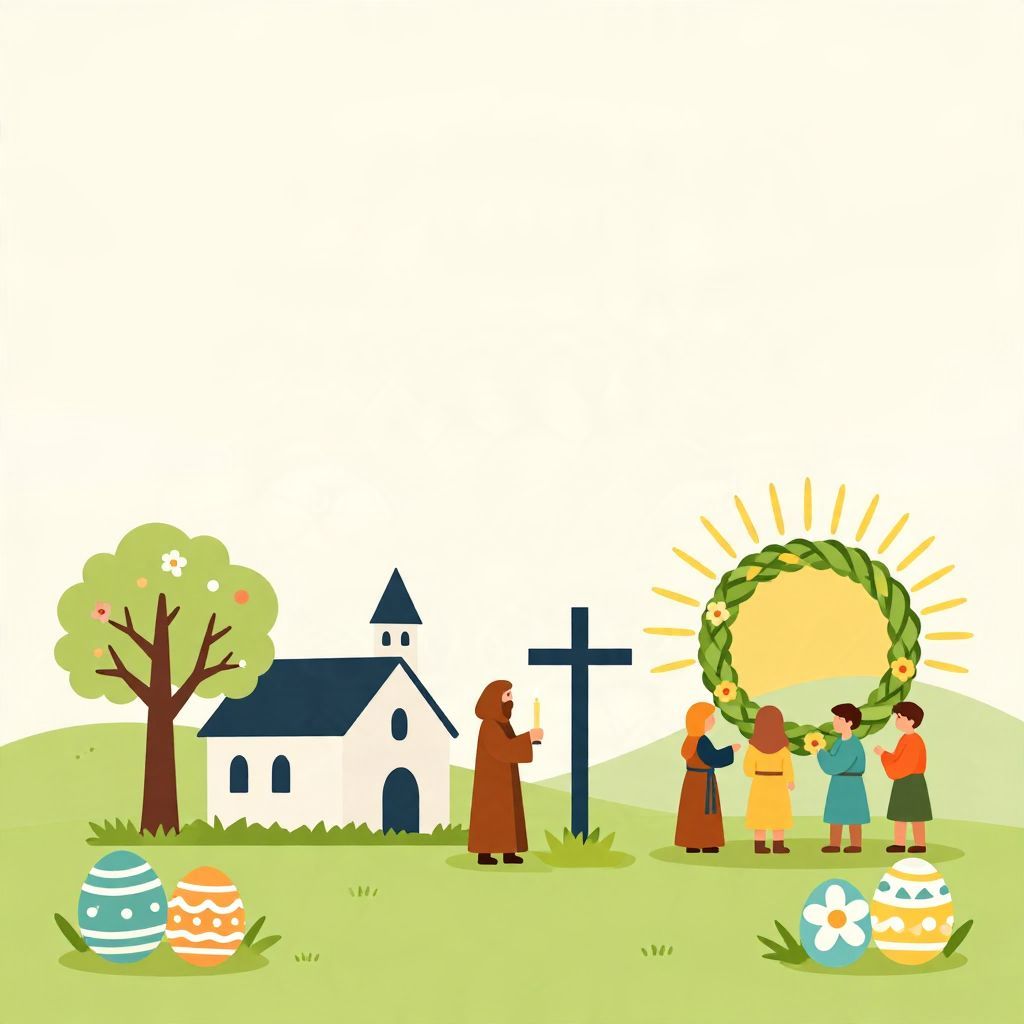
Easter is called Easter because the English name likely comes from an old Germanic springtime word associated with the dawn, the east, and a seasonal goddess or festival. That explanation is widely repeated, but the historical evidence is limited. What is clear is that the Christian feast itself developed separately from the name, which varies across languages and was shaped by late ancient and medieval history.
So the answer is not simple: the holiday’s meaning comes from Christianity, while its English name probably reflects older pre-Christian language and seasonal customs.
Why Is Easter Called Easter?
The most likely reason Easter is called Easter is that English inherited the word from an older Germanic term, probably linked to Eostre or Ēastre, a springtime figure or festival associated with dawn and renewal. However, the evidence is thin. The Christian celebration of Jesus’ resurrection did not originate from that word; it adopted an existing seasonal name in English-speaking lands.
The strongest historical clue: Bede
The main early source is the Anglo-Saxon scholar Bede, writing in the early 8th century. He said that the month roughly corresponding to April was called Eosturmonath and that it had once been named after a goddess called Eostre. He also noted that Christians later used the same month name for their feast. That is the foundation of the common explanation, but it is only one text, and no other early source confirms the goddess in detail.
What historians can and cannot prove
Historians generally agree that the English word Easter is Germanic in origin. What remains uncertain is whether it truly comes from a pagan goddess, from a broader spring festival, or from a word connected to the east and sunrise. Because the evidence is sparse, scholars treat the goddess explanation as plausible but not fully proven. In other words, the name is old; the precise origin is debated.
The Christian holiday came first in meaning, not in name
Easter as a Christian feast developed from the earliest centuries of Christianity to commemorate the resurrection of Jesus. Its religious meaning was established long before English speakers used the word Easter. In most of the Christian world, the feast is called something derived from Pascha, the Greek and Latin form of Passover, showing that the holiday’s core identity was tied to the biblical story, not to a pagan spring festival.
Pascha and the Jewish Passover connection
The earliest Christians were Jews or lived in Jewish communities, and Jesus’ death and resurrection were understood in relation to Passover. That is why many languages still use forms of Pascha: for example, Pâques in French, Pasqua in Italian, and Pasen in Dutch. These names reflect the holiday’s biblical and liturgical roots. English is unusual in preserving a different name.
Why English is different
English became Christian in a Germanic-speaking environment, and its vocabulary often preserved older local terms even as Christian belief spread. So instead of replacing the spring festival word with Pascha, English kept the inherited seasonal name for the new Christian feast. This is why the same holiday has one name in English and another in much of Europe.
The likely origins of the word “Easter”
There are three main historical explanations for the English name, and they are not equally well supported. The first is the goddess theory, the second is a dawn or east theory, and the third is that the word simply came from a local spring month name that already existed before Christianity. The evidence overlaps, which is why the question remains open.
1. A goddess named Eostre
Bede’s account is the reason many people connect Easter with a goddess named Eostre. According to him, the month was named after her. Some later writers expanded this into a full pagan fertility cult, but those later claims are much less reliable. Modern historians usually stop short of saying there is firm proof of a widespread cult. Bede may have preserved a genuine local tradition, but we cannot verify it independently.
2. A word related to dawn or the east
Some scholars suggest the word may be related to Germanic terms for the east or the dawn. This is attractive because Easter is a spring festival, and sunrise imagery fits the Christian symbolism of resurrection and new life. Still, linguistic connections are not always straightforward, and this explanation is not universally accepted. It remains a scholarly possibility rather than a settled fact.
3. A pre-Christian seasonal month name
Another possibility is that Easter began as a name for a spring month or season, not necessarily for a deity. In this view, Christians simply adapted a familiar local term for the feast that fell in that season. This would explain why the English word survived while the Christian meaning became dominant. It also fits a common pattern in history: older seasonal language often persists after religious change.
How the date of Easter shaped the name and the celebration
The name of Easter is only part of the story. The holiday’s timing also reflects ancient debates in the church. Early Christians disagreed about whether to celebrate on the same date as Passover or on a Sunday after it. By the 4th century, church authorities sought greater uniformity, and the feast became tied to a movable Sunday date in the spring.
From Passover season to a movable feast
Easter is not fixed to a single calendar day because it is calculated by the lunar and solar cycles. In Western Christianity, it falls on the first Sunday after the first full moon following the spring equinox, though the exact ecclesiastical calculation is more technical than the simple formula suggests. This movable date helped reinforce Easter’s identity as a spring festival, which may have made older seasonal names feel natural in English.
Why spring mattered in the ancient world
Spring was a powerful season in many premodern societies. It marked the return of light, the end of winter hardship, and the beginning of agricultural renewal. Christian Easter was not a pagan harvest festival, but it arrived in a season already rich with symbolic meaning. That made it easier for older words and customs to survive alongside the new religious feast.
Did pagan customs become part of Easter?
Popular culture often says Easter is simply a Christianized pagan holiday. That is too neat. Some spring customs were absorbed into local Christian practice over time, but the resurrection feast itself came from early Christianity, not from pagan worship. The name may have older roots, yet the holiday’s central meaning is unmistakably Christian.
What is well supported
- The Christian feast of Easter developed from the earliest centuries of Christianity.
- The English name is Germanic, unlike the Latin and Greek Pascha tradition.
- Bede is the key early source linking the month name to Eostre.
- Spring customs often blended with Christian observance in medieval Europe.
What is often overstated
- That Easter was originally a pagan fertility festival in its Christian form.
- That historians have proven a major goddess cult behind the name.
- That every Easter custom comes directly from pre-Christian religion.
Why the English name survived when other languages changed
Language history often preserves older layers that religion later transforms. In English, the word for the feast stayed local, while Christian theology gave it new meaning. In Romance and many other European languages, the church’s inherited term Pascha remained dominant. This difference shows how Christianity spread through existing cultures rather than erasing them completely.
English and Germanic tradition
English belongs to the Germanic language family, and Germanic-speaking regions often retained local seasonal vocabulary. The German word Ostern is also commonly linked to the same root as English Easter. That suggests the name was not a uniquely English invention but part of a wider Germanic naming pattern.
Christianity and cultural adaptation
As Christianity expanded across Europe, it did not always replace local words and customs. Instead, it often reinterpreted them. Easter is a good example: a Christian feast with Jewish roots was celebrated using a Germanic seasonal name in parts of northern Europe. The result is a holiday whose theology, date, and name come from different historical layers.
So what is the best historical answer?
The best historical answer to “Why is Easter called Easter?” is that the English name probably comes from an old Germanic spring word, possibly linked to a goddess named Eostre, the dawn, or the east. But the Christian holiday itself originated independently as the celebration of Jesus’ resurrection and was widely called Pascha elsewhere. The name and the feast have different histories.
That distinction matters. It shows how language, religion, and seasonal custom can overlap without having the same origin. Easter is called Easter because English preserved an older springtime word, even as Christianity gave that word a new and enduring meaning. If you want to explore the holiday’s timing next, see why Easter is different every year and why Easter changes dates.