
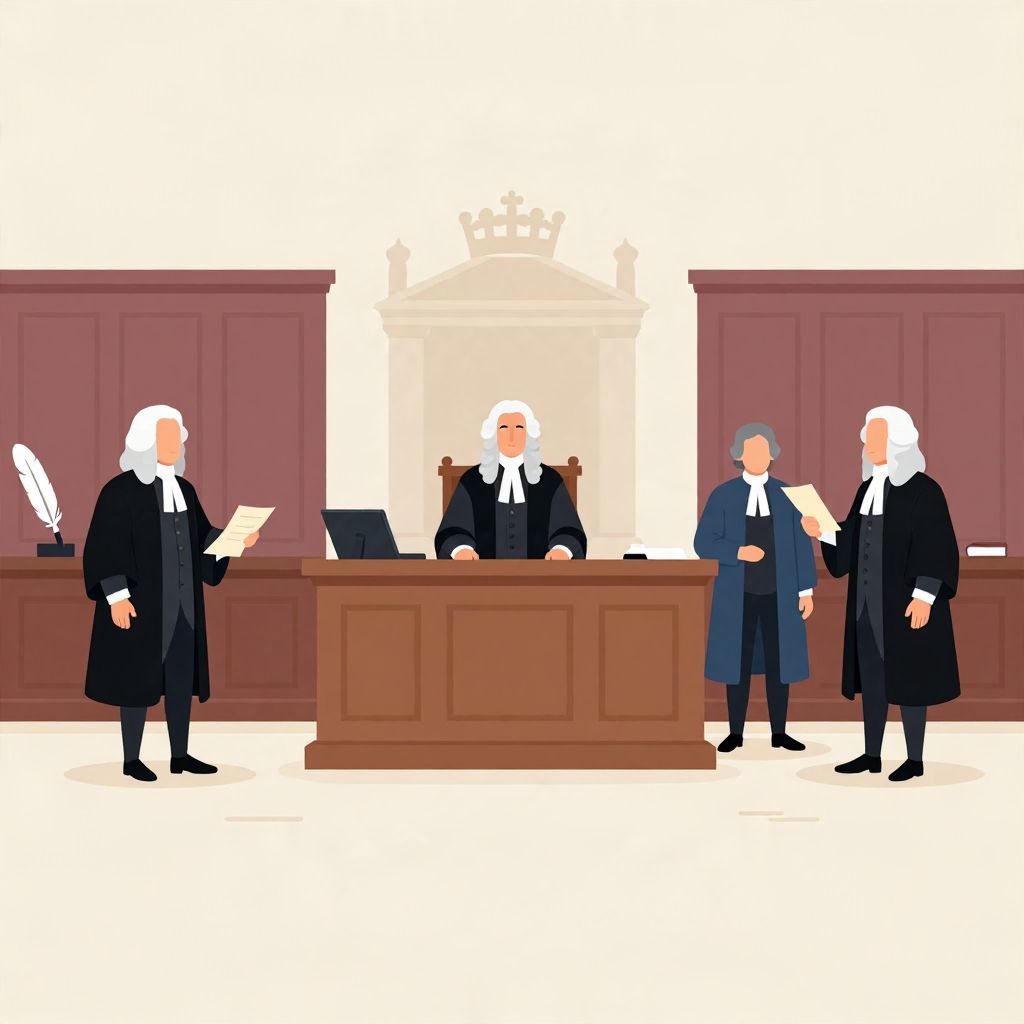
Why do British lawyers wear wigs? The short answer is that wigs became a symbol of professional respectability in seventeenth-century Britain and then survived long after everyday fashion changed. What began as a practical and fashionable accessory for elite men gradually turned into a visible marker of legal authority, continuity, and tradition.
Today, the wig is less about comfort or necessity than about ceremony and identity. In British courts it helps signal that the person speaking is acting in a formal legal role, not as an ordinary private individual.
Why do British lawyers wear wigs?
British lawyers wear wigs because the practice began as fashionable dress in the 1600s and became part of court costume. When ordinary people stopped wearing wigs, judges and barristers kept them, turning a once-common style into a lasting symbol of legal formality, neutrality, and continuity with the past.
How wigs entered British law
The legal wig did not begin as a uniquely legal invention. It came from broader European fashion in the seventeenth century, when wigs or perukes became popular among aristocratic and professional men. In England, lawyers adopted them as part of respectable dress, especially after the Restoration of 1660, when courtly style became more elaborate and visible.
From fashion to professional uniform
In the late seventeenth century, lawyers in England increasingly wore robes, bands, and wigs as part of a disciplined court appearance. This was not yet a rigid uniform in the modern sense, but it helped distinguish legal professionals from laypeople. Over time, the wig became associated with seriousness, learning, and the authority of the courts.
By the early eighteenth century, wigs were no longer just fashionable. They had become conventional legal attire, especially for barristers and judges. The legal profession is often conservative in dress, and once the wig was established, it remained in place even after it disappeared from ordinary society.
The historical causes behind the wig tradition
1. Seventeenth-century elite fashion
Wigs became fashionable across Europe in the mid-1600s, partly because they signaled status and partly because they could cover hair loss. The French court, especially under Louis XIV, helped popularize elaborate wigs, and English elites followed. Lawyers, who wanted to present themselves as educated gentlemen, adopted the style as part of their professional image.
2. Restoration-era court culture
After the monarchy was restored in 1660, English public life became more ceremonial. Clothing mattered more in marking rank and office. The courts of law, like the royal court, developed a visual language of authority. Wigs fit that world because they looked formal, controlled, and dignified.
3. The desire for continuity and impersonality
Law depends on precedent, procedure, and the idea that the court stands above individual personalities. The wig helped create that effect. It made the barrister appear less like a private citizen and more like a representative of the legal system. In that sense, the wig became a symbol of impersonality and institutional continuity.
4. Tradition outlasting fashion
By the eighteenth and nineteenth centuries, wigs had largely disappeared from everyday male dress in Britain. But legal institutions are slow to change. Once the wig had become associated with the courts, it was preserved as a marker of tradition. What had once been ordinary fashion turned into a ceremonial relic.
What kind of wigs do British lawyers wear?
The wigs worn in British courts are not the large, full-bottomed styles often imagined in popular culture, except in some historical depictions and ceremonial settings. Modern barristers usually wear a shorter horsehair wig with curls and a close fit. Judges in certain courts may wear fuller versions, depending on the court, the occasion, and the jurisdiction.
Barristers and judges
- Barristers generally wear wigs in court for many types of hearings.
- Judges may wear wigs, though practice varies by court and formality.
- Solicitors traditionally did not wear wigs in the same way barristers did, because their role developed differently.
The exact rules have changed over time, and modern practice is less uniform than it once was. In some family, civil, and criminal contexts, wig-wearing has been reduced or abandoned. Still, the wig remains one of the most recognizable symbols of the British legal profession.
Why the tradition survived after wigs left everyday life
The wig survived because legal culture values visible continuity. Courts often preserve older forms of dress to emphasize stability, seriousness, and respect for the law. When fashion changed in the wider world during the eighteenth century, lawyers did not abandon the wig because it had already acquired a meaning beyond style.
A symbol of authority
To many people in the eighteenth and nineteenth centuries, a wig suggested expertise and rank. It also helped create a formal atmosphere in court. Even today, supporters argue that the wig reminds everyone that the legal process is bigger than any one person.
A symbol of anonymity and role
Some historians and legal commentators have noted that the wig can reduce the sense of individual personality in the courtroom. That does not mean it makes lawyers anonymous in a literal sense, but it does encourage the idea that they are performing a public role. The costume tells the audience that the law is being administered through office, not personal identity.
Did British lawyers always wear wigs?
No. The wig tradition has a specific history. It emerged in the seventeenth century and became established in the eighteenth. Before that, English lawyers did not wear the same style as a fixed professional requirement. The wig is therefore not an ancient medieval custom, even though it often looks that way to modern observers.
It is also important not to confuse legal wigs with other legal dress. Robes, collars, and bands have their own histories. Together, these items created the visual language of the English and later British courts, but each element developed at a different time.
Myths and misunderstandings about legal wigs
“They wear wigs to hide lice”
This is a popular explanation, but it is too simple. Hygiene concerns may have made wigs practical for some people, and powdered wigs could be easier to maintain than natural hair in an age before modern washing. However, the legal wig tradition is mainly about fashion, status, and institutional symbolism, not a single medical reason.
“They are a medieval tradition”
That is also misleading. The practice is early modern, not medieval. British lawyers began wearing wigs in the seventeenth century, long after the Middle Ages. The older the tradition seems, the more likely it is to be associated with medieval ceremony, but the historical record points to a later origin.
“All British lawyers still wear them all the time”
Not exactly. Wig use has declined in some courts and settings, and practice differs across the UK and across types of proceedings. The tradition remains strongest in more formal legal contexts, especially in England and Wales, but it is not universal in every courtroom situation.
How the tradition changed over time
The history of British legal wigs is a story of adaptation. The wig entered law as fashionable dress, became a sign of professional respectability, and then survived as a ceremonial relic. Its meaning shifted from fashion to symbolism, from novelty to tradition.
- Mid-1600s: Wigs become fashionable among elites in Britain and Europe.
- Late 1600s: Lawyers adopt wigs as part of formal court dress.
- 1700s: The wig becomes established legal costume.
- 1800s: Everyday fashion changes, but legal wigs remain.
- 1900s to present: Wig use is reduced in some settings, but it survives as a tradition in parts of the British legal system.
Why the wig still matters
Even where it is no longer strictly necessary, the wig remains historically significant because it reflects how institutions preserve symbols long after their original purpose has faded. British lawyers wear wigs not because modern law requires them for practical reasons, but because the legal profession has chosen to keep a visible link to its past.
That makes the wig both an artifact and a message: law is meant to appear orderly, stable, and separate from everyday life. If you want to explore more about British legal customs and court traditions, related topics such as the history of British judges’ robes and how the English legal system developed offer useful context.