
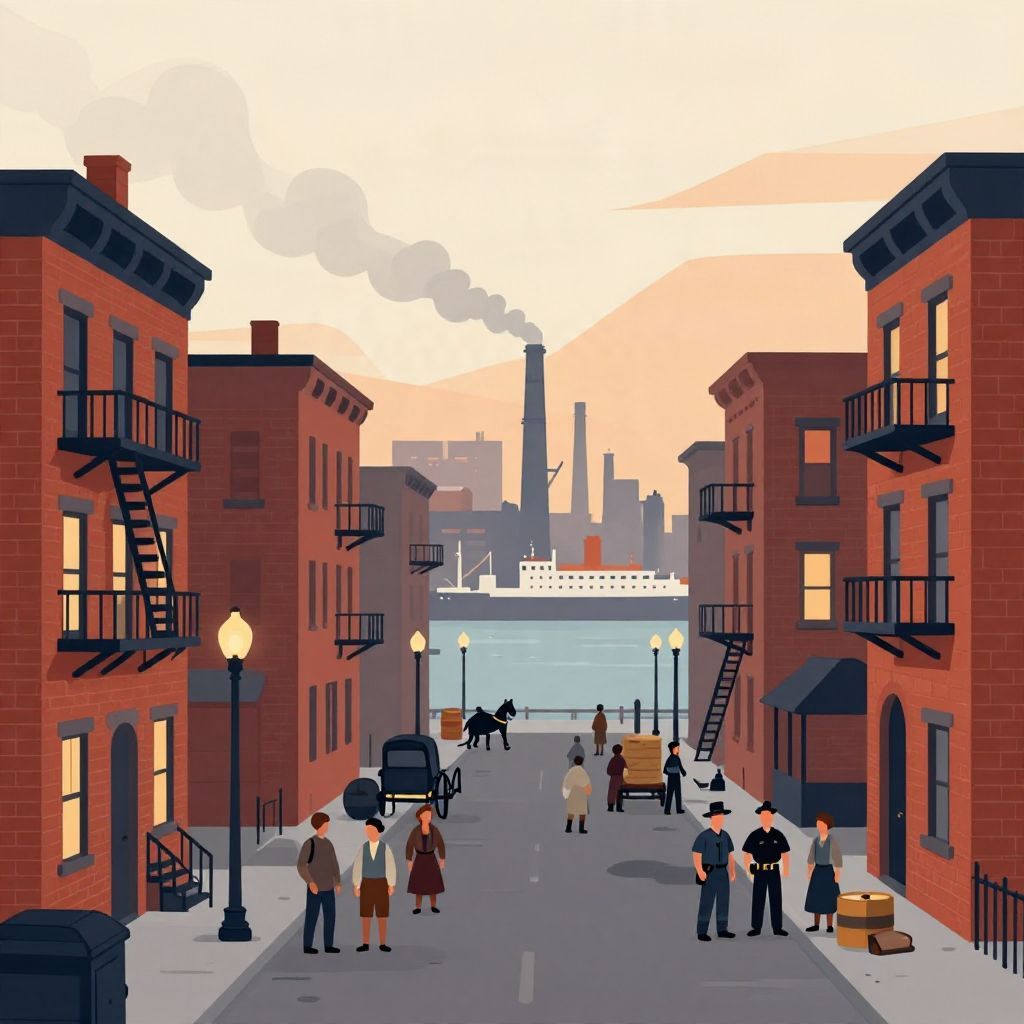
Why is it called Hell’s Kitchen? The short answer is that the name grew out of 19th-century slang for a rough, crowded part of New York City on the West Side of Manhattan. Over time, the label stuck to a neighborhood that was associated with poverty, tenements, gangs, and hard living.
The exact origin of the phrase is debated, but historians generally agree that it emerged in the late 1800s and became attached to the area through local speech, newspaper usage, and popular storytelling. What began as a colorful nickname eventually became the official identity of one of Manhattan’s best-known neighborhoods.
Why is it called Hell’s Kitchen?
Hell’s Kitchen is called that because the area earned a reputation in the late 19th century as a violent, impoverished, and disorderly neighborhood. The name likely began as slang and was reinforced by journalists and residents. There is no single proven inventor of the phrase, but the nickname reflected the district’s tough social conditions.
The historical origins of the name
The name Hell’s Kitchen is usually traced to the 1870s or 1880s, when the neighborhood west of Midtown Manhattan was densely packed with tenements, laborers, saloons, and street gangs. At that time, the area was far from the polished commercial district it is today. It was a working-class zone shaped by immigration, unstable housing, and urban poverty.
Where the nickname may have come from
Several explanations have circulated, and not all of them can be proven. The most widely repeated story links the name to a police officer nicknamed “Dutch Fred” who allegedly described the area as “hell’s kitchen” because of its disorder. That story is popular, but historians treat it cautiously because it is difficult to verify from surviving evidence.
Another explanation is simpler: the name may have developed gradually as a vivid phrase used by residents, reporters, and outsiders to describe a neighborhood seen as dangerous and hard to control. In this view, “hell” was a common 19th-century metaphor for misery, noise, and crime, while “kitchen” may have been added to suggest a hot, chaotic, overworked place.
Why the phrase made sense in the 19th century
New York in the post-Civil War era was growing rapidly. Immigrants arrived in large numbers, jobs were unstable, and housing often lagged behind population growth. On the West Side, especially around the blocks that later became known as Hell’s Kitchen, crowded tenements and rough street life created a setting where sensational nicknames flourished.
In that context, the name was not unusual. American cities often developed nicknames for districts based on reputation rather than official boundaries. “Hell’s Kitchen” was one of many such labels, but it endured because it was memorable and because the neighborhood’s image matched the phrase.
The neighborhood’s reputation and social conditions
To understand why the name stuck, it helps to look at the neighborhood’s history. Hell’s Kitchen was long associated with dockworkers, railroad laborers, immigrants, and the urban poor. Its location near the Hudson River and the west-side piers made it a working district rather than an elite one. That economic role helped shape its identity.
Immigration, tenements, and crowding
During the late 19th century, many newcomers to New York settled in dense neighborhoods where rent was cheaper and work was nearby. Housing was often overcrowded and poorly ventilated. Such conditions did not create the nickname by themselves, but they contributed to the area’s rough reputation. In many urban neighborhoods of the period, poverty and crowding were closely linked in the public imagination with vice and disorder.
Crime, gangs, and public perception
Like many working-class districts in industrial cities, Hell’s Kitchen was associated with street violence and gang activity. That reputation was amplified by newspapers, which often highlighted sensational stories. The press played a major role in turning local slang into a lasting place name. Once a neighborhood was described repeatedly as a dangerous place, the label could become self-reinforcing.
It is important, however, not to flatten the neighborhood into a stereotype. Hell’s Kitchen was also home to families, workers, churches, mutual aid networks, and everyday community life. The name captured a reputation, not the full reality.
How Hell’s Kitchen became an official neighborhood name
What began as a nickname eventually became a recognized geographic label. By the early 20th century, “Hell’s Kitchen” was widely used in newspapers, city discussions, and everyday speech. Even as the neighborhood changed, the name remained attached to the area west of Midtown, roughly from 34th Street to 59th Street and from Eighth Avenue to the Hudson River, though exact boundaries have varied over time.
Urban change and persistence of the name
As Manhattan developed, the neighborhood’s character shifted. Rail yards, warehouses, and industrial uses coexisted with apartment buildings and local businesses. Later, the construction of infrastructure and the growth of Midtown altered the district again. Yet the nickname survived because it had already entered common usage and because it carried a strong sense of place.
By the later 20th century, Hell’s Kitchen was increasingly associated not only with its rough past but also with theater workers, restaurants, LGBTQ community life, and urban renewal. The name remained, even as the neighborhood’s social meaning evolved.
Popular legends versus historical evidence
Because the phrase is vivid, many stories have tried to explain it. Some are plausible; others are more legend than fact. The historical record supports the broad idea that the name came from the neighborhood’s rough reputation, but it does not support every colorful tale attached to it.
The “Dutch Fred” story
The best-known anecdote says that a police officer or local figure named Dutch Fred used the phrase to describe the area. This story may contain a kernel of truth, but it is not firmly documented enough to be treated as the sole origin. Historians usually present it as a tradition rather than a confirmed fact.
The broader linguistic pattern
In the 19th century, Americans often used “hell” in place names and nicknames to express hardship, danger, or moral judgment. Similar expressions appeared in other cities and regions. Hell’s Kitchen fits that pattern well. The phrase likely spread because it was vivid, easy to remember, and suited the neighborhood’s reputation.
Why the name lasted even after the neighborhood changed
Place names often outlive the conditions that created them. Hell’s Kitchen is a good example. Even after the area became less notorious and more desirable, the old nickname remained because it had become part of New York’s cultural geography. People continued to use it for identity, history, and local pride.
From stigma to identity
In some cases, neighborhoods reclaim names that once carried stigma. Hell’s Kitchen is one of them. What may once have been a mocking or fearful label became a familiar and even affectionate one. That shift tells us something important about urban history: names can change meaning as communities change.
Modern recognition
Today, Hell’s Kitchen is widely recognized as a Manhattan neighborhood with a distinct character. Its name still evokes the past, but it no longer means the same thing it did in the 19th century. Instead of simply signaling danger, it now also signals history, resilience, and neighborhood identity.
What the name tells us about New York history
Hell’s Kitchen is more than a memorable nickname. It reflects the social history of New York City: immigration, labor, housing inequality, urban growth, and the power of public reputation. The name survived because it captured a real historical moment when the West Side was seen as rough, crowded, and difficult.
At the same time, the story reminds us to be careful with origin legends. The exact first use of “Hell’s Kitchen” is uncertain, but the broader explanation is clear: the neighborhood’s name emerged from its 19th-century reputation and endured as the city around it transformed.
If you want to explore more neighborhood history and place-name origins, you may also like this deeper look at why Hell’s Kitchen got its name. The history of the phrase shows how urban life, language, and reputation can shape a place for generations.