
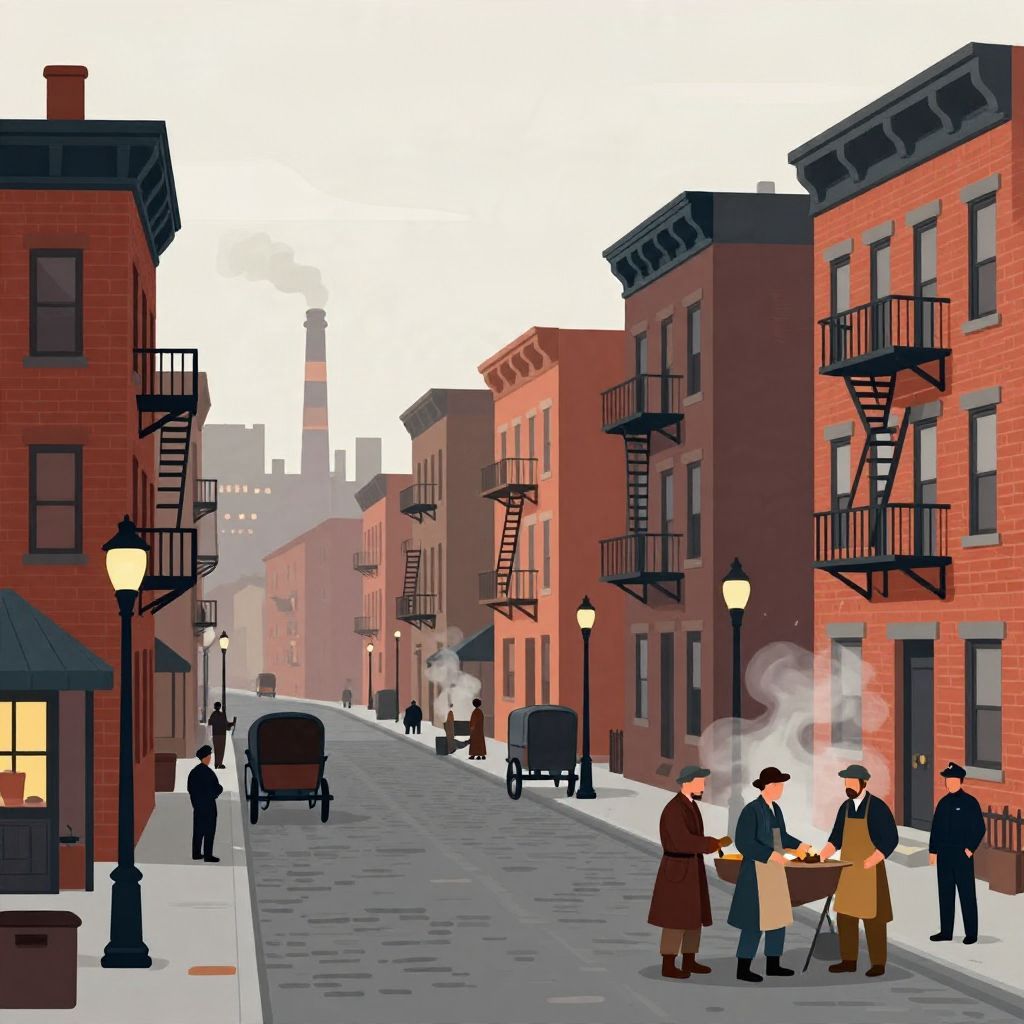
Why is it called Hell’s Kitchen? The short answer is that the name grew out of 19th-century reputation, not a single official naming event. The west side Manhattan neighborhood became associated with poverty, crowding, violence, and rough street life, and by the late 1800s people were already using “Hell’s Kitchen” as a colorful label for the area.
Like many urban nicknames, the phrase was shaped by local storytelling, newspaper language, and changing neighborhood boundaries. Its exact origin is debated, but the historical context is clear: this was a hard-edged district whose name reflected how outsiders and residents alike understood it.
Why is it called Hell’s Kitchen?
Hell’s Kitchen is called that because the area developed a reputation in the 19th century for being dangerous, overcrowded, and difficult to police. The nickname likely emerged from local slang and newspaper usage rather than from one proven incident. By the late 1800s, it had become a widely recognized name for a rough working-class neighborhood on Manhattan’s West Side.
The historical setting: a hard-edged Manhattan neighborhood
Hell’s Kitchen refers to a section of west Midtown Manhattan, roughly from the 30s to the 50s streets west of Eighth Avenue, though the boundaries have shifted over time. In the 19th century, this part of New York City was far from the polished commercial and tourist district it is today. It was a dense urban landscape of tenements, docks, rail yards, small industries, and crowded immigrant housing.
That environment mattered. Neighborhood names often emerge from daily experience, and in places marked by poverty and instability, nicknames could be blunt, mocking, or exaggerated. “Hell’s Kitchen” fit the way many people described the district: noisy, violent, and difficult.
Why the area developed a rough reputation
Several forces helped create the conditions behind the nickname:
- Rapid urban growth in 19th-century New York brought overcrowding and strained infrastructure.
- Immigration filled the area with new arrivals seeking cheap housing near work.
- Industrial and waterfront labor drew transient workers, including dockworkers and laborers.
- Poverty and tenement conditions made the neighborhood vulnerable to crime and disorder.
- Weak or uneven policing in some periods allowed gangs and street violence to flourish.
It is important not to romanticize this history. Hell’s Kitchen was not “hellish” in a literal sense, and not everyone there was criminal or violent. But the neighborhood’s public image was shaped by the realities of urban hardship, especially in an era before modern housing codes, social services, and reliable city management.
Where did the name come from?
The exact origin of “Hell’s Kitchen” is not fully settled. Historians generally agree that the name was in use by the late 19th century, but there is no single confirmed moment when someone first coined it. Instead, several explanations circulated, and the nickname likely spread because it captured an existing reputation so well.
The most common explanation
The most widely accepted explanation is that “Hell’s Kitchen” was a descriptive nickname for a neighborhood viewed as unruly and dangerous. In other words, the name did not need a precise origin story to stick. It worked because it sounded vivid, memorable, and fitting for a place with a fearsome reputation.
Popular legends about the name
As with many famous place names, folklore grew up around it. One popular story claims the name came from a police officer or local figure comparing the area to “hell.” Another version links it to a particularly rough apartment house or boardinghouse known as “Hell’s Kitchen.” These stories may contain a kernel of truth, but they are difficult to verify and should be treated cautiously.
There is also a commonly repeated tale that the nickname came from a German or Irish immigrant family’s kitchen being so hot and chaotic that it inspired the name. This kind of anecdote is colorful, but historians generally treat it as folklore unless supported by contemporary evidence. The more reliable conclusion is that the name evolved from the neighborhood’s broader reputation, not from one neat origin tale.
How the nickname spread in the 1800s
By the late 19th century, New York newspapers, local residents, and city observers were using “Hell’s Kitchen” as a recognizable label. The name belonged to a broader pattern in American city life, where neighborhoods acquired nicknames based on class, ethnicity, crime, or geography. Such names could be affectionate, insulting, or both.
Hell’s Kitchen was especially suited to this kind of naming because it sat near major transportation and labor corridors. Areas around docks, rail lines, and industrial employment often developed rough reputations, especially when they were densely packed and under-served. The nickname likely circulated first in speech and print among people who already knew the district as a tough place.
Nicknames and urban reputation
In the 19th century, neighborhood names were often less formal than they are today. A place might be known by a parish, ward, street, ethnic enclave, or nickname depending on who was speaking. “Hell’s Kitchen” was one of those informal names that became durable because it was vivid and easy to remember.
The phrase also reflects a common urban habit: turning social judgment into geography. A neighborhood could be labeled for its perceived moral character, not just its location. In that sense, the name tells us as much about outsiders’ attitudes toward working-class urban life as it does about the neighborhood itself.
Was Hell’s Kitchen really that dangerous?
Compared with modern expectations, 19th-century Hell’s Kitchen was indeed rough. Gangs, saloons, street fights, and labor violence were part of the city’s broader urban world. But the image of the neighborhood as uniquely lawless should be handled carefully. New York had many districts with serious crime and hardship, and sensational accounts sometimes exaggerated differences for dramatic effect.
Still, Hell’s Kitchen did have a reputation that set it apart. Its proximity to the waterfront and working-class housing, along with intense crowding, helped make it a symbol of urban toughness. That reputation became self-reinforcing: once a place is known as dangerous, stories about danger travel faster than stories about ordinary life.
Immigration and community life
The neighborhood was also home to many immigrant families, especially Irish Americans in the 19th century and later other groups as well. These communities were not defined solely by violence; they built churches, mutual aid networks, businesses, and local institutions. The nickname “Hell’s Kitchen” should not erase that social history.
In fact, one reason the name endured is that it described a district where hardship and community existed side by side. The same streets that produced stories of crime also supported everyday survival, neighborhood loyalty, and working-class culture.
How the neighborhood changed over time
Hell’s Kitchen’s reputation did not remain fixed. In the 20th century, the area experienced major change through urban redevelopment, shifting transportation patterns, and changing housing markets. As Manhattan’s West Side became more valuable, the neighborhood’s image slowly moved from dangerous slum to gritty but desirable urban district.
By the late 20th and early 21st centuries, gentrification and redevelopment altered the area dramatically. Yet the old name survived because it had become part of the city’s identity. Today, “Hell’s Kitchen” evokes both a historical past and a modern neighborhood that has been transformed many times.
Why the name lasted
Place names often outlive the conditions that created them. Hell’s Kitchen remained because it was memorable, locally rooted, and useful as a cultural label. Even after the district improved, the name carried a sense of history and authenticity that newer names could not replace.
In that way, the nickname became a historical artifact. It preserves the memory of a rougher Manhattan, even as the neighborhood itself changed beyond recognition.
What historians can say with confidence
There are a few points historians can state confidently. First, Hell’s Kitchen was a real 19th-century neighborhood nickname tied to Manhattan’s West Side. Second, the name reflected the area’s rough reputation for poverty, crowding, and violence. Third, the precise first use of the phrase is uncertain, and several origin stories are more legend than documented fact.
That combination of certainty and uncertainty is typical in urban history. Names often emerge gradually, through repeated use rather than a single official act. What matters most is the historical context: a dense, working-class district whose reputation inspired a vivid and lasting nickname.
Conclusion: the meaning behind the name
Hell’s Kitchen is called Hell’s Kitchen because 19th-century New Yorkers came to associate the area with hardship, disorder, and a tough street culture. The exact first use of the name is unclear, but the historical explanation is straightforward: the nickname grew from the neighborhood’s reputation and stuck because it perfectly captured how people thought about the place.
If you enjoy the history of place names, you may also like why Boston is called Beantown and why it is called a flea market.