
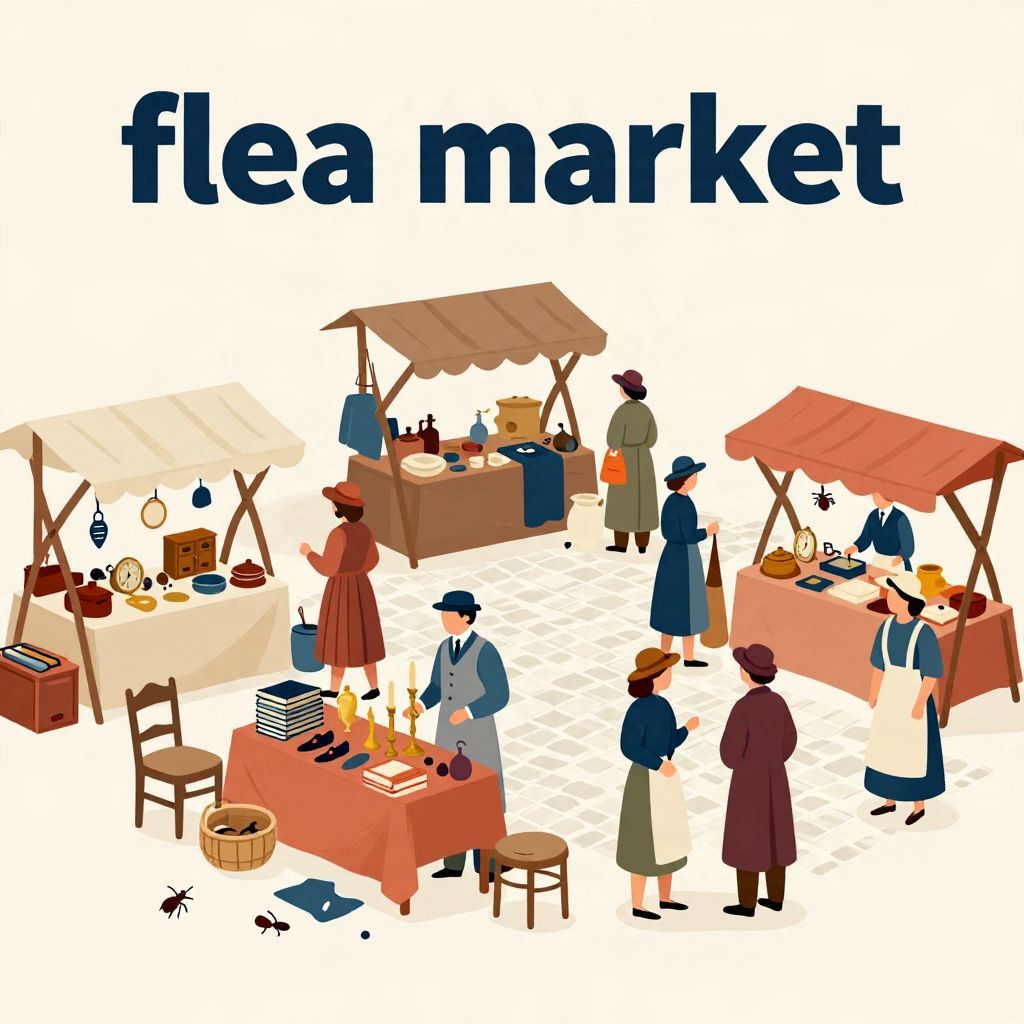
Why is it called a flea market? The short answer is that the name comes from the French phrase marché aux puces, literally “market of fleas.” The expression originally referred to secondhand stalls where used goods were sold, sometimes in conditions so crowded or dusty that fleas were associated with them.
Over time, the phrase became a standard label for markets selling antiques, vintage items, and used merchandise. The name is partly literal, partly colorful, and partly the result of language and urban culture in France and beyond.
Why Is It Called a Flea Market?
The term “flea market” comes from French usage, especially marché aux puces, a phrase that became associated with places where old, used, or cast-off goods were sold. The “flea” part is best understood as a vivid nickname, not a strict description: it evoked the idea of worn items, crowded stalls, and sometimes unhygienic conditions where fleas might actually have been present.
The French Origin of the Name
The most widely accepted explanation is that “flea market” is a translation of the French marché aux puces. In Paris, this phrase was linked to markets where dealers sold secondhand clothing, furniture, and household objects. Because these goods were often old and handled many times, the market acquired a humorous or slightly mocking name.
French speakers did not necessarily mean that every stall literally had fleas. Rather, the phrase captured the social reputation of these markets: inexpensive, shabby, and full of used items that came from the margins of respectable commerce.
Why “fleas” made sense as a label
Fleas were a familiar nuisance in premodern and early modern cities. They were associated with overcrowding, poor sanitation, and old textiles. Since flea markets often sold clothing, bedding, and furniture, the image of fleas fit the setting well, even if it was exaggerated for effect.
The phrase also carried a touch of wit. Naming a market after fleas turned a practical trading space into something memorable and slightly comic, which helped the expression stick.
How the Term Developed in France
The history of flea markets is tied to the growth of urban secondhand trade in Europe. As cities expanded, so did the market for used goods. Not everyone could afford new items, and many people relied on resale, repair, and reuse. In Paris, informal and later more organized markets emerged where dealers bought and sold cast-off possessions.
By the nineteenth century, Paris had several famous secondhand markets, and the term marché aux puces became increasingly recognizable. One of the best-known examples is the market area later associated with Saint-Ouen, just outside Paris, which developed into a major center for antiques and used goods.
From informal trading to established market culture
What began as scattered resale activity gradually became a structured part of city life. Traders specialized in old furniture, clothes, books, tools, and decorative objects. As these markets became more permanent, the nickname “flea market” survived and spread, even as the goods themselves ranged from cheap household items to valuable antiques.
Did Flea Markets Really Have Fleas?
Sometimes, yes. In earlier centuries, secondhand clothes and bedding could carry lice, fleas, or other pests, especially before modern laundering and pest control. That reality likely reinforced the name. But it is important not to overstate the literal meaning: the term was not simply a sanitary warning. It was also a cultural label for the kind of commerce that happened there.
In other words, the name reflects both material conditions and social attitudes. Flea markets were often seen as places of reuse, thrift, and improvisation, but also as spaces that stood apart from polished retail culture.
How the Name Spread Beyond France
English borrowed “flea market” from French usage, and the phrase became common in the nineteenth and twentieth centuries. As trade, tourism, and urban culture spread across Europe and North America, the term traveled with them. In English, it came to mean any market where secondhand goods, antiques, collectibles, and used household items are sold.
Today, the phrase is used widely, even in places with no direct connection to French markets. In many countries, “flea market” has become a generic term for a weekend market, swap meet, or open-air bazaar focused on used goods.
Related terms in other languages
- French: marché aux puces
- English: flea market
- German: Flohmarkt
- Spanish: often translated as mercadillo or used in local forms for secondhand markets
These names often share the same basic idea: a market associated with used items, low prices, and the lively disorder of informal trade.
Common Myths About the Term
Because the phrase sounds unusual, several folk explanations have circulated. Some people assume the market was named only because it was dirty. Others think “flea” is a metaphor for tiny, cheap objects. These ideas are partly plausible, but they are not the full story.
What historians generally accept
- The term is rooted in French marché aux puces.
- It referred to markets selling secondhand or old goods.
- The “flea” image likely came from both literal pests and the social reputation of used-goods markets.
- The phrase spread through language contact and became standard in English.
What is less certain is whether one exact moment or one exact market “invented” the term. As with many popular expressions, the wording likely developed gradually rather than appearing all at once.
Why Flea Markets Became Important Historically
Flea markets were more than places to shop cheaply. Historically, they were part of a broader economy of reuse. Before mass production and disposable consumer culture, people repaired, resold, inherited, and repurposed goods far more often than they do today. Flea markets helped circulate objects through different social classes and households.
They also preserved material culture. Many antiques, books, tools, and decorative items survive because they passed through secondhand markets instead of being discarded. In that sense, flea markets have long served as informal archives of everyday life.
Social and economic significance
Flea markets often offered opportunities for small-scale dealers, immigrants, artisans, and low-income buyers. They could be places of survival commerce as well as treasure hunting. Their history reflects the practical realities of urban life: scarcity, thrift, and the constant movement of objects from one owner to another.
From Stigma to Charm
Over time, the phrase “flea market” lost much of its negative edge. What once suggested old, shabby, or pest-ridden goods now often sounds charming, nostalgic, and even upscale. Many flea markets today specialize in antiques, collectibles, handmade items, and vintage fashion, attracting tourists and design enthusiasts as well as bargain hunters.
This shift shows how language changes with culture. A term that once hinted at poverty and disorder can become a marker of style and authenticity. The name remains, but its tone has softened.
So, Why Is It Called a Flea Market?
It is called a flea market because the phrase comes from French marché aux puces, a nickname for markets selling secondhand goods. The “flea” image likely reflected both the presence of pests in old textiles and the rough, crowded reputation of these markets. Over time, the name spread into English and became the standard term for a market of used, antique, or collectible items.
In historical terms, the phrase captures a world of reuse, urban trade, and everyday survival. A flea market was never just a place to buy old things; it was a small but revealing part of how people lived, sold, and reused objects across generations. If you are interested in the history of everyday commerce, you may also enjoy related topics such as the history of antique collecting and how urban markets shaped city life.