
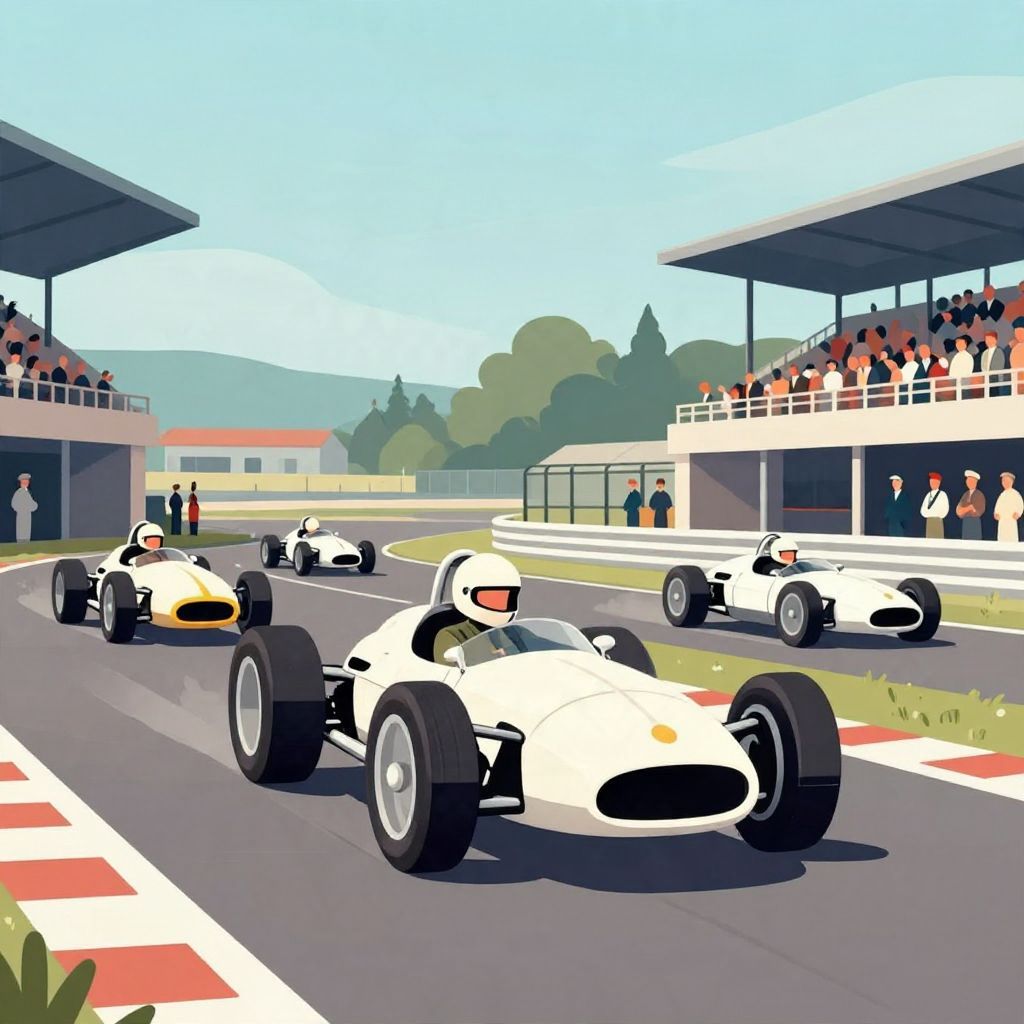
When did F1 start? The short answer is that Formula 1 began in 1950, when the first official World Championship race was held at Silverstone in the United Kingdom. But the sport’s roots go back further, into prewar Grand Prix racing and the effort to create a standardized postwar world championship for open-wheel cars.
Understanding that timeline helps explain why Formula 1 is both a modern championship and the heir to a much older racing tradition. The name, the rules, and the championship structure all emerged from a specific historical moment after World War II.
When did F1 start?
Formula 1 started in 1950, when the FIA organized the first official World Championship for Drivers. The opening race was the British Grand Prix at Silverstone on 13 May 1950. While Grand Prix racing existed long before that date, 1950 is the accepted beginning of Formula 1 as a formal world championship.
The historical roots of Formula 1 before 1950
Formula 1 did not appear out of nowhere. It grew from European Grand Prix racing in the early 20th century, when manufacturers such as Alfa Romeo, Mercedes-Benz, Auto Union, Bugatti, and others competed in high-speed road and circuit races. These events helped establish the idea of elite international motor racing long before the modern championship existed.
Grand Prix racing in the early 20th century
Before Formula 1, major races were often called Grand Prix events. They were not part of a single unified world series, but they did create a recognizable top level of competition. By the 1920s and 1930s, Europe had a strong racing culture, and technical innovation in engines, chassis design, and aerodynamics became central to success.
The sport was interrupted by World War II, which halted most international racing. After the war, there was a clear need to rebuild motorsport in a more organized way. That postwar reconstruction is one reason Formula 1 took shape when it did.
Why 1950 became the official start of F1
The FIA, motorsport’s governing body, created a standardized championship for the best open-wheel cars under a set of technical regulations, or “formula.” That is where the term Formula 1 comes from: it refers to the top formula, or rule set, for racing cars. The championship launched in 1950 because the postwar racing world was ready for a formal international series.
The first World Championship season
The 1950 season was the first year the FIA ran a World Championship for Drivers. It included several major European races, and points were awarded across the season to determine the champion. This was a major shift from earlier racing, where prestige often came from winning individual events rather than a season-long title.
The first season also helped define Formula 1 as a distinct category. Although the rules changed over time, the 1950 championship established the basic idea that still defines the sport today: a regulated international series of races, with drivers and teams competing for world titles.
Key dates in the start of Formula 1
Here is the basic timeline for the beginning of F1:
- Early 1900s: Grand Prix motor racing develops in Europe.
- 1920s–1930s: International racing grows in prestige and technical complexity.
- 1939–1945: World War II stops most major racing activity.
- 1946: The FIA begins organizing postwar motor racing categories and rules.
- 1950: The first official Formula 1 World Championship season begins.
- 13 May 1950: The first F1 World Championship race is held at Silverstone.
The first Formula 1 race: Silverstone 1950
The first championship race took place at Silverstone Circuit in England on 13 May 1950. The event was officially the British Grand Prix and counted toward the new World Championship. Giuseppe Farina won the race in an Alfa Romeo, and he later became the first Formula 1 World Champion that same year.
Why Silverstone matters
Silverstone is historically important because it was not just another race; it was the opening round of the first season under the new world championship format. Its place in F1 history is similar to a foundation stone. The race showed that postwar motorsport could be organized on an international scale with a clear championship structure.
It is worth noting that Formula 1’s first race was also shaped by the era’s realities. The cars were still closely linked to prewar engineering traditions, and many of the leading teams were European. In that sense, the first F1 race was both a beginning and a continuation of earlier motor racing history.
Who were the first major figures in F1 history?
The early years of Formula 1 featured legendary drivers and teams whose names are still central to the sport’s history. Some of the most important early figures included Giuseppe Farina, Juan Manuel Fangio, and the Alfa Romeo team.
Giuseppe Farina
Farina won the first championship race and the first F1 World Championship title in 1950. His achievement makes him a key figure in the sport’s origin story. He was not the only great driver of the era, but he is the one most directly tied to the official start of Formula 1.
Juan Manuel Fangio
Fangio rose to prominence in the early 1950s and became one of the greatest drivers in motorsport history. His success helped establish Formula 1’s reputation as a global test of skill, endurance, and engineering. Although he was not part of the first race, he was central to the sport’s early identity.
How Formula 1 differed from earlier racing
What made Formula 1 distinct was not simply speed. It was the combination of technical rules, international organization, and a championship system. Earlier motor races could be prestigious, but they did not always operate under a single global framework.
The meaning of “formula”
In motorsport, a “formula” is a set of technical regulations that cars must follow. Formula 1 became the highest category under those rules. That structure gave the sport a clear identity and allowed teams to compete on a more level regulatory field, even though engineering innovation remained crucial.
From individual races to a world championship
The move from isolated Grand Prix events to a season-long championship was a major historical development. It changed how fans followed the sport, how teams planned their seasons, and how success was measured. Winning a single race mattered, but winning the championship became the ultimate goal.
Did F1 exist before 1950?
This is where historical precision matters. In a broad sense, the traditions that became Formula 1 certainly existed before 1950. But Formula 1 as an official world championship did not. So if someone asks when F1 started, the best answer is 1950, while also recognizing that its heritage stretches back through earlier Grand Prix racing.
Some people use “F1” loosely to describe pre-1950 top-level racing, but that is a retrospective label. Historians and motorsport authorities generally treat 1950 as the official starting point because that is when the championship structure began.
How the early championship shaped modern F1
The first seasons established patterns that still matter today. Formula 1 became a sport of factory teams, technological development, international travel, and driver rivalry. Over time, the cars became faster and more specialized, and the championship expanded beyond Europe, but the basic identity formed in 1950.
The early era also set the tone for F1’s balance between sport and engineering. Drivers were celebrated, but the cars themselves were always central to the story. That combination helped Formula 1 become one of the most technically sophisticated sports in the world.
Summary: the start date of Formula 1
So, when did F1 start? The official answer is 1950, with the first Formula 1 World Championship race held at Silverstone on 13 May 1950. Its deeper history reaches back to prewar Grand Prix racing, but Formula 1 as we know it began when the FIA created a formal world championship after World War II.
If you want to explore more motorsport history, you may also enjoy related articles on the history of the British Grand Prix and how Grand Prix racing evolved before Formula 1.