
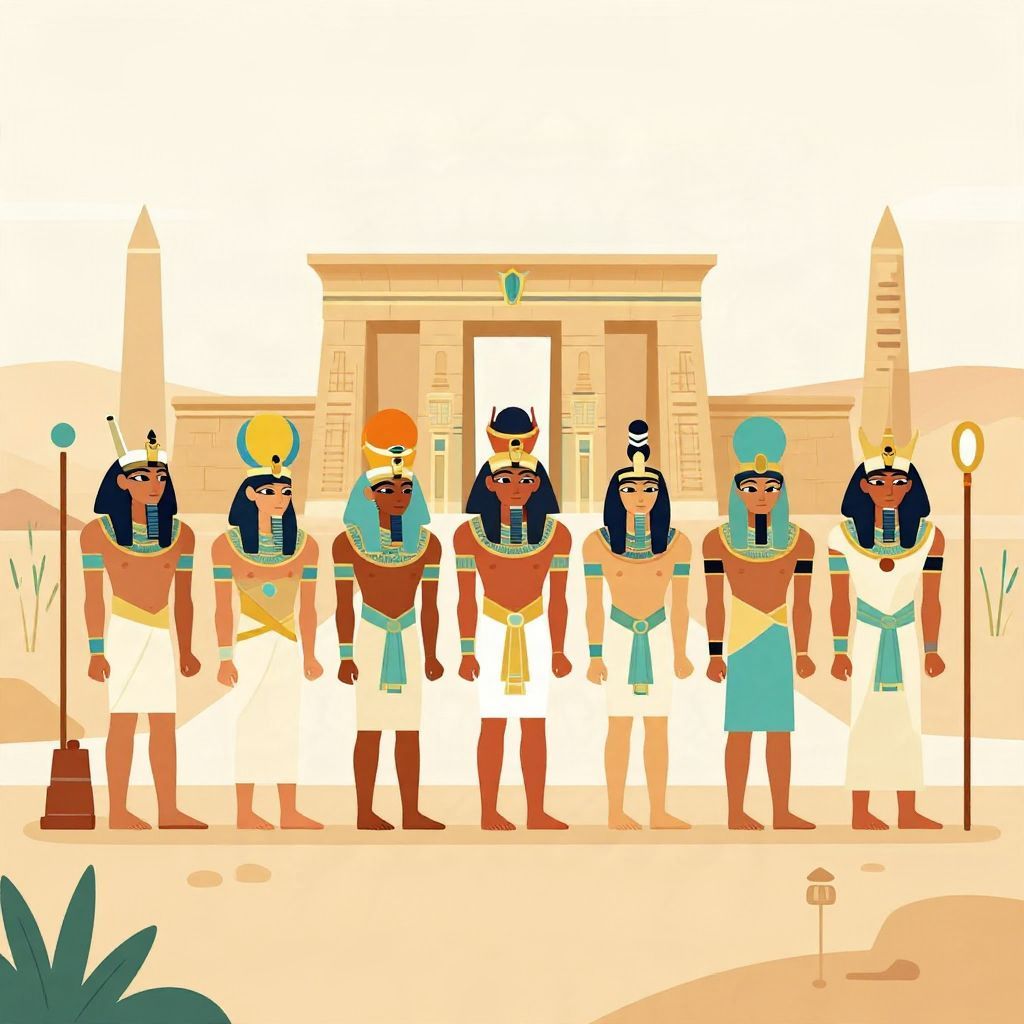
How many pharaohs were there? The short answer is that no one can give a single exact number with complete certainty. Egypt had pharaohs for more than 3,000 years, and the total depends on how historians count co-regents, rival rulers, short-lived dynasties, and gaps in the record.
Most modern Egyptological king lists suggest roughly 170 to 200+ pharaohs, but the number can shift depending on the definition used. What is certain is that pharaonic rule changed over time, from the early dynastic period around 3100 BCE to the end of native Egyptian kingship in 30 BCE.
How Many Pharaohs Were There?
There were probably around 170 to 200 or more pharaohs in ancient Egypt, depending on how scholars count rulers. The total is not fixed because some kings ruled briefly, some ruled jointly with others, and some periods of fragmentation produced overlapping dynasties and disputed names.
Why the number is not exact
Unlike a modern state with complete archives, ancient Egypt left an incomplete record. Some rulers are known only from inscriptions, king lists, tombs, or later historical compilations. In some cases, a ruler may have governed only a small region or for only months, yet still appear in the historical record as a pharaoh.
Historians also disagree about what counts as a separate pharaoh. If a son ruled alongside his father as co-regent, should that be counted as one reign or two? If a local ruler controlled part of Egypt during a time of political collapse, should that person be included? These questions change the total.
A practical historical estimate
A reasonable estimate for the full pharaonic period is:
- Early Dynastic Period and Old Kingdom: a relatively small number of rulers, but many are well documented.
- Middle Kingdom and New Kingdom: more securely recorded, with famous royal lines such as the 18th, 19th, and 20th dynasties.
- Intermediate Periods: harder to count because several dynasties sometimes ruled at once.
- Late Period and foreign dynasties: includes Egyptian and non-Egyptian rulers, such as Libyan, Nubian, Assyrian, Persian, and Macedonian kings who took the pharaonic title.
Taken together, these reigns produce a total that is usually described as “more than 170” and often closer to “about 200” depending on the source and method.
What Was a Pharaoh?
A pharaoh was the king of ancient Egypt, but the word did not always mean exactly the same thing at every stage of Egyptian history. In the earliest periods, rulers were simply kings. The term “pharaoh” later became the standard way to describe the Egyptian monarch, especially in the New Kingdom and afterward.
The pharaoh was more than a political leader. He was seen as the guarantor of order, linked to divine authority, and responsible for maintaining ma’at, the ancient Egyptian idea of cosmic balance, justice, and harmony. That religious role is one reason pharaohs were so central to Egyptian civilization.
Did every Egyptian ruler count as a pharaoh?
Not exactly. The title is often used broadly today for all Egyptian kings, but ancient usage evolved over time. Some rulers were native Egyptians; others were foreign conquerors who adopted Egyptian royal traditions. Even so, many historians include them in lists of pharaohs because they ruled Egypt in the pharaonic style.
How the Dynasties Shape the Count
The easiest way to understand the number of pharaohs is through Egypt’s dynasties. Ancient Egyptian history is commonly divided into dynasties, especially in the system established by the Egyptian priest-historian Manetho in the 3rd century BCE. Although his work survives only in fragments and later quotations, the dynastic framework remains useful.
Major periods of pharaonic rule
- Early Dynastic Period — roughly c. 3100–2686 BCE
- Old Kingdom — c. 2686–2181 BCE
- First Intermediate Period — c. 2181–2055 BCE
- Middle Kingdom — c. 2055–1650 BCE
- Second Intermediate Period — c. 1650–1550 BCE
- New Kingdom — c. 1550–1070 BCE
- Third Intermediate Period — c. 1070–664 BCE
- Late Period — c. 664–332 BCE
- Ptolemaic Period — 332–30 BCE
Each period included multiple dynasties, and some dynasties overlapped or were only partially centered in Egypt. That is why the count of pharaohs is more complicated than simply adding up a neat list of names.
Famous Pharaohs and the Best-Known Rulers
Some pharaohs are especially famous because they left major monuments, won important wars, or ruled during turning points in Egyptian history. These names are often the ones most people remember, but they represent only a fraction of the full total.
Well-known pharaohs
- Narmer — often associated with the unification of Upper and Lower Egypt
- Djoser — linked to the Step Pyramid at Saqqara
- Khufu — associated with the Great Pyramid at Giza
- Hatshepsut — one of the most prominent female rulers
- Akhenaten — known for religious change centered on Aten
- Tutankhamun — famous largely because of the discovery of his intact tomb
- Ramses II — one of Egypt’s longest-reigning and most celebrated kings
- Cleopatra VII — the last active pharaoh of Ptolemaic Egypt
These rulers are famous because they are historically visible. Many other pharaohs ruled effectively but left fewer surviving records, especially in periods of instability or when their monuments were later destroyed or reused.
How Long Did Pharaohs Rule Egypt?
Pharaonic rule lasted for more than three millennia. The first unified Egyptian kings emerged around 3100 BCE, and the last pharaoh, Cleopatra VII, died in 30 BCE after Egypt became part of the Roman world. That means the institution of pharaohs endured for roughly 3,100 years.
Why the institution lasted so long
Egypt’s geography helped sustain central rule. The Nile River created a narrow, fertile corridor that supported agriculture, taxation, transport, and administration. A powerful kingship could organize labor, manage grain supplies, and sponsor large building projects. Over time, the pharaoh became a deeply rooted symbol of state power and divine legitimacy.
Foreign Rulers Who Became Pharaohs
Not all pharaohs were ethnically Egyptian. Several foreign dynasties ruled Egypt while adopting pharaonic customs, titles, and religious roles. This matters because the total number of pharaohs depends partly on whether one counts these rulers alongside native Egyptian kings.
Examples of foreign dynasties
- Nubian kings of the 25th Dynasty
- Assyrian overlords who briefly controlled parts of Egypt
- Persian kings who ruled Egypt as part of their empire
- Macedonian and Ptolemaic rulers after Alexander the Great
The Ptolemies are especially important. They were Greek-speaking rulers who governed Egypt after Alexander’s conquest in 332 BCE. Although culturally Greek, they presented themselves as pharaohs in Egyptian temples and royal imagery. Cleopatra VII was the last of this line.
Why Some Pharaohs Are Missing or Doubtful
Egyptian history is not a perfectly complete list of names. Some rulers are poorly attested, and some may have existed only briefly or under local conditions. Archaeologists and historians sometimes debate whether a name belongs to a true pharaoh, a regional ruler, or a mistaken reading of a damaged source.
Common reasons for uncertainty
- Short reigns that left little evidence
- Co-regencies where two rulers shared power
- Civil wars and fragmentation that produced rival kings
- Damaged inscriptions and incomplete king lists
- Later editing or omission by succeeding rulers
Because of these issues, scholarly king lists are revised from time to time as new evidence is studied. The broad outline of Egyptian kingship is secure, but the exact count remains approximate.
So What Is the Best Answer?
If you need a simple answer, say this: there were probably around 170 to 200 pharaohs in ancient Egypt. If you want a more careful answer, explain that the total depends on how historians define a pharaoh and whether they count disputed rulers, co-regents, and foreign dynasties.
That is the most historically responsible way to answer the question. Ancient Egypt was not ruled by a neat, fixed number that can be stated with absolute certainty. Instead, it was a long-lived civilization with a changing monarchy, a complex record, and a royal tradition that lasted from the dawn of Egyptian statehood to the Roman conquest.
Takeaway
The question “How many pharaohs were there?” has no single exact figure, but the best historical estimate is roughly 170 to 200+ rulers across more than 3,000 years of Egyptian history. If you want to explore the world they built, you may also enjoy reading about when the pyramids of Giza were built and which country has the most pyramids.