
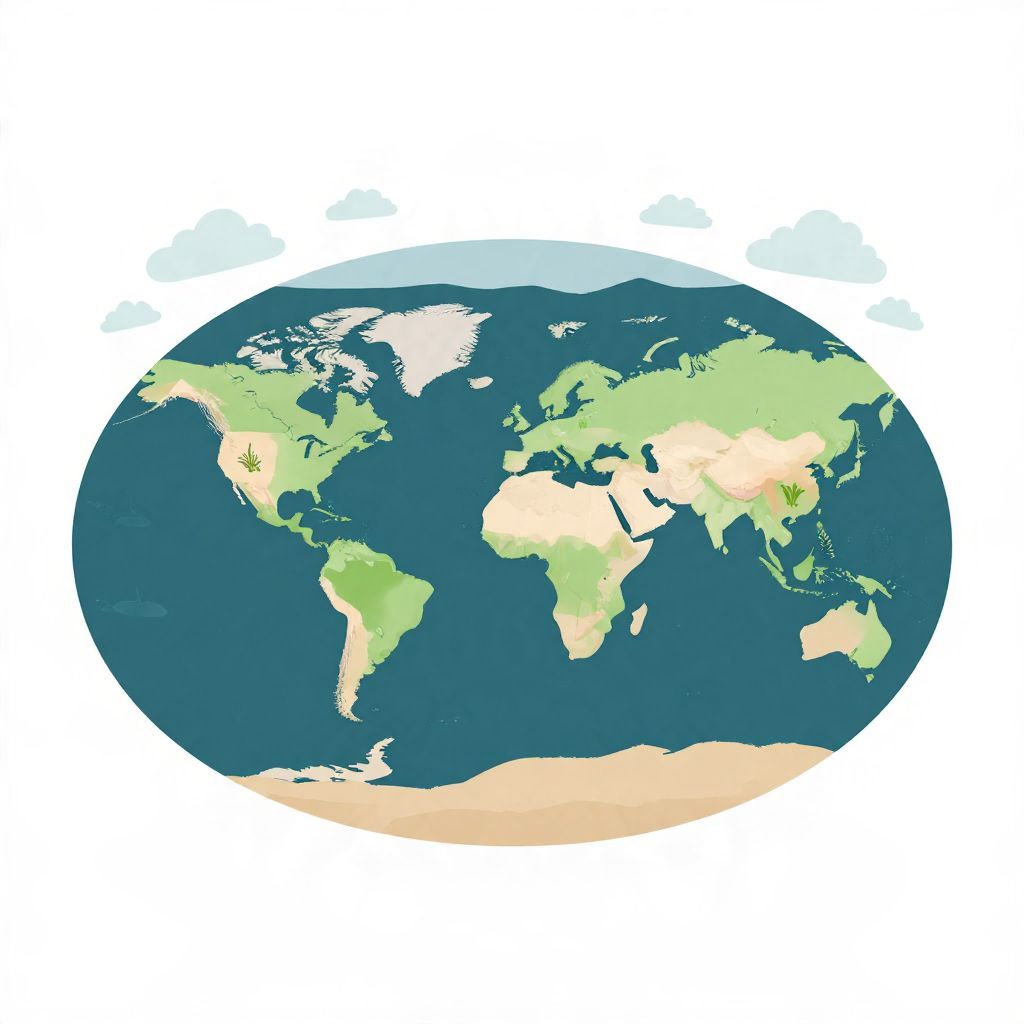
How long ago was Pangea? The short answer is that Pangea existed roughly between 335 million and 175 million years ago, with its best-known “supercontinent” phase lasting from about 335 million to 200 million years ago. It was not a single moment in time, but a long geological process of assembly, stability, and breakup.
Understanding Pangea helps explain why today’s continents fit together, why similar fossils appear on widely separated landmasses, and how plate tectonics reshaped Earth’s surface over immense spans of time.
How long ago was Pangea?
Pangea formed about 335 million years ago and began breaking apart around 200 million years ago. By roughly 175 million years ago, the continental breakup was well underway. In other words, Pangea was not around for one fixed date; it existed for tens of millions of years during the late Paleozoic and early Mesozoic eras.
A simple timeline
- ~335 million years ago: Early assembly of the supercontinent begins.
- ~300 to 250 million years ago: Pangea is largely united and at or near its most complete form.
- ~200 million years ago: Breakup starts in earnest.
- ~175 million years ago: Major fragments are separating into the continents we recognize today.
These dates are approximate because Pangea formed and split gradually, not all at once. Different parts of the supercontinent collided and drifted apart over millions of years.
What was Pangea?
Pangea was a supercontinent, meaning a landmass made up of most of Earth’s continents joined together. The name comes from Greek roots meaning “all Earth.” It is one of the most important ideas in geology because it shows that continents are not fixed; they move over time on tectonic plates.
Pangea is often imagined as a perfect puzzle piece of modern continents, but the reality was more complex. The edges did not match neatly, and the landmass changed shape as mountains rose, oceans opened, and plates shifted.
Why Pangea matters
Pangea is important because it helps explain several major patterns in Earth history:
- matching coastlines, especially South America and Africa
- similar fossils found on continents now separated by oceans
- ancient mountain belts that line up across modern continents
- changes in climate and sea level caused by continental arrangement
How did Pangea form?
Pangea formed through the slow collision of earlier continents and smaller landmasses. Before Pangea, Earth had other supercontinents, and the crust was continually rearranged by plate tectonics. Over time, drifting landmasses collided, folded, and welded together into a vast connected region.
The role of plate tectonics
Plate tectonics is the process by which Earth’s outer shell is broken into moving plates. These plates float on the hotter, softer mantle below. Where plates collide, continents can crumple into mountains; where they separate, new ocean basins can form. Pangea was created by these collisions and later destroyed by them.
One major stage in its assembly involved the closing of ancient oceans. As those oceans disappeared, continents such as Laurussia and Gondwana moved together. Their collision helped create the enormous landmass that became Pangea.
Was Pangea the first supercontinent?
No. Pangea was not the first supercontinent, and it was not the last. Earth’s crust has likely assembled into supercontinents several times. Pangea is simply the most recent one and the one most familiar to modern readers because its breakup directly led to today’s continents.
What did Pangea look like?
Pangea was a gigantic landmass surrounded by a global ocean, often called Panthalassa. It stretched across a huge portion of Earth’s surface and had a broad, C-shaped configuration. The land was not evenly distributed; interior regions were likely dry and seasonal, while coastal areas had different climates and ecosystems.
The supercontinent contained the ancestors of modern North America, South America, Africa, Europe, Antarctica, Australia, and parts of Asia. These landmasses were connected in ways that made migration of plants and animals possible across areas now divided by oceans.
Climate on Pangea
Pangea’s size influenced climate strongly. Because so much land sat far from the sea, the interior likely experienced extreme seasonal temperatures and arid conditions. Coastal zones were more humid, and mountain ranges affected rainfall patterns. The arrangement of land and sea also influenced ocean circulation and the distribution of life.
Why did Pangea break apart?
Pangea broke apart because tectonic forces continued to move after the supercontinent formed. Heat from inside Earth drives plate movement, and over long periods that movement can weaken and split continental crust. Eventually, rifts opened, magma rose, and new ocean basins formed between separating landmasses.
The breakup of Pangea
The breakup did not happen in one clean event. It unfolded in stages:
- Rifting began in certain regions of Pangea.
- The crust thinned and cracked.
- New seafloor formed as magma rose and cooled.
- Ocean basins widened as the fragments drifted farther apart.
By the early Jurassic period, the supercontinent had split into large northern and southern portions often described as Laurasia and Gondwana. Over time, those regions broke into the continents we know today.
How do scientists know Pangea existed?
Scientists do not rely on one piece of evidence. Pangea is supported by several independent lines of research that fit together remarkably well. The theory became widely accepted because the evidence is strong, repeatable, and consistent across geology, paleontology, and paleomagnetism.
Key evidence for Pangea
- Matching fossils: Similar ancient plants and animals are found on continents now far apart.
- Fitted coastlines: Some continental margins align in a way that suggests they were once joined.
- Rock formations: Mountain chains and rock layers match across oceans.
- Paleomagnetism: Ancient magnetic signals in rocks show that continents moved.
- Glacial evidence: Signs of ancient ice sheets appear in places that are warm today, making sense only if the continents were positioned differently.
These clues were especially important because they showed that the continents had once been connected long before modern maps existed. The evidence also helped overturn older ideas that continents were permanent and unmoving.
Who discovered Pangea?
The idea that continents move developed over time. In the early 20th century, Alfred Wegener famously argued for continental drift, proposing that the continents had once formed a single landmass. His idea was initially controversial because he could not fully explain the mechanism. Later, plate tectonics provided the physical explanation that made continental movement widely accepted.
Wegener did not “discover” Pangea in the modern scientific sense, but he played a major role in bringing the idea into serious scientific discussion. The supercontinent concept became much stronger when geologists later combined fossil evidence, seafloor mapping, and magnetic data.
How long did Pangea exist?
Pangea existed for a very long time by human standards, but only a portion of Earth’s history. If we use the broad estimate from its early assembly to major breakup, Pangea lasted for about 160 million years. If we focus on the fully assembled supercontinent, its peak phase may have lasted closer to 100 million years, depending on how one defines “Pangea.”
That uncertainty is normal in geology. Large natural processes do not begin and end on a single day. Scientists use approximate dates because they are reconstructing events from rocks, fossils, and geophysical data spread across the globe.
What happened after Pangea broke apart?
After Pangea split, Earth’s geography changed dramatically. New oceans opened, coastlines shifted, and isolated continents developed their own ecosystems. The breakup helped shape the distribution of dinosaurs, marine life, plants, and later mammals. It also influenced long-term climate patterns by changing how heat and moisture moved around the planet.
Long-term consequences
The breakup of Pangea had several lasting effects:
- It created the Atlantic Ocean.
- It separated land animals and plants, encouraging evolution in isolation.
- It changed ocean currents and climate circulation.
- It helped produce the modern arrangement of continents.
These changes did not happen instantly. The continents continued drifting after the initial breakup, and they are still moving today at rates measured in centimeters per year.
How does Pangea fit into Earth’s bigger history?
Pangea is just one chapter in Earth’s very long geological story. Before it, there were earlier supercontinents; after it, the continents kept moving toward their present positions. In the future, Earth may again form another supercontinent as plate motion continues.
That broader perspective is important. Pangea is not only a prehistoric curiosity. It is evidence that Earth is dynamic, with a surface that is constantly being rebuilt over deep time.
So, how long ago was Pangea?
Pangea was around 335 million to 175 million years ago, with its most complete form existing roughly between 300 million and 200 million years ago. The exact dates vary slightly depending on how scientists define its beginning and end, but the overall timeline is well established.
Its story matters because it connects geology, climate, fossils, and the movement of continents into one powerful explanation of Earth’s past. If you want to see how the continents fit together visually, what Pangea looked like is a natural next read, and for a broader sense of Earth’s deep past, how humans survived the Ice Age offers another view of changing environments over time.