
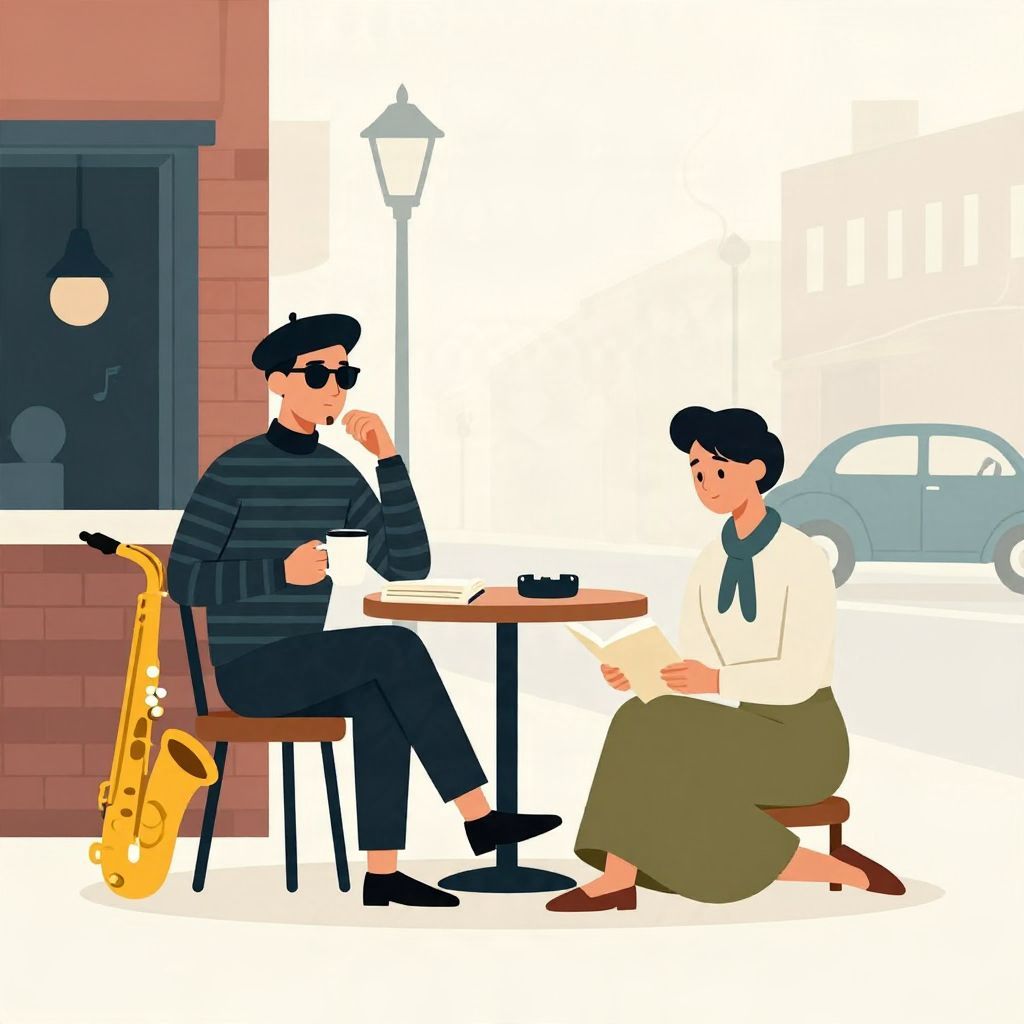
What is a beatnik? The word usually refers to a stereotyped figure from the late 1950s and early 1960s: a young person associated with the Beat Generation, bohemian dress, jazz clubs, coffeehouses, and a skeptical attitude toward mainstream American life. The term was popularized in the United States and quickly became both a label and a caricature.
To understand beatniks, it helps to separate the real literary and cultural movement from the media image that grew around it. Beat writers, artists, and followers were part of a broader postwar search for freedom, authenticity, and spiritual alternatives in an era of conformity.
What Is a Beatnik?
A beatnik was a person associated with the Beat Generation, especially in the late 1950s. The term often described a young urban bohemian who rejected conventional middle-class values, favored jazz, poetry, and informal dress, and was seen as politically and socially nonconformist. In practice, “beatnik” was often a stereotype rather than a precise identity.
Where Did the Word “Beatnik” Come From?
The word beatnik appeared in 1958, after the Soviet launch of Sputnik, when American columnist Herb Caen reportedly coined it by blending “Beat” with the Russian-style suffix “-nik.” The term was meant to sound playful, but also slightly mocking. It helped turn a literary subculture into a mass-media label.
Beat vs. Beatnik
The distinction matters. “Beat” referred first to the Beat Generation, a circle of writers and artists who emerged in the 1940s and 1950s. “Beatnik” came later and was more commercial and satirical. Many people labeled beatniks had little direct connection to the original writers, and many Beat writers disliked the term because it flattened a serious cultural movement into a fashion trend.
The Origins of the Beat Generation
The Beat Generation developed in the United States after World War II, especially in New York City and later San Francisco. It grew from a mix of literary experimentation, jazz culture, urban bohemian life, and dissatisfaction with postwar conformity. The movement was never a formal organization, but rather a loose network of writers and friends.
Key Figures in the Beat Movement
Several writers became central to the Beat reputation:
- Jack Kerouac, whose novel On the Road became one of the movement’s defining texts.
- Allen Ginsberg, whose poem Howl became famous for its raw language and criticism of modern life.
- William S. Burroughs, known for experimental fiction and a darker, more radical style.
- Neal Cassady, a charismatic figure who inspired Beat writing and mythology.
These figures were not identical in politics, religion, or lifestyle, but they shared an interest in freedom of expression, direct experience, and resistance to cultural sameness.
What Did Beatniks Believe or Value?
Beatniks were not a single political movement with a clear platform. Still, they tended to value personal freedom, artistic experimentation, spontaneous living, and skepticism toward consumer culture. Many were interested in jazz, Eastern religion, sexuality outside conventional norms, and travel as a way of escaping routine.
Common Themes in Beat Culture
- Anti-conformity: rejection of suburban respectability and rigid social expectations.
- Artistic freedom: poetry, improvisation, and experimental writing.
- Spiritual searching: interest in Buddhism, Hindu thought, and other non-Western traditions, though often in simplified or selective forms.
- Urban bohemianism: coffeehouses, lofts, and clubs instead of suburban domestic life.
- Jazz influence: especially bebop, which shaped Beat language, rhythm, and style.
What Did Beatniks Look Like?
The familiar beatnik image was highly stylized. Men were often imagined in black turtlenecks, berets, sunglasses, and goatees. Women were pictured in dark clothing, with long hair, scarves, and a detached, artistic pose. This look was more media cliché than historical requirement, but it became a recognizable shorthand for counterculture.
Why the Style Mattered
Clothing and mannerisms helped communicate distance from mainstream society. The look suggested seriousness, artistic identity, and refusal of suburban polish. Yet the visual stereotype often obscured the fact that real Beat communities were diverse and that not everyone in the scene dressed the same way.
Beatniks, Jazz, and Coffeehouses
Jazz was central to the Beat world, especially bebop, a fast, complex style associated with improvisation and artistic freedom. Beat writers admired jazz musicians for their spontaneity and independence. Coffeehouses, bars, and clubs became gathering places where poetry readings, music, and conversation mixed together.
Why Jazz Mattered to the Beat Ethos
Beat writers often saw jazz as a model for writing: improvisational, rhythmic, and alive in the moment. This connection was cultural as much as musical. It reflected a broader search for authenticity, especially among young people who felt that postwar American life was too managed, too polished, or too materialistic.
How the Media Turned Beats into Beatniks
By the late 1950s, newspapers, magazines, and television had transformed a literary subculture into a public spectacle. The media often portrayed beatniks as lazy, aimless, exotic, or comically detached from ordinary work and family life. This caricature made the movement easier to sell to a mass audience, but it also distorted its meaning.
From Subculture to Stereotype
Popular entertainment often reduced beatniks to a few familiar traits: snapping fingers, speaking in slang, smoking cigarettes, and reading poetry in dimly lit rooms. These images were widely circulated, but they were not an accurate summary of the Beat Generation as a whole. In many cases, “beatnik” became a label for any young nonconformist, whether or not they had read the Beat writers.
Why Did Beatniks Appear in the 1950s?
Beatnik culture emerged in a particular postwar setting. The United States in the 1950s was marked by economic growth, suburban expansion, Cold War anxiety, and strong pressure to fit in. For some young people, especially artists and students, this environment felt restrictive. Beat culture offered an alternative language for alienation and freedom.
Historical Context
Several forces helped shape the movement:
- Postwar conformity: social expectations around marriage, work, and consumer life.
- Cold War politics: suspicion of dissent and nontraditional ideas.
- Urban artistic scenes: especially in New York’s Greenwich Village and San Francisco’s North Beach.
- Publishing and media: which spread Beat ideas to a much wider public.
Were Beatniks the Same as Hippies?
Beatniks and hippies overlapped, but they were not the same. Beatnik culture was mainly associated with the 1950s, while the hippie movement rose in the 1960s. Both groups challenged mainstream values, but hippies were generally more visible politically, more tied to youth protest, and more associated with psychedelic culture and the antiwar movement.
Continuity and Difference
The Beat Generation helped prepare the ground for the counterculture of the 1960s. Its emphasis on personal liberation, alternative spirituality, and distrust of conformity influenced later youth movements. But the hippie era was broader, more public, and more politically charged than the smaller, more literary Beat world.
How Long Did Beatnik Culture Last?
As a distinct media phenomenon, beatnik culture was strongest from the late 1950s into the early 1960s. The original Beat literary movement had begun earlier, in the 1940s, and its influence continued long after the term “beatnik” faded. By the mid-1960s, the label sounded dated, even as Beat writing remained important.
Lasting Influence
The Beat movement left a durable mark on American literature, music, and ideas about freedom of expression. It helped normalize experimental prose, confessional poetry, and open discussion of sex, drugs, religion, and alienation. Even when the beatnik stereotype faded, the underlying questions remained: How should a person live authentically in a mass society?
Why Does the Beatnik Still Matter?
The beatnik matters because it captures a moment when American culture began to question its own postwar confidence. The term may have started as a joke, but it points to real historical tensions: conformity versus individuality, consumerism versus art, and social respectability versus personal freedom. Behind the stereotype was a serious cultural revolt.
In short, a beatnik was both a real participant in a mid-century bohemian scene and a media-made symbol of rebellion. The word survives because it names a turning point in modern cultural history, when literature, jazz, and youth dissent began to reshape American life. For related background, you may also be interested in what speakeasies were and where the Beatles were from.