
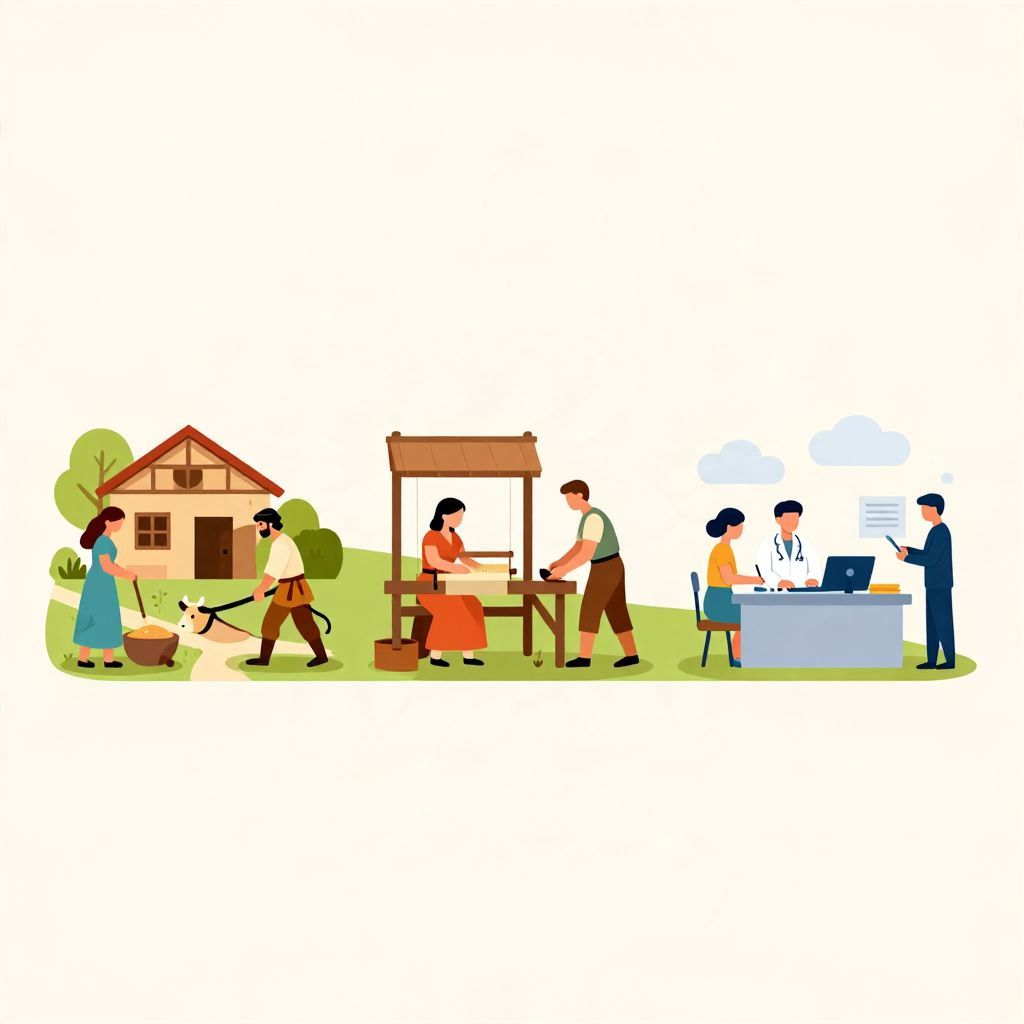
What are gender roles? In history, gender roles are the socially expected behaviors, duties, and appearances assigned to people because they are seen as male, female, or another gender category in a given society. These expectations have changed across time and place, and they have shaped family life, work, law, religion, and politics.
Understanding gender roles means looking at both biology and culture, but especially culture: societies teach people what is considered “proper” for men and women, and those rules have never been fixed. They have been enforced, challenged, and redefined from ancient civilizations to the modern era.
What Are Gender Roles?
Gender roles are the historical and cultural expectations attached to gender. They tell people who should lead, who should care for children, who should labor in the home or in public, and how people should dress, speak, and behave. These roles vary widely by time, place, class, religion, and economic need.
Gender roles versus sex
Historians and social scientists usually distinguish sex from gender. Sex refers to biological traits, while gender refers to social meanings and expectations. In practice, many past societies treated the two as closely linked, but the historical record shows that ideas about masculinity and femininity were always shaped by culture, not just biology.
Why the concept matters historically
Gender roles help explain why some jobs were coded as “men’s work” or “women’s work,” why inheritance often favored sons, why political power was usually male, and why certain forms of education were restricted. They also reveal resistance: women, men, and gender-nonconforming people have repeatedly pushed against social rules.
Where Did Gender Roles Come From?
Gender roles did not begin at one single moment. They emerged gradually as human communities developed agriculture, property, states, and formal religion. As societies became more hierarchical, they often assigned different tasks and authority to men and women, though the details varied enormously.
Early human societies
For hunter-gatherer groups, evidence suggests more flexible divisions of labor than older stereotypes once assumed. Men often hunted more frequently, while women often gathered plants and cared for children, but these patterns were not universal or rigid. Archaeology and anthropology show that survival depended on cooperation, and social roles could shift with environment and need.
The rise of agriculture and property
With farming, settled villages, and inherited property, many societies began to place greater importance on controlling land, labor, and descent. This often increased pressure to define legitimate heirs and regulate family life. In many regions, this led to stronger patriarchal systems, where men held more public authority and women’s sexuality and labor were more tightly controlled.
Gender Roles in Ancient Civilizations
Ancient states made gender roles more visible because they wrote laws, kept records, and built institutions around family, labor, and power. Yet even in the ancient world, expectations differed from one civilization to another.
Mesopotamia and Egypt
In Mesopotamia, legal codes and household structures often placed men in positions of authority, especially in inheritance and public life. Women’s roles were usually centered on marriage, children, and household management, though some women could own property, run businesses, or serve in religious institutions. In ancient Egypt, women generally had more legal rights than in many later societies, including the ability to own property and initiate some legal actions, though political power remained mostly male.
Greece and Rome
Classical Athens idealized a sharp separation between male public life and female domestic life. Athenian men were expected to participate in politics, warfare, and public debate, while respectable women were often associated with the household. Sparta differed: women there had more physical freedom and public visibility, partly because the militarized state depended on managing households during long periods of male military service. In Rome, elite ideals emphasized male authority in the family and public service, but Roman women could exercise influence through property, patronage, and family networks.
China, India, and other classical traditions
In imperial China, Confucian thought strongly shaped ideals of hierarchy, filial duty, and family order. Women were often expected to be obedient daughters, wives, and mothers, though their real lives varied by class and region. In South Asia, gender roles were influenced by religious traditions, kinship systems, and local custom. Women could hold significant religious or political authority in some periods, but patriarchal family structures were common across many regions.
How Religion Shaped Gender Roles
Religions did not create gender roles on their own, but they often gave them moral authority. Sacred texts, rituals, and religious institutions frequently reinforced ideas about male leadership and female modesty, yet religious traditions also produced women leaders, mystics, saints, and reformers.
Authority, purity, and family order
Many religious systems linked gender to ideas of purity, lineage, and social order. Marriage, reproduction, and inheritance became moral as well as practical concerns. In some traditions, religious law reinforced male guardianship; in others, women gained spiritual authority even when they lacked political power.
Exceptions and flexibility
Historical evidence shows that religious life could create alternative roles for women and men. Convents, monasteries, priesthoods, and devotional movements sometimes offered education, leadership, or independence unavailable in ordinary family life. These exceptions matter because they show that gender roles were never absolute, even when they were strongly enforced.
Gender Roles in the Middle Ages and Early Modern World
From roughly the 5th to the 18th centuries, gender roles in Europe, the Islamic world, Africa, and Asia were shaped by agrarian economies, dynastic politics, and religious authority. The details differed, but most societies expected men to dominate public life and women to focus on household and kinship responsibilities.
Medieval Europe
In medieval Europe, gender roles were tied to estate, labor, and Christian teaching. Noblewomen could manage estates, arrange marriages, and sometimes rule as regents, while peasant women worked in fields, markets, and households. The ideal of female chastity and male protection was powerful, but everyday life often required women’s economic labor.
The Islamic world
In many Islamic societies, gender roles were shaped by religious law, local custom, and empire. Women’s rights and restrictions varied by time and place. Some women owned property, funded mosques, or participated in scholarship and trade, while others lived under stronger seclusion or guardianship norms. As elsewhere, class and geography mattered greatly.
Early modern change
From the 15th through 18th centuries, global trade, colonial expansion, and state centralization altered family and work patterns. In Europe, ideas about “separate spheres” slowly developed, especially among elites: men were associated with public work and politics, women with domestic morality. This ideal was not yet universal, but it became increasingly influential.
Industrialization and the Remaking of Gender Roles
The Industrial Revolution transformed gender roles by separating home from workplace for many families, especially in urban and middle-class settings. Wage labor, factory discipline, and new ideals of respectability changed how masculinity and femininity were defined.
Men, work, and breadwinning
Industrial capitalism helped create the modern ideal of the male breadwinner: a man who earned wages outside the home and supported his family financially. This was never true for all men, especially workers, migrants, and the poor, but it became a powerful social norm. Men were increasingly judged by earning power, discipline, and public success.
Women, domesticity, and “respectability”
Middle-class women were often expected to embody domestic virtue, childrearing, and moral influence. This did not mean they were inactive; many managed households, performed unpaid labor, and supported family businesses. Still, the ideology of domestic femininity narrowed acceptable roles and helped justify limits on women’s education, property rights, and political participation.
Working-class realities
For working-class families, the ideal of separate spheres often clashed with economic necessity. Women and children frequently worked in factories, farms, domestic service, and informal trades. Gender roles existed, but poverty made them more flexible and more contested.
Gender Roles in the Modern Era
From the 19th century onward, movements for women’s rights, labor reform, and education challenged older gender hierarchies. The modern history of gender roles is largely a history of negotiation between inherited expectations and social change.
Suffrage and citizenship
Women’s suffrage movements argued that political rights should not depend on gender. As women won the vote in different countries during the late 19th and 20th centuries, the meaning of citizenship changed. Political participation became less tied to male identity, even though access to power remained unequal.
War and social change
World wars accelerated change by drawing women into factories, offices, nursing, and public service while men were mobilized for combat. These shifts did not erase gender roles, but they exposed how quickly societies could redefine them when necessity demanded it. After wars, many governments tried to restore older norms, often only partially successfully.
Second-wave feminism and beyond
In the mid-20th century, feminist movements challenged legal discrimination, workplace inequality, and rigid expectations about marriage and motherhood. Over time, many societies expanded women’s access to education, professions, and political office. At the same time, debates about masculinity, caregiving, and family life became more open, showing that gender roles were becoming less fixed, though not disappearing.
How Historians Study Gender Roles
Historians study gender roles through laws, letters, art, literature, court records, census data, religious texts, and material culture. Because most historical records were created by elites, especially men, historians must read carefully for silence, bias, and hidden evidence about ordinary life.
What the sources can and cannot tell us
Written sources often describe ideals rather than reality. A legal code may show what authorities wanted people to do, not what they actually did. Household accounts, trial records, diaries, and burial evidence can reveal a more complex picture, including women’s labor, men’s caregiving, and the many ways people adapted social expectations.
Changing interpretations
Older histories sometimes treated gender roles as natural and unchanging. Modern scholarship emphasizes that they are historical constructions shaped by economy, religion, law, and power. This does not mean biology is irrelevant, but it does mean societies have interpreted biology in many different ways.
Why Gender Roles Have Changed Over Time
Gender roles change when economies change, when laws change, when wars disrupt normal life, and when people challenge inherited ideas. Urbanization, education, contraception, wage labor, and political movements all altered the possibilities available to men and women. No single cause explains the shift; it is the result of long historical pressure and human agency.
Continuity and resistance
Even as gender roles changed, older expectations often persisted. Families, schools, churches, and states could preserve traditional norms for generations. Change therefore happened unevenly: some people embraced new roles quickly, while others resisted them as threats to morality, order, or identity.
Conclusion
Historically, gender roles are the socially created expectations that tell people how to behave, work, lead, and live according to gender. They have never been universal or fixed. Across history, they have been shaped by agriculture, religion, law, empire, industrialization, and modern rights movements—and they continue to evolve. For related topics, see when women started shaving their armpits and the history behind “separate is never equal”.