
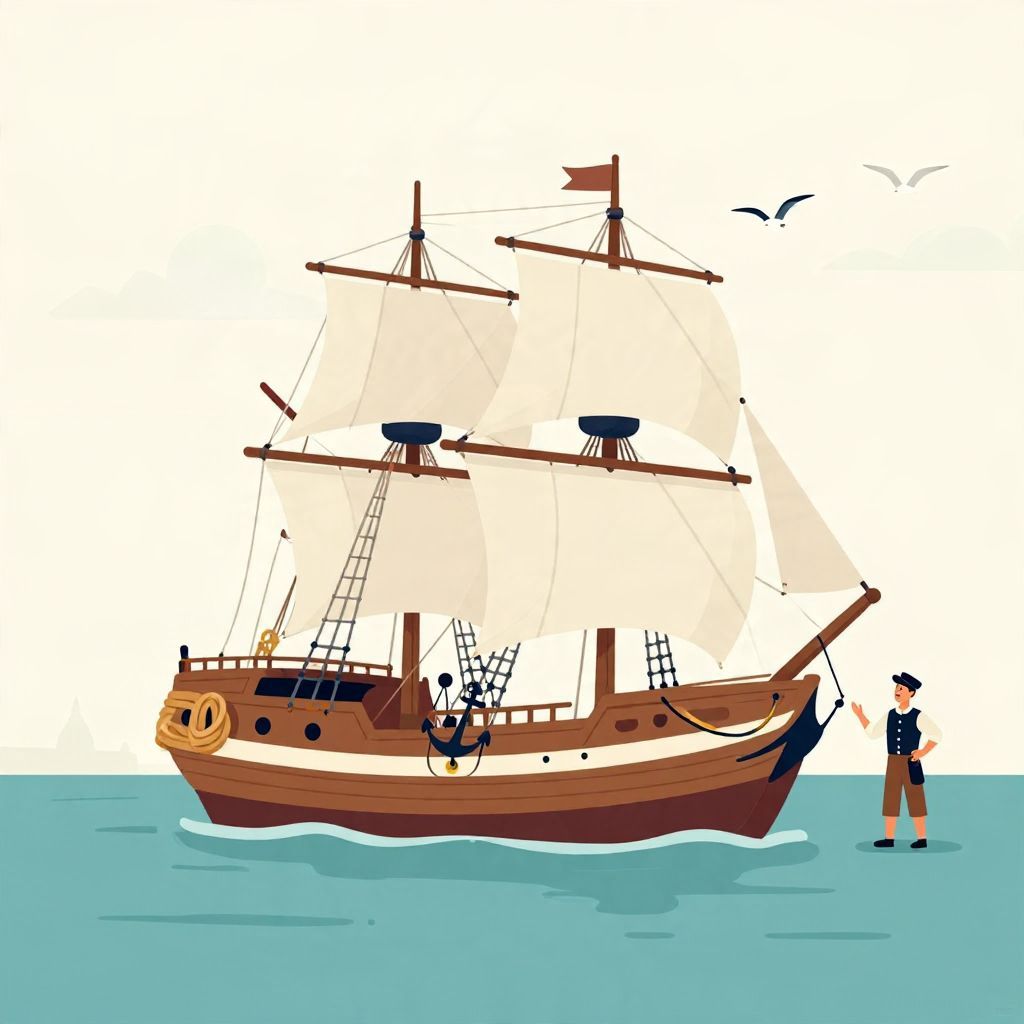
Why are ships called she? The short answer is that this tradition grew out of centuries of maritime language, custom, and symbolism rather than a single official rule. Sailors often treated ships as protective, life-sustaining, and personified beings, and many seafaring cultures used feminine imagery for vessels long before modern grammar books tried to standardize language.
The custom became especially familiar in English-speaking maritime culture, where ships were often spoken of with affection, loyalty, and even reverence. But the tradition is historical, not universal: many languages do not assign ships a feminine gender, and modern usage is increasingly mixed. Understanding why ships were called “she” means looking at grammar, folklore, seafaring life, and the long history of how people imagined the sea.
Why are ships called she?
Ships were called she because sailors and writers personified them as powerful, beloved, and sometimes temperamental companions. The feminine pronoun reflected maritime custom, not biology. Over time, English-speaking seafarers, naval traditions, and literature reinforced the habit until it became a familiar way to speak about vessels.
The historical roots of calling ships “she”
Personification at sea
For sailors, a ship was never just machinery. Before modern engines and navigation systems, a vessel was a living workplace, shelter, and means of survival. It carried crews through storms, protected them from danger, and demanded constant care. It was therefore natural to speak of a ship as if it had a personality, moods, and a will of its own.
This kind of personification appears in many cultures. People often give human traits to objects that matter deeply to them, especially objects associated with risk and dependence. A ship could be “faithful,” “stubborn,” “beautiful,” or “unlucky.” The feminine pronoun fit that emotional and symbolic relationship in English maritime tradition.
Influence from older linguistic habits
One reason the custom took hold is that many languages historically used grammatical gender. In Latin, French, Spanish, and other European languages, nouns may be masculine or feminine regardless of whether they refer to living things. English does not work that way in the same grammatical sense, but it inherited many cultural habits from these languages through literature, religion, and elite education.
That said, historians should be careful not to overstate a simple grammar explanation. English speakers did not call ships “she” only because of grammar. The more important reason was social and cultural: seafaring communities developed a strong tradition of treating ships as female, especially in poetry, song, and everyday speech.
How maritime culture shaped the tradition
Sailors depended on their ships
In the age of sail, a ship could mean the difference between survival and disaster. Crews spent months or years aboard, often in harsh conditions, and the vessel became central to their identity. It was common to form an attachment to a ship in the same way people might feel loyalty to a home, a horse, or a family member.
Because ships were so important, sailors often gave them names, decorated them, and spoke of them with affection. Calling a ship “she” helped express that bond. The pronoun also suggested grace, beauty, and strength—qualities that maritime culture admired in a vessel built to endure wind and sea.
Ships as protectors and mothers
Another symbolic reason lies in the protective role of ships. A vessel enclosed its crew within a floating shelter, much like a mother or caretaker protects children. This is not a literal historical explanation, but it helps explain the emotional logic behind the language. In many traditions, the feminine is associated with nurture, shelter, and continuity, and those associations fit the way sailors experienced their ships.
At the same time, ships could be dangerous and unpredictable. That duality—protective yet potentially destructive—made them ideal subjects for personification. A ship might be spoken of as a “lady” because she was admired, but also because she could be temperamental and demanding.
Did all sailors call ships “she”?
The custom was widespread, but not universal
The feminine ship tradition became especially strong in English-speaking naval and merchant cultures, but it was never absolute. Some speakers used “it,” particularly in technical or formal contexts. Other languages used different grammatical patterns entirely. In modern English, many writers and institutions now prefer “it” for ships, especially in official documentation.
So while “she” is historically well established, it is best understood as a cultural convention rather than a fixed rule of English. The convention was strongest in seafaring speech, literature, and public memory, less so in legal or engineering language.
Naval and merchant traditions
The practice was common in both naval and commercial seafaring. Merchant ships, warships, and exploration vessels could all be feminized in speech. This helped create a shared maritime language across different kinds of seafarers. The tradition also spread through newspapers, travel writing, and popular literature, which brought seafaring language to readers who had never been to sea.
If you want to understand the broader world in which this language developed, it helps to consider the people who worked on these vessels. Merchant crews, privateers, and naval sailors all contributed to the culture of ship personification. For related maritime history, see what a merchant marine is and what a buccaneer was.
Ships in literature and popular culture
Poetry, songs, and storytelling
Literature played a major role in preserving the tradition. Poets and storytellers often described ships as feminine because the image sounded elegant, intimate, and dramatic. In ballads and sea stories, a ship could be a beloved companion, a tragic victim, or a fierce survivor. These artistic choices reinforced the everyday habit of saying “she.”
By the 18th and 19th centuries, when imperial trade and naval power made ships central to public life, the feminine ship became even more familiar. Readers encountered it in adventure novels, naval histories, and patriotic writing. The convention entered the broader language of English-speaking societies, even among people who had never served at sea.
The age of sail and national identity
During the age of sail, ships were symbols of national power, exploration, and commerce. Nations celebrated famous vessels for military victories, voyages of discovery, and trade routes. Naming and personifying ships helped turn them into public icons. A famous ship was not merely equipment; it was a character in national history.
That symbolic status made feminine language especially useful. It gave the ship a dignified identity and made it easier to narrate its “life” in stories of battle, storm, and voyage. In this sense, calling a ship “she” was part of a larger historical habit of turning vessels into heroes or heroines.
What historians think the tradition means
A blend of language, symbolism, and social life
Historians generally see the custom as the result of several overlapping influences rather than one single origin. These include grammatical habits from European languages, seafaring superstition, emotional attachment, and literary style. The tradition survived because it was useful: it expressed respect, familiarity, and affection in a compact and memorable way.
It is also important not to read the custom too simplistically. Calling a ship “she” did not necessarily reflect a coherent theory about women or gender. In some cases it was affectionate and admiring; in others it was patronizing or conventional. Like many historical language habits, it reveals more about social custom than about deliberate ideology.
Superstition and bad luck at sea
Maritime life was full of ritual and superstition, and language was part of that world. Sailors often believed that proper names, gestures, and words could influence luck. Referring to a ship as female may have fit into a broader pattern of treating vessels as beings that required respect. If a ship was a kind of companion, then speaking of her correctly mattered.
Still, historians should be careful here. Superstition may have supported the custom, but it is difficult to prove that it was the main cause. The evidence points more strongly to long-term cultural habit than to any single maritime belief.
Why the tradition is changing
Modern language and official style
In contemporary English, the habit of calling ships “she” is less universal than it once was. Modern style guides, technical writing, and international shipping communication often prefer neutral language. This shift reflects broader changes in English usage, including reduced personification in formal prose and greater sensitivity to gendered language.
Even so, the older tradition remains alive in many contexts. Naval ceremonies, memorial writing, and nostalgic maritime speech still use “she” for ships, especially older or famous ones. The custom survives because it carries historical memory, not because it is required by grammar.
Continuity with the past
People continue to use the feminine pronoun for ships partly because it connects them to earlier generations of sailors. The language evokes the age of sail, naval warfare, exploration, and merchant travel. In that sense, “she” is a small but durable piece of maritime heritage.
As with many historical customs, the phrase has outlived the world that created it. Steam power, diesel engines, radar, and modern navigation changed ships dramatically, but the old language remained. That is one reason the tradition still feels evocative today: it preserves a cultural memory of seafaring life.
So, why are ships called she?
Ships are called she because sailors and writers historically personified them as cherished, protective, and powerful companions. The custom grew from maritime culture, literary tradition, and older language habits, especially in English-speaking seafaring societies. It was never a universal rule, but it became one of the most recognizable traditions in naval and maritime history.
In the end, the feminine ship is a reminder that history lives not only in battles and empires, but also in everyday words. A simple pronoun can preserve centuries of seafaring experience, showing how language carries the emotions, beliefs, and customs of the past.