
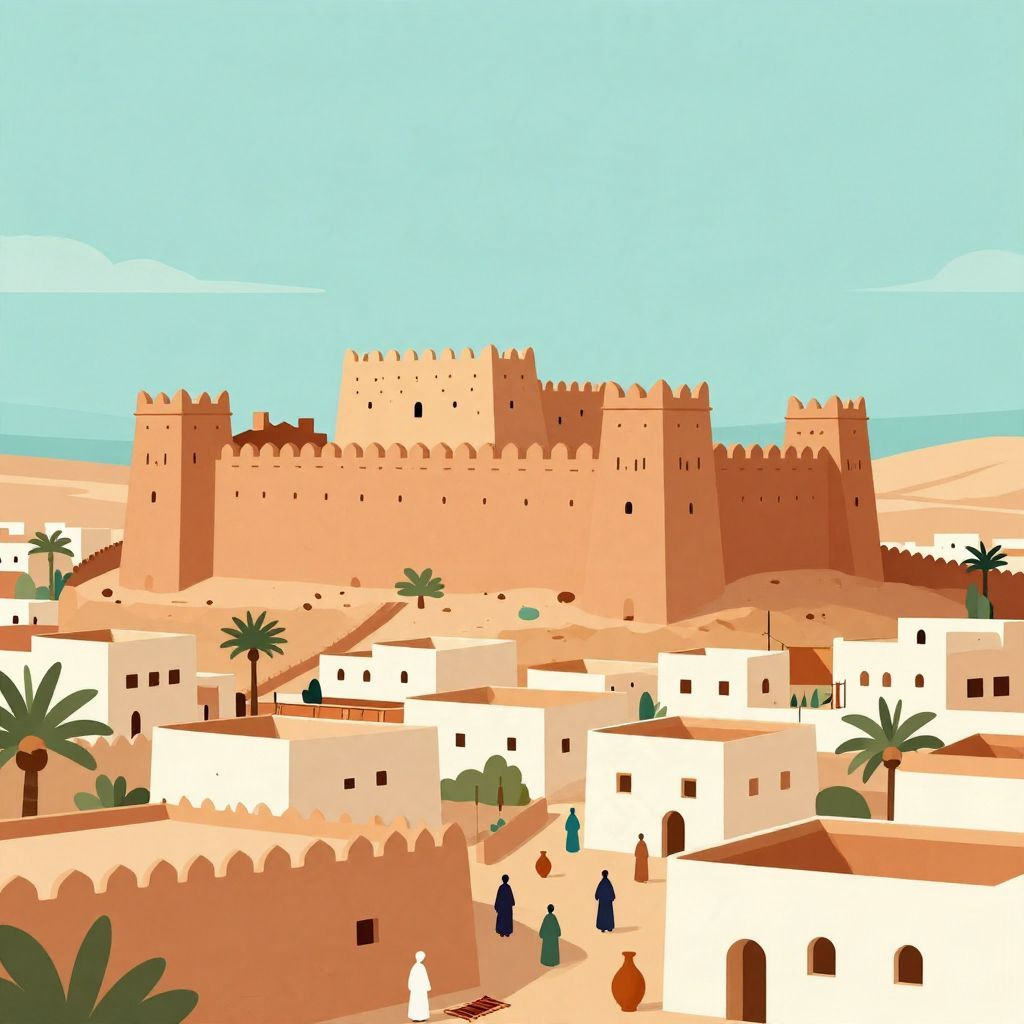
What is a casbah? The word usually refers to the fortified core of a North African city, especially in Algeria, Morocco, Tunisia, and parts of the wider Maghreb. It can mean a citadel, a walled quarter, or the old administrative and military center of a town.
Over time, “casbah” also came to suggest a dense, maze-like neighborhood of narrow streets, houses, mosques, markets, and defensive walls. Its meaning varies by place and period, but its history is tied to urban defense, imperial rule, trade, and local community life.
What Is a Casbah?
A casbah is a fortified urban district, often the oldest and most defensible part of a city. In historical usage, it could function as a citadel, a governor’s stronghold, or a protected neighborhood where political power, military control, and daily life were closely intertwined.
The term is most strongly associated with North Africa and the Arabic-speaking Islamic world. In some cities, the casbah was a single fortress; in others, it was an entire old quarter enclosed by walls. Because local usage differed, the word does not describe one fixed building type.
Origins of the Word “Casbah”
The English word casbah comes through French from the Arabic qaṣba or qasaba, a term linked to a fortified place, citadel, or central stronghold. The root is associated with strength and enclosure, which fits the function of these urban centers.
As Arabic-speaking dynasties and later Ottoman and local rulers shaped North African cities, the word spread across the region. European colonial writers and travelers then popularized “casbah” in English, often using it broadly to describe old fortified quarters, sometimes with romantic or exotic overtones.
How Did Casbahs Develop Historically?
Casbahs developed because cities in the medieval and early modern Mediterranean often needed protection. Rulers wanted a secure base from which to govern, collect taxes, store supplies, and defend against revolt or attack. A fortified district near the center of the city was practical and symbolic.
In North Africa, many casbahs grew out of earlier Roman, Byzantine, and local settlement patterns, then were reshaped after the spread of Islam from the 7th century onward. Later dynasties built walls, towers, gates, and palaces, turning older urban cores into strategic centers of rule.
Why fortify a city center?
- Defense: walls and narrow streets made assault difficult.
- Administration: rulers could govern from a secure base.
- Control: military garrisons could monitor the city and harbor.
- Prestige: a citadel projected power and legitimacy.
- Community: residents benefited from protection during unrest.
Casbahs in North African History
Casbahs are especially important in the history of the Maghreb, the region stretching across modern Morocco, Algeria, Tunisia, and Libya. Here, urban life often centered on a medina, or old city, with a casbah as the protected heart of political authority or elite residence.
In some places the casbah was the seat of a local ruler or governor. In others it became a military quarter or a fortified neighborhood occupied by influential families, soldiers, or officials. The exact form depended on the city’s size, geography, and ruling power.
Examples across the region
- Algiers: the Casbah of Algiers became famous as a dense, historic quarter linked to Ottoman-era rule and later resistance to French colonial power.
- Tunis: the citadel area around the old city served administrative and defensive purposes.
- Fez and other Moroccan cities: fortified quarters and kasbahs often housed elites or served as defensive strongpoints.
- Coastal towns: some casbahs guarded ports, trade routes, and approaches from the sea.
Casbah, Medina, and Kasbah: Are They the Same?
These terms are related but not identical. A medina usually means the old city or historic urban core, especially in North African and Middle Eastern contexts. A kasbah or casbah more specifically refers to a fortified district, citadel, or stronghold within or beside that city.
In everyday speech, people sometimes use “casbah” loosely for the whole old quarter. Historians and urban scholars, however, try to distinguish between the broader medina and the more defensible, politically important casbah. Local usage can still vary from city to city.
What Was Life Like in a Casbah?
Casbahs were not only military spaces. They were lived-in neighborhoods where people worked, prayed, traded, and raised families. Houses were often built around interior courtyards, helping provide privacy, shade, and relief from heat. Streets were narrow, winding, and sometimes covered in places.
This layout was not accidental. Dense streets reduced exposure to sun and wind, while twisting paths could slow attackers and make the neighborhood easier to defend. Markets, workshops, religious buildings, and homes were often closely packed together, creating a highly interconnected urban world.
Common features of a historic casbah
- Fortified walls or gates
- Narrow lanes and alleys
- Courtyard houses
- Mosques or prayer spaces
- Markets and small workshops
- Administrative buildings or barracks
Casbahs Under Ottoman and Colonial Rule
From the 16th century onward, many North African cities came under Ottoman influence or rule. In that period, casbahs often became the residence of governors, military elites, or local authorities. They were practical centers of power in a region shaped by maritime trade, regional politics, and imperial competition.
During the 19th and 20th centuries, European colonial powers transformed many historic cities. In some cases, they demolished walls, altered street patterns, or shifted administrative centers away from the old casbah. Yet these districts remained powerful symbols of local identity and resistance.
The Casbah of Algiers as a symbol
The Casbah of Algiers is one of the best-known examples because it remained a dense historic quarter into the modern era. Under French colonial rule, it became associated not only with older urban traditions but also with political struggle, especially during the Algerian War of Independence in the 20th century.
That history gave the word “casbah” a wider cultural resonance. In modern usage, it can evoke not just architecture, but also memory, resistance, and the survival of historic urban life under pressure from colonialism and modernization.
Casbahs in Architecture and Urban History
From an architectural standpoint, a casbah shows how cities adapted to security, climate, and governance. Its design reflects a balance between defense and domestic life. Unlike a purely military fortress, it was usually embedded in a living city and shaped by social customs as much as by warfare.
Urban historians value casbahs because they reveal how premodern cities were organized. They show how power was concentrated, how communities protected themselves, and how architecture could serve both state authority and everyday life. Many surviving casbahs are now protected as heritage sites.
Why historians care about casbahs
- They preserve evidence of precolonial urban planning.
- They show the relationship between rulers and city residents.
- They reveal how defense shaped housing and streets.
- They help explain regional identity in North Africa.
- They are key sites in debates over preservation and modernization.
Popular Culture and the Word “Casbah”
In English, “casbah” entered popular imagination through travel writing, colonial accounts, films, and songs. These uses often emphasized mystery, labyrinthine streets, and exotic atmosphere. While such imagery helped spread the word, it sometimes flattened the real historical diversity of casbahs.
In reality, casbahs were practical urban environments shaped by politics, climate, religion, trade, and family life. Their beauty and complexity came from function as much as from symbolism. The romantic image is only one layer of a much older historical reality.
Do Casbahs Still Exist Today?
Yes. Many historic casbahs survive, though often in altered form. Some remain inhabited and active; others have become heritage districts, tourist destinations, or protected monuments. Preservation can be difficult because old structures need maintenance, and modern urban growth places pressure on historic neighborhoods.
At the same time, surviving casbahs remain living places rather than frozen museums. Their continued use is part of their historical importance. They connect present-day communities to centuries of urban development, local memory, and architectural adaptation.
So, What Is a Casbah in Historical Terms?
Historically, a casbah is a fortified urban center or citadel, most closely associated with North African cities. It could serve as a ruler’s stronghold, a military quarter, or a protected old neighborhood. Its form changed over time, but its purpose was always tied to defense, authority, and urban life.
Understanding the casbah means seeing it not as a single building, but as a historical landscape where architecture, politics, and community met. If you want to explore related ideas, see cultural preservation in architecture and the history of the acropolis.