
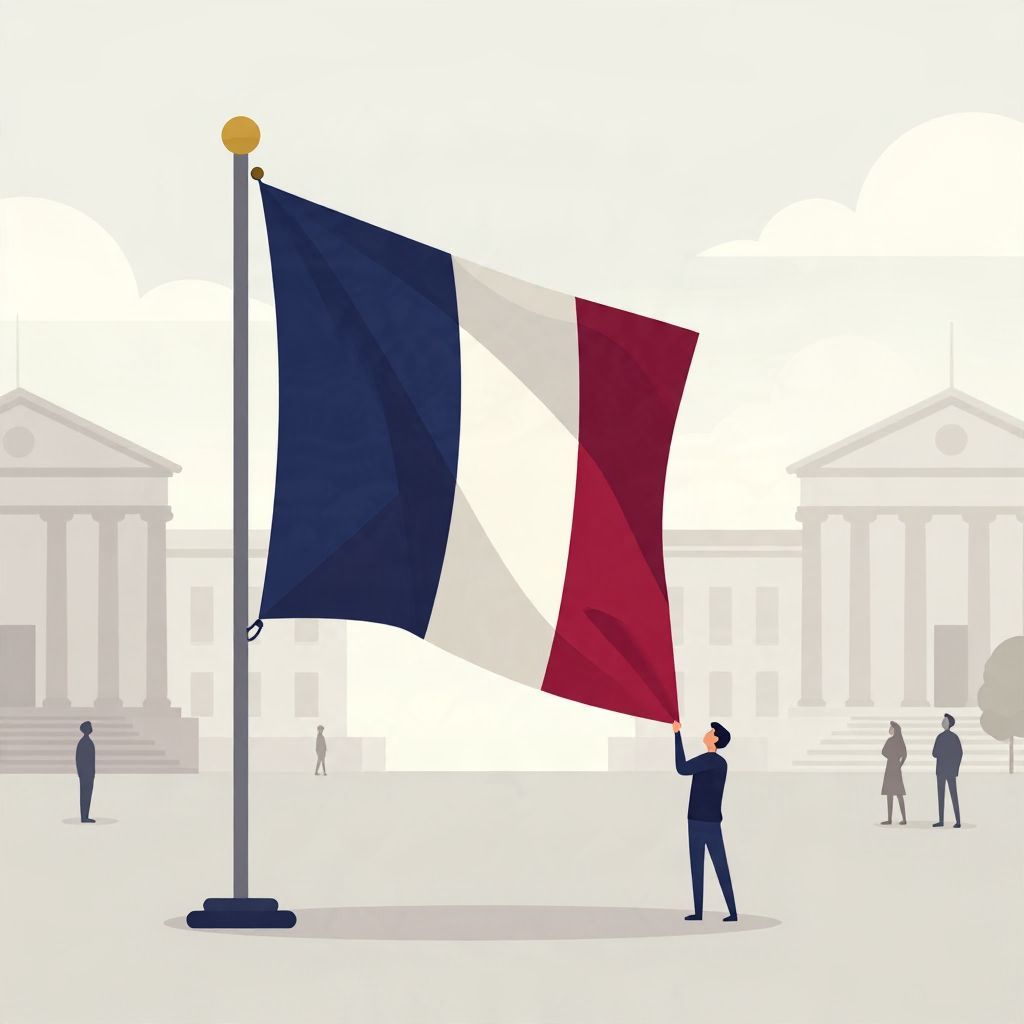
What does an upside down flag mean? In most historical and legal contexts, it is a signal of distress or extreme danger. The idea is older than modern politics and is especially associated with maritime tradition, where a reversed flag could mean a ship was in serious trouble and needed immediate help.
Over time, the upside down flag also took on broader meanings, including protest, emergency, and symbolic rejection of normal order. Its interpretation depends on the country, the setting, and the intent of the person displaying it.
What does an upside down flag mean?
An upside down flag traditionally means distress, danger, or a call for help. Its strongest historical roots are in seafaring, where ships used distress signals to show they were in trouble. In modern use, it can also express protest, although the meaning depends on context and, in some countries, may be restricted by law or custom.
Origins of the upside down flag
The upside down flag did not begin as a political slogan. Its earliest clear meaning comes from maritime practice, where flags were part of a shared visual language at sea. Before radios and satellites, ships needed simple signals that could be recognized from a distance. A reversed flag became one such sign of emergency.
Maritime distress and visual signaling
At sea, distress had to be communicated quickly and unmistakably. Sailors used flags, lanterns, smoke, and later coded signal systems to indicate danger. An upside down national or ship’s flag could show that a vessel was disabled, under attack, or otherwise in urgent need of assistance. The basic idea was practical: if the normal display of a flag represented order and identity, reversing it suggested that something was seriously wrong.
This convention mattered because ships were isolated. A passing vessel might be the only help available. The upside down flag therefore became one visual shorthand among several maritime emergency signals, especially before standardized international distress systems developed in the late 19th and early 20th centuries.
How the meaning changed over time
The upside down flag gradually moved from a strictly maritime emergency signal into a broader symbol used on land. By the modern era, people began flying it to show political protest, social unrest, or a belief that the nation was in crisis. That shift did not erase the older meaning; instead, it layered new uses onto an older symbol of distress.
From shipboard emergency to public protest
In land-based political culture, symbols often borrow from older traditions. A flag flown upside down can suggest that normal civic life has been turned upside down or that the nation is in trouble. Protesters have used it to signal alarm about war, government actions, corruption, or social breakdown. Because the symbol is so visually direct, it can communicate urgency without words.
At the same time, the protest use is not identical everywhere. In some places, an upside down flag is understood mainly as a statement of dissent; in others, it is seen as disrespectful. The same act may therefore be interpreted as either a protected political expression or an offense against national symbols.
Historical timeline of the symbol
The upside down flag has no single invention date, but its meaning developed through several historical stages. A simplified timeline helps show how a practical maritime signal became a modern political emblem.
- Pre-19th century: Flags are used at sea and on land as identity markers, signals, and symbols of authority.
- 19th century: Maritime signaling becomes more formalized; distress conventions develop alongside other visual and coded systems.
- Late 19th to early 20th century: International distress signaling becomes more standardized, reducing dependence on improvised visual signals.
- 20th century: The upside down flag increasingly appears in political protest and symbolic criticism.
- 21st century: It remains a contested symbol, often tied to emergency, activism, or national crisis depending on the setting.
Why the upside down flag is so powerful
Flags are among the most emotionally charged symbols in history. They stand for nations, armies, communities, and shared identity. Turning a flag upside down does not destroy that meaning; it reverses it. That reversal makes the symbol effective because it is instantly recognizable and deliberately unsettling.
Symbolism of reversal
Across many cultures, reversal can imply disorder, inversion, or crisis. A flag flown upside down works in the same way. It visually says that the ordinary state of affairs has been disrupted. Because the symbol is so simple, it can be read quickly even from a distance, which is one reason it has endured.
The power of the symbol also comes from ambiguity. A person displaying it may mean “help is needed,” “the nation is in trouble,” or “I reject what this flag currently represents.” That ambiguity can make the symbol effective in protest, but it can also lead to misunderstanding.
Legal and cultural differences
Whether an upside down flag is considered acceptable depends heavily on national law and public custom. In some countries, especially where flag etiquette is closely tied to patriotism, the act may be viewed as offensive. In others, it may be protected as free expression when used in protest.
United States context
In the United States, the upside down flag is widely recognized as a sign of distress under the U.S. Flag Code, though the code is generally advisory rather than criminal in most everyday settings. Historically, Americans have used it both as a distress signal and as a form of political protest. Because the flag is a powerful national emblem, the gesture can provoke strong reactions.
That said, the historical meaning remains important. The symbol did not originate as an insult. Its older sense was practical and urgent, and that heritage still shapes how many people interpret it today.
Other national traditions
In other countries, flag etiquette varies. Some nations have strict rules about display, while others treat flag orientation less formally. The same upside down display can therefore carry different weight depending on local history, laws, and political culture. A historian should be cautious about assuming a single universal meaning.
Distress signal or protest symbol?
The answer is often both, but not at the same time. Historically, distress came first. Protest use developed later, borrowing the older idea of emergency to communicate that something is deeply wrong. The distinction matters because intent and context shape meaning.
How context changes interpretation
If a flag is upside down on a sinking boat, the meaning is straightforward: distress. If it appears at a rally, on a lawn, or outside a government building, it may signal political opposition or alarm. Observers often infer meaning from location, accompanying signs, and the broader historical moment.
This is why historians avoid oversimplifying the symbol. The upside down flag is not inherently one thing. It is a historically layered sign whose meaning has shifted as communication and politics changed.
Historical significance of the upside down flag
The upside down flag matters because it shows how symbols evolve. What begins as a practical emergency signal can become a political statement, and what begins as a sign of distress can later be read as defiance. Its history reflects broader changes in communication, nationhood, and public protest.
It also reveals how people use familiar symbols to express crisis. When ordinary language seems inadequate, a reversed flag can say in one glance that something is wrong. That makes it one of the most durable and emotionally charged symbols in modern public life.
What to remember about the upside down flag
The historical meaning of an upside down flag is distress, especially in maritime tradition. Over time, it also became a symbol of protest and national alarm. Its significance depends on context, but its core message has always been the same: something is out of order and demands attention.
If you want to explore related symbolism and national history, you may also find what an upside down flag means and what an upside down American flag means useful for further reading.