
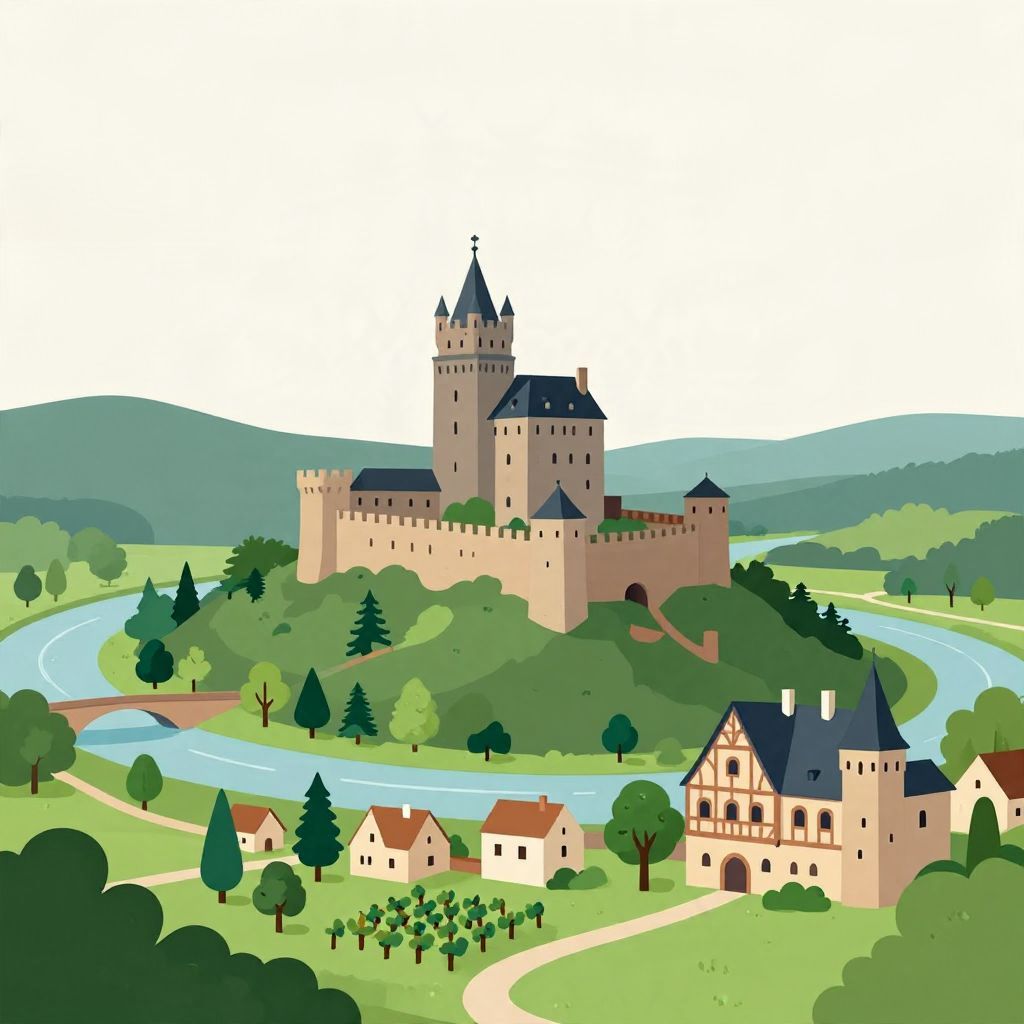
How many castles are in Germany? The short answer is that no one knows the exact number, because “castle” can mean different things in German history and architecture. Depending on whether you count medieval fortresses, noble residences, palace-like castles, and ruins, the total is usually estimated at several tens of thousands.
Germany has one of the densest castle landscapes in Europe, shaped by centuries of feudal fragmentation, river trade, territorial rivalries, and later romantic preservation. The question is less about a single fixed number than about how historians define a castle and which surviving structures are included.
How Many Castles Are In Germany?
There is no universally accepted exact count, but Germany is commonly said to have around 20,000 castles, palaces, and fortress-like historic buildings if ruins and related structures are included. If the definition is narrowed to medieval castles alone, the number is lower; if palaces and manor houses are added, it rises. The total depends entirely on classification.
Why the number is not fixed
In English, “castle” often suggests a fortified medieval stronghold. In German, however, several terms are used: Burg for a fortified castle, Schloss for a palace or residence, and Festung for a fortress. Many famous sites blur these categories, which is why published figures vary so widely.
Some lists count only intact buildings still standing today. Others include ruins, reconstructed sites, and large residential complexes that began as fortified castles but were later remodeled into elegant palaces. That is why one source may say Germany has a few thousand castles, while another gives a figure closer to 20,000.
What Counts as a Castle in German History?
Burg: the medieval fortified castle
A Burg was usually built for defense, control, and status. Many date from the High Middle Ages, especially between the 11th and 14th centuries, when local lords, bishops, and imperial officials competed for land and power. Hilltop castles, river castles, and toll castles were especially common.
Schloss: the residence of princes and nobles
A Schloss was often less about military defense and more about display, administration, and court life. Many medieval castles were transformed into Renaissance or Baroque residences during the 16th to 18th centuries. These buildings may still be called castles in casual English, even though historically they functioned more like palaces.
Festung: the fortress age
From the early modern period onward, artillery changed military architecture. Some older castles were adapted into bastioned fortresses, while new strongholds were built according to modern military principles. These are important to Germany’s castle heritage, but they are not always counted in the same way as medieval castles.
Why Does Germany Have So Many Castles?
Germany’s castle density reflects its long political fragmentation. For much of the Middle Ages and early modern era, the region was not a single centralized nation-state but a patchwork of duchies, bishoprics, free cities, counties, and imperial territories. Local rulers built castles to defend land, collect tolls, and project authority.
Geography also mattered. Rivers such as the Rhine, Moselle, Main, and Elbe were major trade routes, and castles were often placed above them to monitor traffic and demand tolls. Hills, passes, and borderlands were strategic locations. A castle was not just a home; it was a tool of power.
Feudal competition and territorial control
From the 10th century onward, nobles and church leaders used castles to secure land claims and military advantage. In regions where authority was divided among many rulers, fortifications multiplied. Unlike in more centralized kingdoms, there was no single royal policy limiting castle construction across the whole territory.
Trade routes and toll stations
Many castles were built near rivers or roads to control commerce. The Rhine Valley is a famous example: its steep slopes and narrow passages made it ideal for toll castles. Some of these strongholds became wealthy centers of administration, while others were destroyed in conflicts over trade and sovereignty.
The Historical Growth of Castle Building in Germany
Early medieval beginnings
Predecessors of later castles existed in the early Middle Ages, but the classic stone castle landscape expanded mainly from the 11th century. Early fortifications were often timber-and-earth structures, later replaced or supplemented by stone. The shift to more durable construction reflected both wealth and the need for stronger defense.
The High Middle Ages: the great castle boom
The 12th and 13th centuries were the great age of castle building in German lands. This was the period when many of the best-known hill castles were founded. As dynasties, bishops, and imperial ministers competed for territory, castles became symbols of rank as well as military assets.
Late medieval change and decline
By the late Middle Ages, some castles lost their military importance as warfare changed. Gunpowder artillery made many older fortifications vulnerable. Some were strengthened, but others were abandoned or converted into residences. Economic shifts and changing noble lifestyles also reduced the need for purely defensive strongholds.
Renaissance and Baroque transformation
From the 16th century onward, many medieval castles were rebuilt into comfortable residences. Moats, towers, and curtain walls might remain, but the interior and surrounding layout changed. This is one reason Germany today has so many “castles” that are actually palatial estates with medieval origins.
Destruction, ruin, and restoration
Wars repeatedly damaged German castles, especially during the Thirty Years’ War in the 17th century and later conflicts. Some were left as ruins; others were restored in the 19th century, when Romanticism made medieval architecture fashionable again. That restoration movement helped preserve many sites that might otherwise have disappeared.
Famous Castle Regions in Germany
Germany’s castles are not evenly distributed. Some regions contain especially dense concentrations because of their medieval political history and river geography. These areas are among the best places to understand why the country became so castle-rich.
- Rhine Valley – Known for dramatic hill castles overlooking the river and former toll stations.
- Palatinate (Pfalz) – Famous for ruins, forest castles, and border fortifications.
- Bavaria – Home to both medieval castles and later royal residences, including iconic 19th-century romantic castles.
- Thuringia – Rich in hilltop castles tied to medieval territorial fragmentation.
- Harz region – Contains many fortress ruins and noble seats in a mountainous landscape.
The Rhine as a castle corridor
The Middle Rhine is especially famous because the river narrowed into a strategic corridor where rulers could oversee shipping and tax commerce. The result was a chain of castles, many of them now ruins or carefully restored monuments. This landscape is one of the clearest examples of how geography and politics produced castle density.
How Castle Counts Are Estimated Today
Modern estimates usually come from heritage inventories, tourism organizations, and architectural surveys, but there is no single master list that settles the question. Some counts include only surviving structures that are clearly identifiable as castles. Others add palaces, fortress ruins, and partially preserved complexes.
A practical way to think about the numbers is this:
- Strict medieval castles only: several thousand.
- Castles plus palaces and fortress sites: often estimated in the low tens of thousands.
- Including ruins, reconstructions, and related noble residences: the total can approach or exceed 20,000 depending on the method used.
Because of these differences, any exact figure should be treated cautiously. The historical landscape is real; the number is a matter of definition.
Why Germany’s Castles Matter Historically
Germany’s castles are more than picturesque monuments. They reveal how power worked in a fragmented political order. They show where rulers controlled roads, rivers, and borders. They also trace the shift from medieval warfare to early modern state-building, and from military architecture to aristocratic display.
In cultural terms, castles became symbols of German regional identity in the 19th century, especially during the Romantic era. Painters, poets, and restorers helped turn ruined strongholds into national heritage. Today, castles are central to historical tourism, but they are also primary evidence for understanding medieval society, noble life, and territorial politics.
So, How Many Castles Are In Germany?
The most accurate answer is that Germany has many thousands of castles, with common estimates reaching around 20,000 when castles, palaces, fortress sites, and ruins are counted together. The exact number depends on whether you mean a medieval Burg, a palace-like Schloss, or a fortress. Historically, that variety is exactly what makes Germany’s castle heritage so rich.
For readers interested in related medieval and European history topics, this question connects naturally to broader studies of feudal power, fortress design, and royal residences across Europe.