
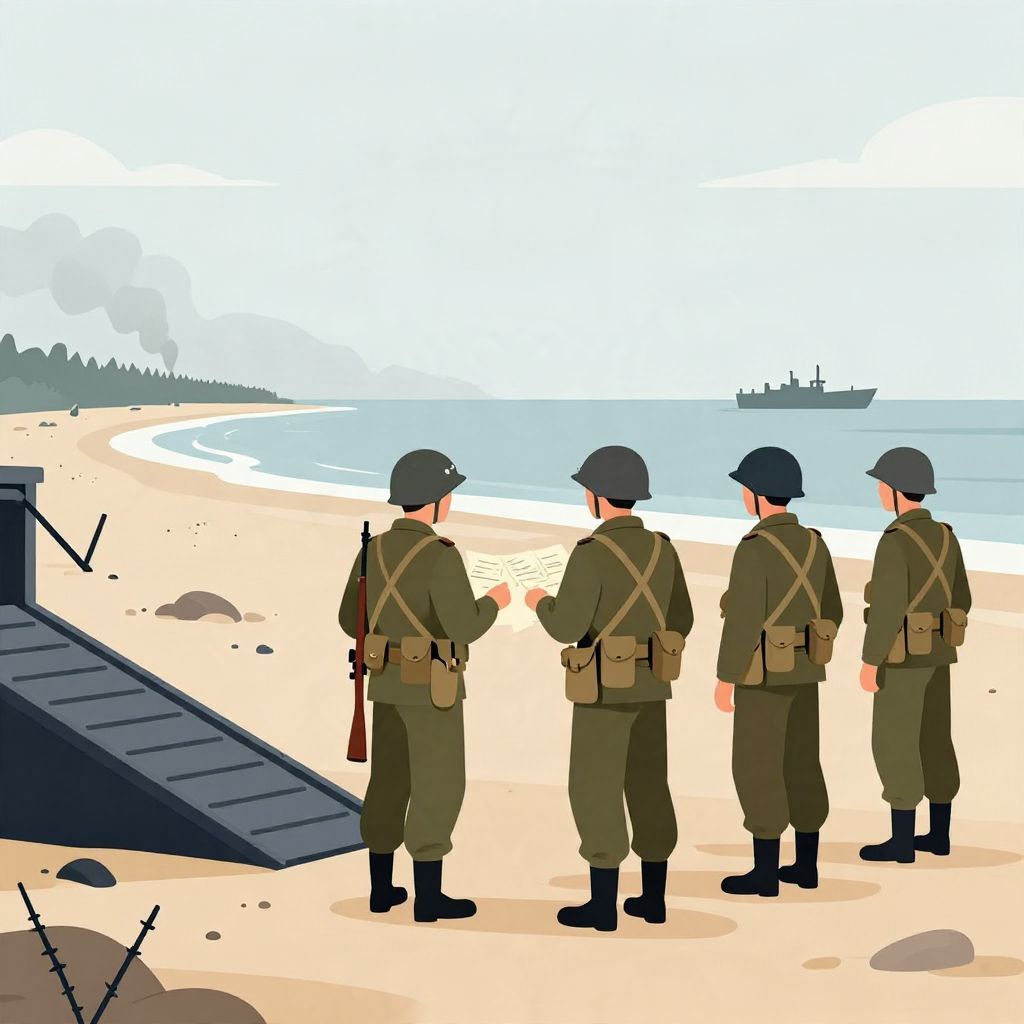
Is Saving Private Ryan based on a true story? The short answer is: not as a direct retelling of one real soldier’s life, but it is deeply rooted in real World War II history. Steven Spielberg’s 1998 film draws on the actual chaos of the Normandy landings, the U.S. Army’s casualty-heavy search and rescue realities, and the broader wartime effort to recover or account for missing servicemen.
The movie’s central mission is fictional, but many of its details, atmosphere, and battlefield conditions were shaped by historical research and by the experiences of real veterans. That blend of invention and evidence is why the film feels so authentic.
Is Saving Private Ryan based on a true story?
Saving Private Ryan is not based on one specific true story, but it is inspired by real World War II events and by a real family case that helped shape its premise. The film’s plot about a squad sent to find and bring home one soldier after his brothers have been killed is fictionalized, yet it reflects the U.S. military’s concern for “sole surviving sons” and the human cost of the Normandy campaign in 1944.
The historical idea behind the story
The movie’s emotional core comes from a real wartime policy concern: when several sons from the same family served, the military tried to reduce the risk of a family losing all of them. This became especially significant after tragic losses in World War II made the issue impossible to ignore. The film does not follow a documented rescue mission exactly, but it uses that historical context to build a believable wartime scenario.
In other words, the film is best understood as historical fiction: a made-up story set inside a real war, using authentic military conditions, weapons, uniforms, tactics, and the moral pressures of combat.
What real events inspired the film?
The most obvious historical foundation is the Normandy invasion of June 6, 1944, known as D-Day. The opening sequence depicts the landings on Omaha Beach, where American forces suffered severe casualties while trying to establish a foothold in occupied France. Spielberg’s portrayal is not a documentary, but it is widely regarded as one of the most realistic recreations of amphibious assault ever filmed.
Operation Overlord and Omaha Beach
On D-Day, Allied forces landed across five beaches in Normandy. Omaha Beach was among the bloodiest sectors because of strong German defenses, difficult terrain, and rough conditions at sea. The film captures the confusion, terror, and fragmentation of the assault: units become separated, communication breaks down, and individual soldiers are forced to make rapid life-or-death decisions.
That atmosphere is historically grounded. Veterans’ accounts describe similar sensory overload: shellfire, loss of command structure, wounded men struggling ashore, and the difficulty of moving under fire. While the movie compresses and dramatizes events, its emotional truth owes much to these firsthand testimonies.
The “sole surviving son” policy
The film’s mission premise reflects a real wartime policy concern that later became known as the “sole survivor” or “sole surviving son” issue. After the deaths of the Sullivan brothers in 1942, public attention grew around the danger of a single family losing multiple sons in combat. The U.S. military and government later developed procedures to protect remaining family members when possible, though the rules were not always simple or immediate in practice.
That background helps explain why the film’s central mission feels plausible. The army would not normally send a small unit on a highly dangerous rescue operation for one man alone, but the moral and political pressure surrounding family losses was real.
Was there a real Private Ryan?
There was no single “Private Ryan” whose story the film directly retells. However, the character was influenced by several historical and literary sources, including real wartime family tragedies and the idea that one surviving son might be pulled from combat after his brothers were killed. The name “Ryan” itself is fictional.
The Niland brothers and the closest historical parallel
The most frequently cited real-life parallel is the Niland brothers of New York. Four brothers served in the U.S. military during World War II, and after two were reported killed and a third presumed dead, the surviving brother, Edward Niland, was removed from combat and sent home. Later, it turned out that one brother thought dead had actually been taken prisoner and survived the war.
This case is important because it shows that the military did, at times, pull a surviving son from combat when a family had suffered devastating losses. The film’s premise is not a direct adaptation of the Niland story, but the resemblance is strong enough that many viewers see it as the main historical inspiration.
Why the film still changes the facts
The Niland case did not involve a dramatic rescue mission behind enemy lines. That part is pure invention, created to give the audience a compelling narrative structure and to explore questions of duty, sacrifice, and the value of one life against many. The film uses the historical idea, then builds a fictional quest around it.
Which parts of the film are historically accurate?
Many of the film’s broad details are accurate, even if the characters and mission are fictional. The uniforms, weapons, landing craft, battlefield confusion, and the general appearance of the Normandy fighting were researched carefully. The film also reflects the brutal reality that many soldiers were young, exhausted, frightened, and operating with incomplete information.
Historically grounded elements
- The D-Day landing setting in Normandy, France, in June 1944.
- The use of American infantry, Rangers, and German defensive positions.
- The chaos of amphibious assault and the difficulty of coordinating under fire.
- The physical devastation caused by artillery, machine guns, and mines.
- The emotional strain on soldiers who had to keep moving despite fear and loss.
Where the film takes dramatic liberties
- A small squad being assigned a special mission to retrieve one private is fictionalized for narrative effect.
- Several encounters and combat scenes are compressed or combined from different battlefield experiences.
- Characters represent types of soldiers rather than specific historical individuals.
- The timeline of events is tightened to create a continuous dramatic arc.
These liberties do not make the film “fake.” They simply mean it is not a documentary. It is a dramatization built on real wartime conditions.
How accurate is the D-Day portrayal?
The Omaha Beach sequence is one of the film’s most celebrated historical reconstructions. Many veterans and historians praised its intensity and attention to detail, especially the confusion of landing under fire and the difficulty of surviving the first minutes ashore. The scene’s power comes from showing war as disorienting, not heroic in a simple or tidy way.
Why the opening feels so real
Spielberg’s team used muted colors, handheld camera movement, and abrupt sound design to create a sense of instability. The result is a visual style that mimics the uncertainty of combat. The film does not present battle as a clean sequence of tactical maneuvers; instead, it shows fragmented action, partial orders, and the randomness of survival.
That approach aligns with many veterans’ descriptions of combat in Normandy. While individual details can be debated, the overall impression is historically credible: landing under heavy fire was terrifying, messy, and often beyond the control of any one soldier.
Why did the film become so influential?
Saving Private Ryan changed how many people imagined World War II on screen. Before it, many war films emphasized strategy, heroism, or polished adventure. Spielberg’s film emphasized bodily vulnerability, fear, and confusion. It pushed audiences to confront the cost of the war rather than only its triumph.
Impact on public memory
The movie helped renew popular interest in the Normandy invasion and in the experiences of ordinary American soldiers. For many viewers, it became the defining visual reference for D-Day. That influence is significant, but it also means the film has shaped memory as much as it reflects history. Viewers sometimes assume the rescue mission itself was real, when in fact it was a dramatic device.
Its popularity also encouraged broader discussion of how war stories are told. A film can be historically responsible without being literally true in every detail. In this case, the emotional and material realism is what gives the fiction its authority.
What should viewers take away from the film?
The best way to understand Saving Private Ryan is as a historically informed fictional drama. It is not a biography, and it is not a scene-by-scene record of one actual operation. But it is built from real wartime history, especially the Normandy campaign, the human cost of D-Day, and the military’s efforts to deal with devastating family losses.
The film’s lasting value lies in that balance. It uses fiction to illuminate history, while reminding viewers that the war was fought by real people under extreme pressure. Its central rescue story was invented, but the fear, sacrifice, and chaos it depicts were very real.
If you want more context on the war behind the film, you may also find it useful to read about how many Americans died in World War II and how many Americans died on D-Day. Those figures help explain why the film’s opening battle and its rescue premise continue to resonate so strongly.