
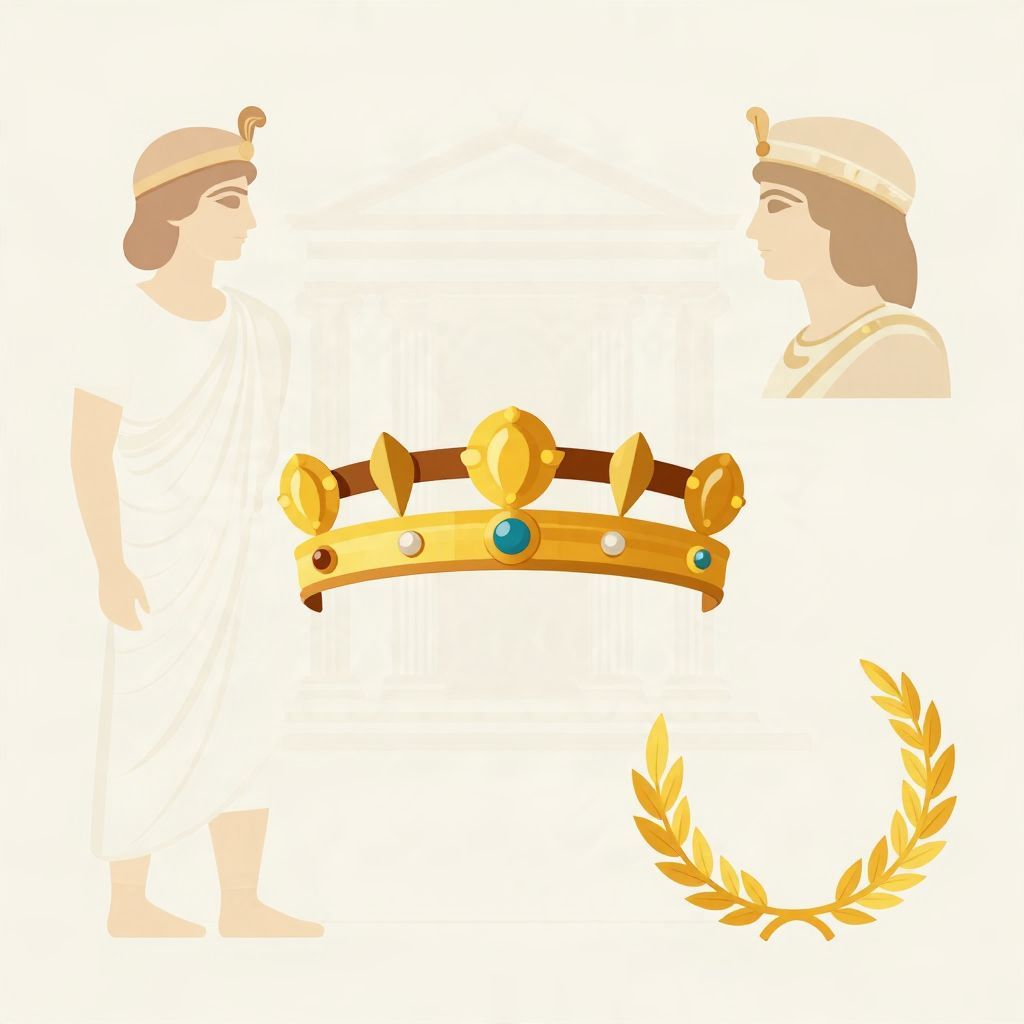
A diadem is a jeweled headband or crown-like ornament worn around the head, often as a sign of rank, authority, or ceremonial dignity. In history, the word has referred to both a real object and a powerful symbol: a visible marker of sovereignty, victory, or sacred status.
Its meaning has changed over time. In ancient empires, a diadem could signal royal power; in later European courts, it became associated with queens, princes, and formal regalia; and in modern usage, it can describe a decorative tiara-like headpiece or a poetic symbol of rule.
What Is a Diadem?
A diadem is a band worn on the head, usually made of metal and sometimes set with gems, that symbolizes authority, nobility, or ceremonial honor. Unlike a full crown, a diadem is often open-ended or shaped as a circlet. Historically, it was especially associated with kingship in the ancient world and with royal ornament in later periods.
The Origins of the Diadem in the Ancient World
The diadem is one of the oldest royal symbols known from the ancient Mediterranean and Near East. Its earliest clear associations appear in ancient Persia and the Hellenistic world, where rulers used headbands and fillets to mark special status. Over time, the diadem became a recognizable emblem of monarchy across many cultures.
From headband to royal symbol
In early Greek usage, a diadema could mean a band tied around the head. The term gradually took on political meaning. By the time of Alexander the Great and the kingdoms that followed his conquests in the late 4th century BCE, the diadem had become a sign of royal legitimacy. It was not simply decoration; it marked the wearer as a ruler set apart from ordinary people.
Persian and Hellenistic influence
Ancient Persian kings were often depicted with elaborate royal headgear, and Greek observers connected eastern monarchy with distinctive ceremonial dress. After Alexander’s empire fragmented, his successors adopted the diadem as part of royal imagery. In the Hellenistic kingdoms of Egypt, Syria, and Macedon, the diadem helped define kingship in a world where political authority had to be displayed visually as well as exercised militarily.
How Did the Diadem Become a Symbol of Kingship?
The diadem became a symbol of kingship because ancient rulers needed visible, repeatable signs of legitimacy. In societies where monarchy depended on public recognition, clothing and regalia mattered. A diadem distinguished a ruler from nobles, generals, and priests, and it could be shown in coinage, sculpture, and ceremony.
Why symbols mattered in ancient rule
Ancient states were often large and culturally diverse. A ruler might never be seen by most subjects, so images and regalia carried political meaning. The diadem worked especially well because it was simple, portable, and easy to recognize. It could be worn in portraits, on coins, and at official appearances, making it a flexible symbol of sovereignty.
Not the same as a crown
Although modern readers often imagine a diadem as a kind of crown, the two are not identical. A crown is usually a more enclosed, elevated form of headgear. A diadem is often a band or circlet. In antiquity, the diadem could be less elaborate than later crowns, yet it carried strong symbolic force as a mark of royal rank.
Diadems in Greece, Rome, and Byzantium
In Greek and Roman contexts, the diadem remained closely tied to monarchy and elite ceremony. Its meaning shifted as political systems changed, but the basic idea endured: a head ornament could signal who had the right to rule. Later, Byzantine emperors and empresses inherited and transformed this language of power.
Greek kings and the Hellenistic age
After Alexander’s death in 323 BCE, his generals and successors competed for legitimacy. The diadem became one of the clearest signs of royal status in the successor kingdoms. It appeared on portraits and coins, helping rulers present themselves as lawful heirs to Alexander’s prestige. In this period, the diadem was not merely ornamental; it was part of the political language of empire.
Rome and the suspicion of kingship
In the Roman Republic, kingship was deeply unpopular in political culture, so overt royal symbols were often viewed with suspicion. Roman leaders preferred titles and honors that did not openly resemble monarchy. Yet by the later Roman Empire, imperial ceremony embraced more elaborate regalia, and head ornaments became part of the visual grammar of power. The diadem eventually fit into this imperial world, even if early Romans would have associated it with eastern kings.
Byzantine ceremonial use
In the Byzantine Empire, regalia became highly formalized. The diadem and related head ornaments were used in court ceremony to represent imperial dignity. Over time, Byzantine practice influenced medieval Europe, where rulers and their courts borrowed and adapted imperial symbols. The diadem’s history therefore continued long after the ancient kingdoms that first made it famous.
What Did a Diadem Mean in Different Historical Periods?
The meaning of a diadem changed depending on time and place. Sometimes it represented kingship; sometimes it signaled victory, divine favor, or noble rank; and in later periods it became a ceremonial ornament worn by women of high status. Its core idea, however, remained linked to honor and distinction.
- Ancient Near East and Persia: royal authority and ceremonial rank
- Hellenistic kingdoms: dynastic legitimacy and kingship
- Roman and Byzantine worlds: imperial dignity and court ceremony
- Medieval and modern Europe: aristocratic or royal ornament, especially for women
Victory and divine association
In some ancient and later traditions, the diadem could also be associated with victory or sacred favor. Victorious leaders, gods, and honored figures were sometimes shown with headbands or circlets. This broadened the diadem’s meaning beyond monarchy alone. It could suggest not only political power but also a special, elevated status recognized by society or religion.
Diadems in Medieval and Modern Europe
In medieval Europe, the visual language of rulership became more elaborate. Crowns, circlets, and jeweled headpieces all developed distinct ceremonial roles. The diadem survived as a refined form of head ornament, especially in courtly and aristocratic settings. By the early modern period, it was often associated with queens, princesses, and formal dress.
From regalia to jewelry
As European courts became more ceremonial, the diadem gradually shifted from a primarily political emblem to a decorative item with aristocratic associations. It could still imply rank, but it was also used as fine jewelry. This change reflects a broader historical pattern: symbols of power often become aesthetic objects once their original political meaning is softened by time and custom.
The modern tiara connection
Today, many people use “diadem” and “tiara” almost interchangeably, though historians and jewelers may distinguish them. A tiara is usually a decorative headpiece, often worn by women on formal occasions. A diadem can mean the same thing in some contexts, but historically it has a stronger association with sovereignty and ancient kingship. The word retains an aura of antiquity and authority even when used in fashion or ceremonial settings.
Diadems in Art, Coins, and Literature
One reason the diadem is so well known is that it appears frequently in art and literature. Ancient rulers were often shown wearing it on coins and statues, which helped standardize its meaning across regions. Writers also used the diadem as a metaphor for power, honor, or beauty.
Coins and portraits
Coins were among the most effective tools of royal propaganda in the ancient world. A ruler’s portrait with a diadem could circulate widely, reinforcing the idea of lawful rule. Because coins traveled through markets and military pay, they spread royal imagery far beyond the court. This made the diadem one of the most visible symbols of authority in antiquity.
Literary symbolism
In poetry and later historical writing, the diadem often stood for sovereignty itself. It could symbolize the burden of rule as much as its honor. Authors used it to evoke majesty, succession, or the fragility of political power. Even when the object was not physically present, the word carried a strong emotional and political charge.
Why the Diadem Still Matters Historically
The diadem matters because it shows how societies use objects to define authority. A simple band of metal or fabric could become a major political symbol when placed on the right head in the right setting. Its history reveals the close relationship between material culture and power in the ancient and medieval worlds.
A symbol that changed with power
The diadem’s long history also shows that symbols are never fixed. What began as a headband became a royal emblem, then a court ornament, and later a piece of ceremonial jewelry. Each era inherited the form but gave it a new meaning. That adaptability is one reason the diadem has survived in language and imagery for so long.
So, What Is a Diadem?
A diadem is a head ornament, usually a jeweled band or circlet, that has historically signified rank, sovereignty, or ceremonial honor. Its roots lie in the ancient world, where it became closely tied to kingship, especially in the Hellenistic kingdoms. Over time, it evolved into a broader symbol of elegance and prestige, while still retaining its association with power.
If you are interested in how symbols of status worked in history, you may also enjoy reading about what a signet ring was used for and other forms of historical adornment and display. The diadem’s story is a reminder that in many societies, authority was not only exercised through law and force, but also worn on the body.