
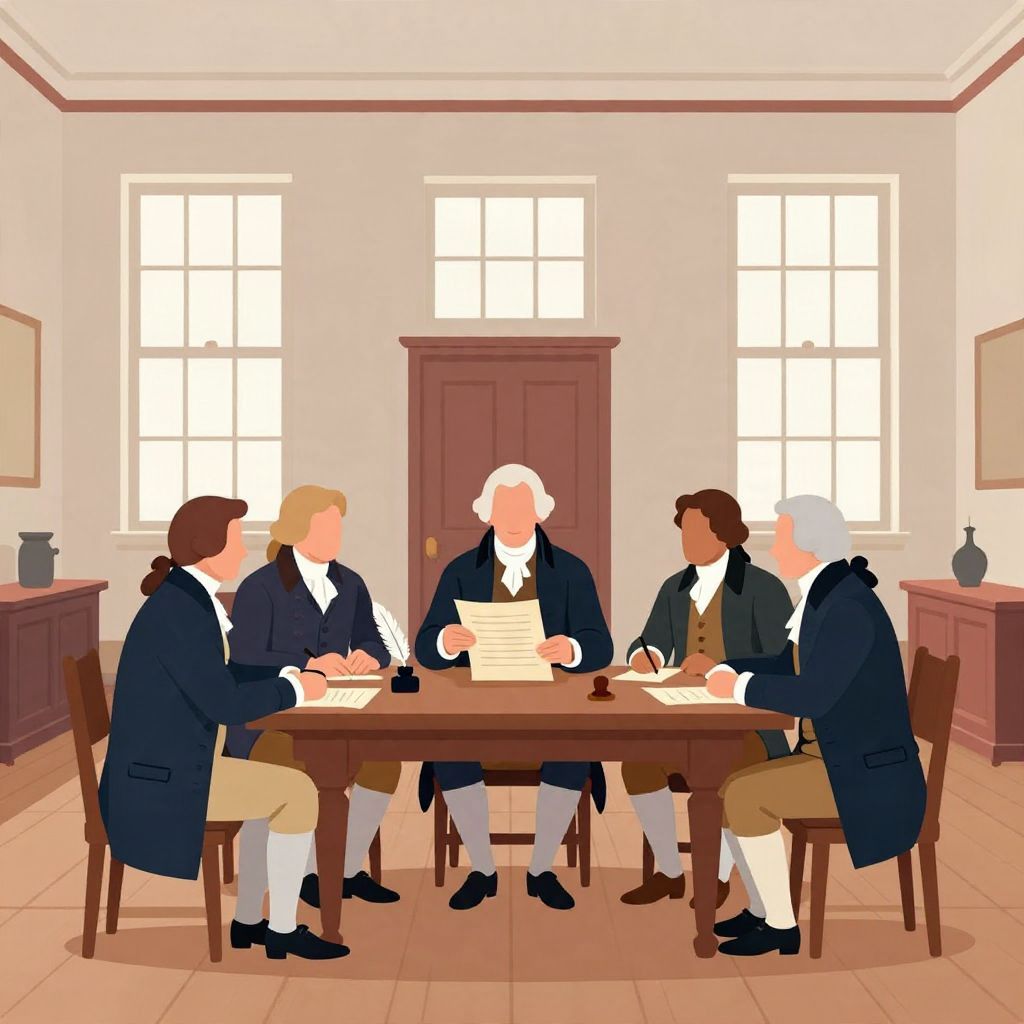
When people ask, “What year was the Constitution written?” they are usually asking about the creation of the United States Constitution, the document that replaced the Articles of Confederation and established the framework of the federal government. The short answer is 1787, though the story includes drafting, debate, signing, and later ratification.
The Constitution was written in Philadelphia during the Constitutional Convention, where delegates met to revise the national government after the weaknesses of the Articles became clear. The result was not a single-day event but a careful process that unfolded over several months and shaped the future of the United States.
What year was the Constitution written?
The United States Constitution was written in 1787. Delegates met in Philadelphia from May 25 to September 17, 1787, and the final text was signed on September 17. Although the document was drafted in that year, it did not take effect until 1789, after ratification by the states.
The Constitution’s timeline: from crisis to ratification
The Constitution emerged from a political crisis. By the mid-1780s, many leaders believed the Articles of Confederation had created a weak central government that could not tax effectively, regulate trade, or respond decisively to national problems. The convention in 1787 was meant to revise the Articles, but it soon became a broader effort to design an entirely new system.
Key dates in the writing of the Constitution
- 1781 — The Articles of Confederation take effect.
- 1786 — Shays’ Rebellion heightens concern about instability and weak national authority.
- May 25, 1787 — Delegates convene in Philadelphia.
- Summer 1787 — Major debates over representation, slavery, executive power, and federal authority.
- September 17, 1787 — The Constitution is signed.
- 1788 — Enough states ratify the document for it to be adopted.
- March 4, 1789 — The new government begins operating under the Constitution.
Why was a new Constitution needed?
The Articles of Confederation had created a loose alliance of states rather than a strong national government. Congress had limited power, no independent ability to tax, and little authority to enforce its decisions. This made it difficult to pay war debts, manage interstate disputes, or present a unified foreign policy. Many leaders concluded that the republic needed a stronger constitutional structure to survive.
The weaknesses of the Articles of Confederation
Under the Articles, each state retained substantial independence. That arrangement reflected fear of centralized power after the Revolution, but it also produced practical problems. Congress could request money from the states but could not compel payment. It could negotiate with foreign nations, yet it struggled to enforce treaties. Trade barriers between states also threatened economic stability.
These problems did not automatically lead to the Constitution, but they created the conditions for constitutional reform. The Philadelphia Convention was originally authorized to revise the Articles, but many delegates quickly decided that patching the old system would not be enough.
How the Constitution was written in 1787
The Constitution was written through debate, compromise, and committee work. The delegates were not all united in purpose, and they represented different regional interests, political philosophies, and economic priorities. The final document was the product of negotiation rather than a single author’s design.
Who wrote it?
No single person wrote the Constitution alone. However, several figures played especially important roles. James Madison is often called the “Father of the Constitution” because he arrived with a detailed plan and kept extensive notes. George Washington presided over the convention, lending it authority. Gouverneur Morris helped shape the final wording, especially the Preamble. James Wilson, Alexander Hamilton, Roger Sherman, and others also influenced major provisions.
The convention included delegates from 12 states; Rhode Island did not send representatives. The men in the room were not a perfectly representative cross-section of the country, but they did bring together a wide range of political experience. Their disagreements helped shape the Constitution’s checks and balances, federal structure, and separation of powers.
Major issues debated in Philadelphia
- Representation — Should states be represented equally or by population?
- Slavery — How should enslaved people be counted, and how should the institution affect representation and taxation?
- Executive power — Should there be one president or several leaders?
- Federal power — How much authority should the national government have over the states?
- Judicial power — How should courts be structured and what authority should they hold?
These disputes produced compromises that still define American government. The Great Compromise created a bicameral legislature with one house based on population and one giving equal representation to states. The Three-Fifths Compromise affected congressional representation and taxation, though it did so by embedding slavery into the constitutional order. The result was a stronger union, but one built on unresolved moral and political tensions.
Was the Constitution signed in the same year it was written?
Yes. The Constitution was both written and signed in 1787. The final text was completed on September 17, 1787, when the delegates present signed it. That date is now commemorated as Constitution Day in the United States. But signing was not the same as immediate adoption. The states still had to ratify it before it became the law of the land.
Signing versus ratification
This distinction matters. The convention delegates signed the proposed Constitution in 1787, but the document did not become operative until enough states ratified it in 1788. In other words, 1787 is the year it was written and signed, while 1789 is the year the federal government under the Constitution fully began functioning.
The ratification process was also contentious. Supporters of the Constitution, known as Federalists, argued that it would strengthen the union and create a workable government. Opponents, called Anti-Federalists, feared that the new system would concentrate too much power in the national government and threaten liberties. Their objections helped lead to the Bill of Rights, added in 1791.
What happened after the Constitution was written?
After the convention ended, the Constitution had to be approved by the states. The ratification debates were intense, especially in large and politically important states such as Virginia and New York. Supporters eventually promised amendments to protect individual rights, which helped secure approval.
Why the Bill of Rights mattered
The original Constitution did not include a list of personal freedoms. Many Americans worried that the new federal government might become too powerful without explicit limits. The first ten amendments, adopted in 1791, addressed many of those concerns by protecting speech, religion, the press, due process, and other rights. This addition did not replace the Constitution written in 1787; it completed and strengthened it.
The Constitution’s structure also proved durable because it could adapt. Its amendment process allowed change without requiring a complete rewrite. That flexibility helped the document survive political conflict, territorial expansion, industrialization, civil war, and modern constitutional disputes.
Historical facts that help explain the Constitution’s creation
Several historical facts are especially useful for understanding why the Constitution was written when it was. The 1780s were a period of uncertainty after the American Revolution. The new nation had won independence, but it still needed a stable political framework. The Constitution was a response to that need, shaped by both idealism and fear.
Important facts to remember
- The Constitution was written in 1787, not 1776.
- It was drafted in Philadelphia at the Constitutional Convention.
- It was signed on September 17, 1787.
- It replaced the weak system created by the Articles of Confederation.
- It became effective after ratification in 1788 and the start of the new government in 1789.
It is also important to note that the Constitution was not the product of unanimous agreement. The delegates compromised because they had conflicting goals. Some wanted a stronger national government, while others wanted to preserve state sovereignty. The final document reflected a balance of those competing aims, though not always a just one.
Why 1787 remains the key date
When historians answer “What year was the Constitution written?” they point to 1787 because that is when the text was drafted and signed. If the question shifts to when it became law, the answer changes to 1788 or 1789 depending on whether one means ratification or the start of the new government. That distinction is the key to understanding the Constitution’s timeline.
So the simplest answer is this: the United States Constitution was written in 1787, during a summer of intense debate that transformed the American republic. For related background, you may also want to read about why the Articles of Confederation were replaced with the Constitution and how many people signed the Constitution.