
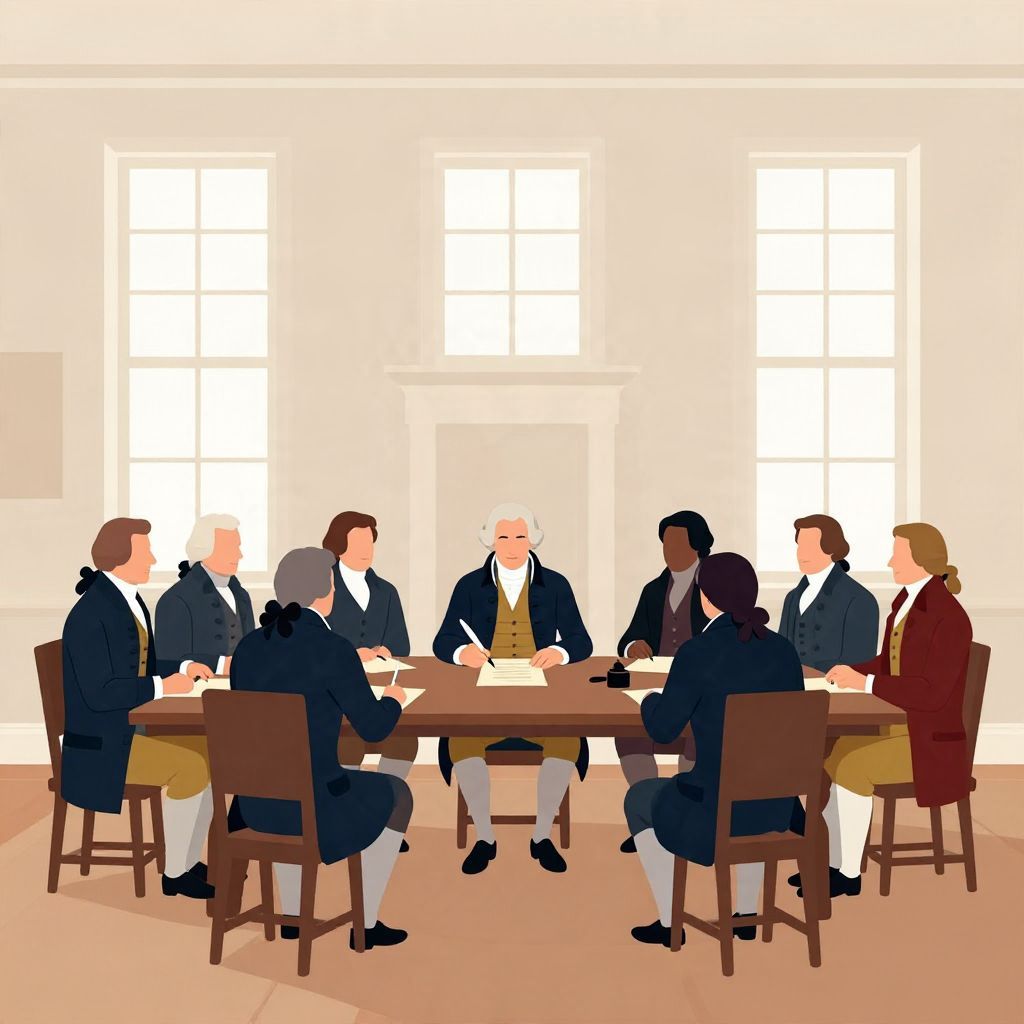
The question “How many people signed the Constitution?” has a precise historical answer, but it helps to know what document we mean and when the signing took place. The United States Constitution was signed in Philadelphia on September 17, 1787, at the end of the Constitutional Convention.
In total, 39 delegates signed the Constitution. Not every man who attended the convention signed it, and a few prominent delegates left before the final document was approved. The signatures represented the final agreement of the delegates who chose to endorse the new framework for the federal government.
How many people signed the Constitution?
Thirty-nine delegates signed the United States Constitution on September 17, 1787. Although 55 men attended the Constitutional Convention at some point, only 39 signed the final document. Three delegates who were present at the end refused to sign, and several others had already left Philadelphia before the signing.
Who signed the Constitution, and who did not?
The signers were delegates from 12 states, all of them present at the convention except Rhode Island, which refused to send delegates. The Constitution was signed by leading figures such as George Washington, James Madison, Benjamin Franklin, and Gouverneur Morris. Washington presided over the convention, Franklin brought prestige and compromise-minded support, and Morris is often credited with helping shape the final wording.
Three delegates refused to sign
Not everyone agreed with the final document. George Mason, Edmund Randolph, and Elbridge Gerry declined to sign. Their objections reflected serious concerns about the balance of power in the new government and the lack of a bill of rights. Their refusal shows that the Constitution was not universally accepted even among the delegates who helped draft it.
Some delegates left before the final signing
A few prominent delegates, including Thomas Jefferson and John Adams, were not there because they were serving abroad as diplomats. Others who attended the convention did not remain until the end. The final number of signers therefore reflects who was present and willing to endorse the completed text, not simply who participated at some point in the debates.
Why was the signing significant?
The signing of the Constitution marked the formal creation of a new national government for the United States. Before 1787, the country was governed under the Articles of Confederation, a system many leaders believed was too weak to handle taxation, trade, defense, and internal unrest. The Constitution aimed to solve those problems by creating a stronger federal structure while still limiting government power.
The signatures mattered because they signaled political commitment. The delegates were not just approving a draft; they were asking the states and the public to accept a new constitutional order. That was a bold step in a nation still recovering from revolution and deeply divided over how much power a central government should have.
How the Constitution was signed
The final signing took place in Independence Hall in Philadelphia after months of debate and compromise. The convention had begun in May 1787, originally with the goal of revising the Articles of Confederation. Instead, the delegates produced an entirely new Constitution.
The signing process in brief
- Delegates debated representation, executive power, slavery, and federal authority throughout the summer of 1787.
- A Committee of Detail and later a Committee of Style helped turn the convention’s resolutions into a final text.
- On September 17, the completed Constitution was read aloud and signed by the delegates who approved it.
- The document was then sent to the states for ratification.
This process was not purely ceremonial. The final text had to balance competing regional and political interests, and the act of signing helped present the Constitution as a finished national plan rather than a collection of unresolved proposals.
Why 39 signers matters historically
The number 39 is important because it shows that the Constitution was the product of a specific coalition, not unanimous agreement. The convention included many influential men, but only those who accepted the final compromise signed their names. That fact helps historians understand both the strength and the limits of the Constitution’s original support.
It also reminds us that the Constitution emerged from negotiation. Some delegates wanted a stronger central government, others feared it would become too powerful, and still others worried that the document did not protect individual liberties enough. The final signatures represented a workable compromise, not complete consensus.
Common misconceptions about the signers
Myth: all the delegates signed the Constitution
This is false. Only 39 of the 55 delegates who attended the convention signed the document. Several never attended the final session, and three who did attend refused to sign.
Myth: the Constitution was signed by the same people who declared independence
That is also false. The Constitution was a separate event from the Declaration of Independence in 1776. Some men were involved in both moments, but the two documents were created 11 years apart and under very different political circumstances.
Myth: signing meant everyone fully agreed on every issue
Not at all. Many signers had reservations. Some accepted the Constitution because they believed it was better than the alternatives, while others expected the ratification process to improve it through amendments, especially the future Bill of Rights.
What happened after the signing?
After the Constitution was signed, it still had to be ratified by the states. That process was contentious and sparked one of the most important political debates in American history. Supporters of the new framework became known as Federalists, while opponents were called Anti-Federalists.
Ratification succeeded in 1788 after enough states approved the document. Soon after, the new government began operating under the Constitution in 1789. The promise of a stronger union was paired with a growing demand for explicit protections of civil liberties, which led to the first ten amendments, known as the Bill of Rights.
Key facts at a glance
- Date signed: September 17, 1787
- Place: Philadelphia, Pennsylvania
- Number of signers: 39
- Total delegates who attended at some point: 55
- Delegates who refused to sign: 3
- States represented by signers: 12
The historical takeaway
The answer to “How many people signed the Constitution?” is 39, but the deeper story is about compromise, conflict, and nation-building. The Constitution was not the product of unanimous enthusiasm; it was the result of hard bargaining among delegates trying to create a durable government after the Revolution. For more context, you may also want to read about when the United States was founded and the first three words of the Constitution.