
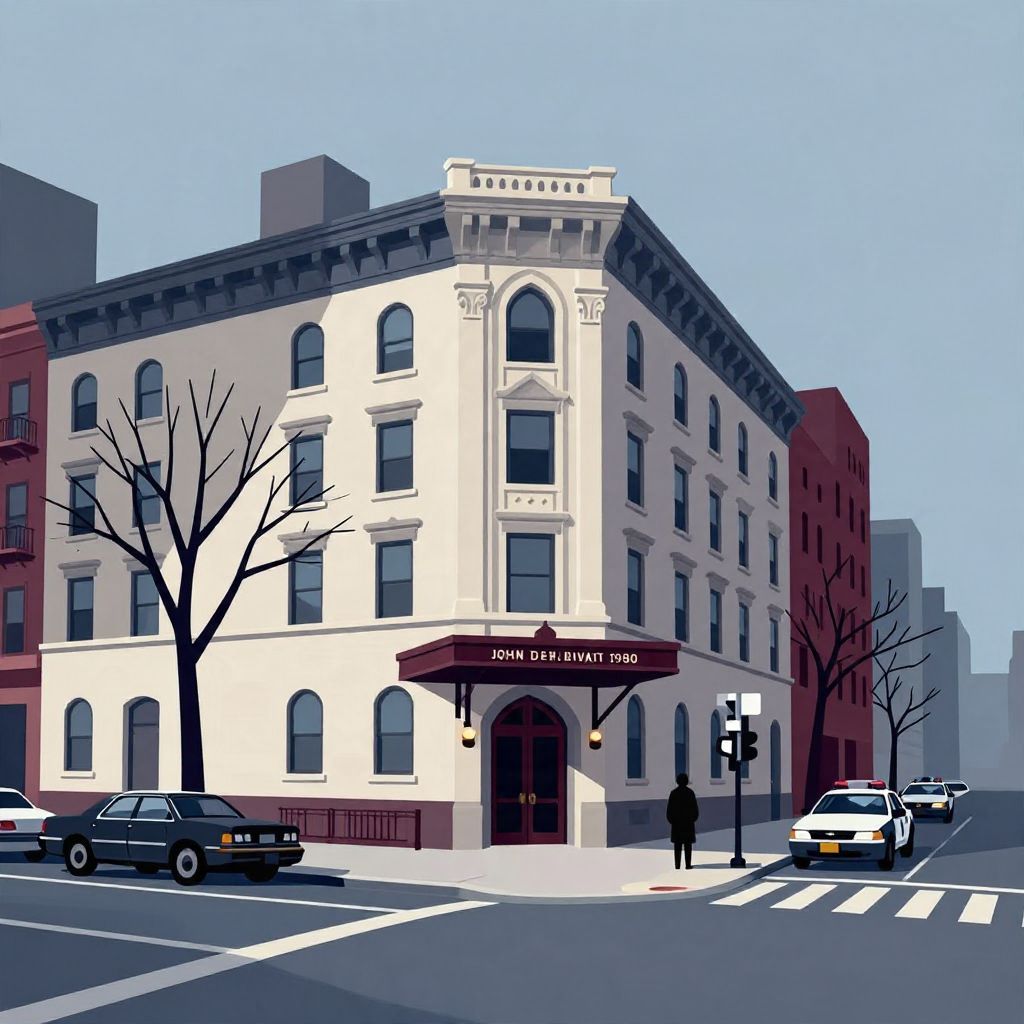
Where was John Lennon shot? The short answer is that John Lennon was shot outside the Dakota, his apartment building on the Upper West Side of Manhattan in New York City, on the evening of December 8, 1980. He was attacked at the entrance to the building after returning from a recording session.
The killing shocked the world because Lennon was not only a former Beatle but also a prominent public figure whose music and activism had shaped popular culture for decades. The location, the timing, and the public nature of the crime all became part of its lasting historical significance.
Where Was John Lennon Shot?
John Lennon was shot at the Dakota, 1 West 72nd Street, near Central Park West in Manhattan, New York City. The shooting took place just outside the building’s entrance on December 8, 1980, shortly before 11 p.m. Lennon had just returned home with Yoko Ono when he was ambushed by Mark David Chapman.
The Dakota: The Exact Location in New York City
The Dakota is a historic apartment building on the Upper West Side of Manhattan, facing Central Park. By 1980, it was known as a prestigious and private residence, and Lennon and Ono lived there with their son, Sean. The entrance where the shooting occurred became one of the most closely remembered places in modern music history.
Why this location mattered
The Dakota was not a concert hall, political venue, or public rally site. It was Lennon’s home, which made the attack especially unsettling. The violence happened in an ordinary domestic setting, underscoring how celebrity could collapse the boundary between public life and private safety.
What Happened on December 8, 1980?
That evening, Lennon and Ono had spent part of the day at the Record Plant studio in New York, where Lennon was working on music. As they returned to the Dakota, Chapman approached Lennon near the entrance and fired multiple shots. Lennon was struck and later died at Roosevelt Hospital.
A brief timeline of the night
- Daytime: Lennon and Ono spent time in the city, including a recording session.
- Evening: They returned to the Dakota in a limousine.
- At the entrance: Chapman shot Lennon outside the building.
- Afterward: Lennon was rushed to the hospital, where he was pronounced dead.
Who Shot John Lennon?
John Lennon was shot by Mark David Chapman. Chapman later pleaded guilty to murder. Historians and biographers have examined his motives, but there is no serious historical dispute about who committed the crime. The broader question has usually centered on how Chapman’s actions emerged from a mix of obsession, grievance, and mental instability.
Understanding the historical record
It is important to separate documented facts from speculation. Chapman was not acting as part of a political conspiracy, despite occasional rumors after the fact. The established evidence points to a lone assailant whose fixation on Lennon culminated in the shooting outside the Dakota.
Why the Shooting Shocked the World
Lennon’s death resonated far beyond New York because he had become a cultural symbol. As a Beatle, solo artist, and outspoken public figure, he represented both the optimism and the turbulence of the 1960s and 1970s. His murder felt to many people like the violent end of an era.
Lennon’s public role before 1980
After the Beatles broke up in 1970, Lennon pursued a solo career that mixed music, activism, and public commentary. He was associated with antiwar protest, peace campaigns, and a highly visible relationship with Yoko Ono. By 1980, he had returned to recording after a period of relative withdrawal from the music industry.
The Dakota and Its Place in History
The Dakota itself predates Lennon by nearly a century. Built in the late 19th century, it had long been one of New York’s most famous apartment houses. Its architecture and exclusivity made it a landmark before Lennon ever lived there, but the building became globally famous because of the events of December 8, 1980.
From residence to memorial site
After Lennon’s death, the area near the Dakota became a place of remembrance for fans from around the world. Strawberry Fields, the memorial section of Central Park across from the building, later became a focal point for public mourning and tribute. The site remains closely associated with Lennon’s legacy.
Historical Background: Lennon in New York
Lennon had moved to New York City in the early 1970s and increasingly identified with the city as his home. For him, Manhattan offered privacy, creativity, and a cosmopolitan environment that contrasted with the pressures of fame in Britain. The Dakota’s location near Central Park gave him both seclusion and visibility.
Why New York mattered to Lennon
New York was central to Lennon’s later life and work. He was seen in the city as a resident rather than only as a global celebrity, and that made the attack feel even more personal to the public. The shooting also raised lasting questions about celebrity security in urban spaces.
Aftermath and Historical Significance
The immediate aftermath of Lennon’s shooting was marked by grief, disbelief, and intense media coverage. Fans gathered in New York and around the world to mourn him. The event also changed how the public thought about fame, vulnerability, and the need for security around major cultural figures.
Lasting consequences
- John Lennon’s death became one of the defining cultural tragedies of the late 20th century.
- The Dakota and nearby Central Park became enduring sites of memory.
- His murder intensified discussions about celebrity safety and public access.
- Lennon’s music and image gained an even more powerful posthumous legacy.
Answering the Question Simply
If you are asking “Where was John Lennon shot?” the clearest answer is: outside the Dakota apartment building at 1 West 72nd Street in Manhattan, New York City. He was shot at the entrance to his home on December 8, 1980, and later died at the hospital.
For more on the timeline of the event, see when John Lennon was shot, and for broader context on his career, you may also want to read about how long the Beatles were together. Lennon’s death remains a stark reminder of how a single location can become part of world history.