
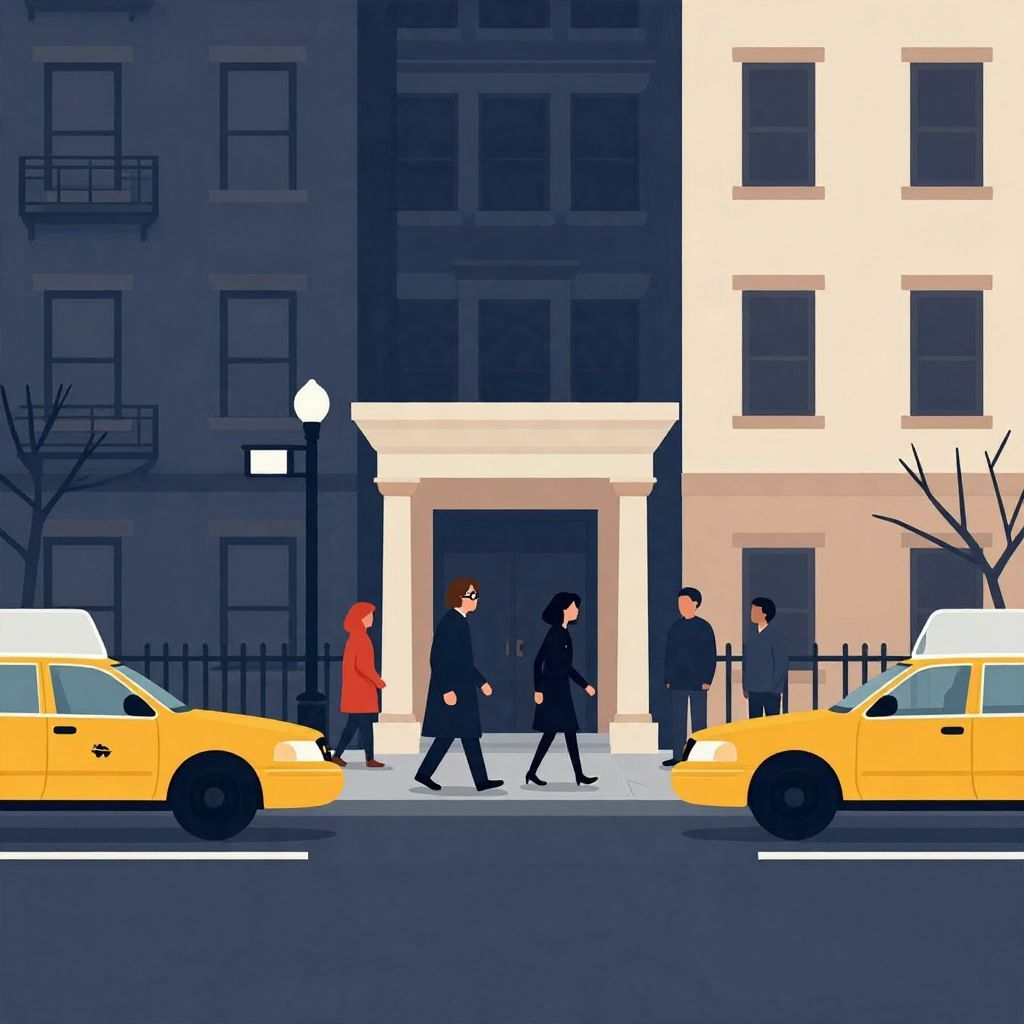
When was John Lennon shot? The former Beatle was shot on December 8, 1980, outside the Dakota apartment building in New York City. He was rushed to Roosevelt Hospital but was pronounced dead later that night. The killing shocked the world and became one of the most infamous acts of celebrity violence in modern history.
To understand the event fully, it helps to look at the timeline, the circumstances around the shooting, and the wider historical impact of Lennon’s death on music and public culture.
When Was John Lennon Shot?
John Lennon was shot on the evening of December 8, 1980, in New York City. The attack happened just outside the Dakota, the apartment building where he lived with Yoko Ono. He was struck by multiple bullets fired by Mark David Chapman and died later that night at Roosevelt Hospital. The shooting occurred shortly after Lennon had returned home from a recording session.
What Happened on December 8, 1980?
On that Monday evening, Lennon and Yoko Ono arrived at the Dakota after spending part of the day in a recording studio. As Lennon entered the building, Chapman approached and fired several shots at close range. Lennon was critically wounded and collapsed near the entrance. Police and emergency responders rushed him to the hospital, but his injuries were fatal.
The sequence of events
- Earlier in the day: Lennon and Ono spent time in the city, including a recording session.
- Evening arrival: They returned to the Dakota around 10:50 p.m.
- The shooting: Chapman fired five shots; four struck Lennon.
- Emergency response: Lennon was taken to Roosevelt Hospital by police.
- Death announcement: He was pronounced dead later that night, at about 11:15 p.m.
The attack was sudden and public, taking place in one of New York’s most recognizable residential buildings. Because it happened in front of witnesses and near the entrance to Lennon’s home, the event quickly became front-page news around the world.
Who Shot John Lennon?
John Lennon was shot by Mark David Chapman, a 25-year-old man from Hawaii. Chapman had been waiting outside the Dakota and had earlier obtained Lennon’s autograph. He later remained at the scene and was arrested without resistance. In court and in later statements, Chapman described his actions, but his motives were complex and have been discussed in psychological and criminal terms rather than as a coherent political or ideological act.
Why did Chapman target Lennon?
Historians and psychologists generally treat the shooting as an act of personal obsession, delusion, and violent grievance rather than a political assassination in the traditional sense. Chapman had fixated on Lennon’s fame and image, and he later said he believed he was acting out a twisted desire for significance. That does not make the act any less tragic; it simply places it in the category of celebrity murder driven by unstable personal motives.
Where Did the Shooting Happen?
The shooting took place outside the Dakota, an apartment building on the Upper West Side of Manhattan in New York City. The Dakota was already famous for its distinctive architecture and prominent residents. By 1980, it had become associated with Lennon and Ono, who lived there after moving to New York in the 1970s.
The location matters historically because it shows how public and vulnerable celebrity life could be even in a major city. Lennon was not on a concert stage or in a private setting; he was entering his home. The murder therefore blurred the line between public fame and private life in a way that deeply unsettled the public.
John Lennon’s Final Day
Lennon’s last day has been documented through eyewitness accounts, police records, and contemporary reporting. He spent part of the day in New York, including time at the recording studio. In the evening, he and Ono returned home. The shooting occurred only minutes after they arrived.
Why this day is remembered so vividly
The date is remembered not only because of the murder itself, but because Lennon had been slowly reemerging into public creative life after several quieter years. He had largely stepped back from recording to focus on family life, and his death cut short what many hoped would be a new artistic phase.
What Were the Immediate Consequences?
Lennon’s death triggered an extraordinary public reaction. Fans gathered outside the Dakota and at memorial sites around the world. Radio stations played his music continuously, and newspapers treated the event as a cultural catastrophe. For many people, it felt like the end of an era that had begun with the rise of the Beatles in the 1960s.
- Public mourning: Vigils and memorial gatherings formed in New York and elsewhere.
- Media coverage: The shooting dominated international news.
- Music industry impact: Lennon’s death intensified the mythic status of the Beatles and of his solo work.
- Security concerns: It raised new questions about celebrity safety and stalking.
Ono later asked for a period of quiet reflection rather than a large funeral, and Lennon’s ashes were not buried in a public grave. The private handling of his remains reflected both the family’s wishes and the intense public attention surrounding the case.
Why John Lennon’s Death Mattered Historically
Lennon was more than a famous musician. He was a central figure in the cultural transformation of the 1960s and 1970s, known for his role in the Beatles, his solo music, and his outspoken public identity. His death symbolized the vulnerability of modern celebrity and the emotional power of popular music in late 20th-century culture.
His place in music history
As a Beatle, Lennon helped shape the sound and cultural reach of rock music. As a solo artist, he became associated with songs of peace, protest, introspection, and personal reinvention. His murder froze his public image at a moment when many still saw him as an active, evolving artist rather than a completed historical figure.
The broader social context
The early 1980s were a period of change in American urban life, media culture, and celebrity fandom. Lennon’s death exposed the darker side of fame: the possibility that admiration could turn into obsession and violence. It also showed how global media could turn a single event into a shared historical memory within hours.
Timeline of the Shooting and Aftermath
Here is a concise timeline of the key events surrounding John Lennon’s shooting and death:
- December 8, 1980, daytime: Lennon spends time in New York and records in the studio.
- Late evening: Lennon and Yoko Ono return to the Dakota.
- About 10:50 p.m.: Lennon is shot outside the building.
- Shortly after: Police transport him to Roosevelt Hospital.
- About 11:15 p.m.: Lennon is pronounced dead.
- Following days: Worldwide mourning and extensive media coverage follow.
Historical Facts and Common Misconceptions
Because Lennon’s death became such a famous event, it is often surrounded by simplified retellings. A few points are worth keeping clear.
It was not a battlefield death
Lennon was not killed in a political uprising, war zone, or public rally. The shooting was a criminal act carried out at his residence.
It was not an instantaneous public execution
Although the shooting happened in public view, Lennon was still alive when taken to the hospital. His death came later that night.
The date is firmly established
Unlike some historical events that are disputed or poorly documented, Lennon’s shooting date is well established: December 8, 1980.
Lasting Legacy
More than four decades later, the shooting of John Lennon remains one of the most remembered acts of violence in popular culture. It is studied not only as a crime, but also as a moment that changed how people thought about fame, security, and the public meaning of celebrity. Lennon’s music continues to be heard worldwide, and his death remains inseparable from the history of the Beatles and late 20th-century culture.
So, when was John Lennon shot? The answer is clear: December 8, 1980. The event took place in New York City, outside the Dakota, and it ended the life of one of the most influential musicians of the modern era. For readers interested in related historical topics, the broader story of Lennon’s era and legacy is often explored in general history resources such as HistoryOrg.