
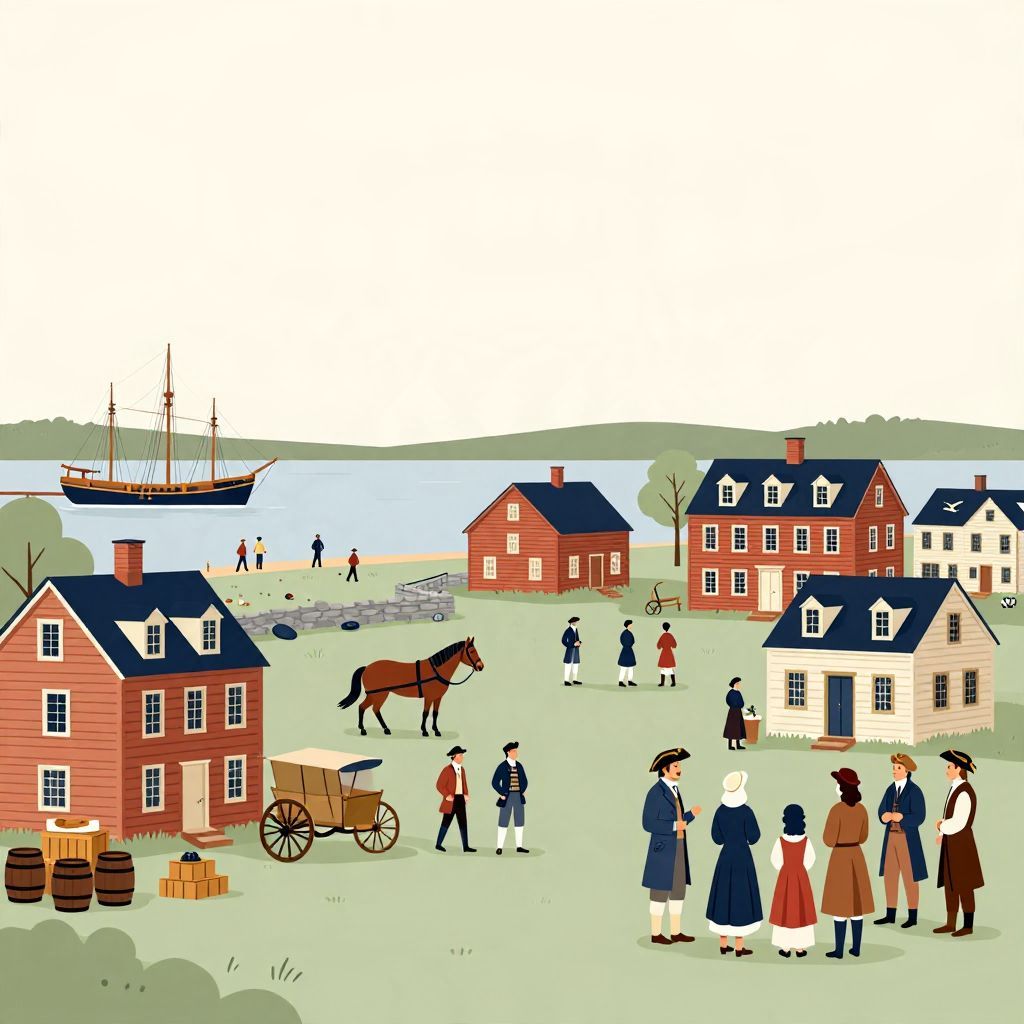
Which statement about the northern states in the 1780s is accurate? The most accurate answer is that the northern states were generally moving toward gradual emancipation, economic recovery, and stronger state governments after the American Revolution. They were not uniform in policy or prosperity, but they tended to be more commercially developed and more likely than the southern states to begin ending slavery in this decade.
That broad pattern, however, hides important differences. The 1780s were a time of political experimentation, postwar debt, social tension, and uneven recovery, and the northern states experienced those changes in distinct ways.
Which Statement About the Northern States in the 1780s Is Accurate?
The most accurate statement is that the northern states in the 1780s were generally industrializing and industrially minded? Not quite. A better, historically sound answer is that they were becoming more commercially oriented, politically assertive, and increasingly committed to gradual abolition of slavery. Northern economies were still largely agrarian, but trade, shipping, small manufacturing, and market activity were growing, especially in port cities and river towns.
The Northern States After the Revolution
The 1780s began in the aftermath of the American Revolution, and the northern states had to rebuild after years of war. British troops had evacuated major cities, but the social and economic effects of the conflict lingered. Farmers faced debt, merchants struggled with disrupted trade, and governments tried to collect taxes while citizens expected relief.
Unlike the later federal system created by the Constitution, the United States in the early 1780s was still governed under the Articles of Confederation. That system left most power with the states. In the North, this meant state legislatures played a major role in shaping economic policy, handling wartime debts, and deciding how quickly to reform older colonial institutions.
Economic recovery was uneven
The northern states did not suddenly become factories or fully modern market economies in the 1780s. That would be too early. But they did have important advantages: established ports, access to Atlantic trade, skilled artisans, and a growing network of merchants. Boston, New York, Philadelphia, and smaller commercial centers helped drive recovery, even as ordinary people often felt the decade as one of hardship.
Many northern farmers were tied to local and regional markets. They sold grain, livestock, timber, and other goods, and they increasingly dealt in cash or credit. This made the region different from the plantation economy of the South, though the North was still far from an industrial society in the modern sense.
Why Gradual Emancipation Is a Key Part of the Answer
One of the clearest accurate statements about the northern states in the 1780s is that they began to move toward gradual emancipation. Several northern states passed laws that did not immediately free all enslaved people, but instead set slavery on a path to eventual extinction. This was a major legal and moral shift, though it was slow and incomplete.
Pennsylvania passed the first state gradual abolition law in 1780. Massachusetts, through court decisions in the early 1780s, effectively ended slavery by interpreting its new constitution as incompatible with bondage. Other northern states followed in different ways, though not always as quickly or as completely.
Gradual emancipation did not mean immediate freedom for all
It is important not to overstate this change. Gradual emancipation meant that slavery persisted for years, sometimes decades, after the laws were passed. Children born to enslaved mothers might be required to serve until a certain age. Some enslaved people remained in bondage well into the nineteenth century in northern states. Still, the direction of change was unmistakable.
This development reflected a mix of revolutionary ideals, religious activism among some groups, demographic differences, and economic change. The Revolution’s language of liberty made slavery harder to defend in some northern political cultures, even though racism remained deeply entrenched.
Political Culture in the Northern States
The northern states in the 1780s were also marked by strong debates over government power. Many elites wanted stable institutions that could protect property, enforce contracts, and restore credit. At the same time, many ordinary farmers and debtors feared that governments were too harsh, too distant, or too favorable to creditors.
This tension appeared in protests and uprisings, most famously Shays’ Rebellion in Massachusetts in 1786–1787. Although not a northern-wide uprising, it revealed how serious economic distress and political frustration had become in parts of the region. The rebellion helped convince many leaders that the Confederation government was too weak and that reform was necessary.
State governments were powerful, but not always stable
Because the Articles of Confederation gave limited authority to the central government, the states retained broad control over taxation, militia affairs, and internal policy. In the North, state politics often turned on questions of debt relief, paper money, representation, and the balance between rural and commercial interests.
These conflicts were not signs of failure alone; they were also signs of a society actively redefining itself after independence. The northern states were among the first places where Americans tested what republican government would look like in practice.
What the Northern States Were Not
To answer the question accurately, it helps to rule out common misunderstandings. The northern states in the 1780s were not fully industrialized, not uniformly anti-slavery, and not politically calm. They were also not economically identical to one another. New England, New York, and Pennsylvania each had distinct populations, economies, and political traditions.
It would also be inaccurate to say that the North had already become morally committed to racial equality. Even where slavery was being abolished, free Black people faced discrimination, restricted rights, and social exclusion. The end of slavery did not mean the end of racism.
Regional differences mattered
- New England was shaped by small farms, maritime trade, and strong town politics.
- New York had a mix of commercial growth, landholding elites, and a sizable enslaved population in some areas.
- Pennsylvania combined a major port city with broad inland farming regions and strong reform currents.
These differences meant that any single sweeping statement about “the northern states” should be treated cautiously. Still, the broad trend toward gradual abolition and commercial recovery is historically well supported.
Historical Significance of the 1780s in the North
The northern states mattered enormously in the larger story of the early United States. Their political struggles helped expose the weaknesses of the Articles of Confederation, while their economic activity showed how a postwar republic might function. Their gradual emancipation laws also marked the beginning of a long and uneven antislavery process in the North.
These developments influenced the Constitutional Convention of 1787 and the early national period. Leaders who wanted a stronger central government often pointed to unrest, debt, and commercial instability. At the same time, the North’s growing opposition to slavery would later become an important part of sectional conflict in the nineteenth century, even though that opposition was incomplete and inconsistent in the 1780s.
Why this decade matters
The 1780s were not just a period of recovery; they were a formative decade. The North’s experience showed that independence did not solve America’s problems overnight. It created new ones: how to govern, how to pay debts, how to rebuild trade, and how to reconcile revolutionary ideals with social realities like slavery and inequality.
In that sense, the northern states in the 1780s were moving toward a new political and economic order, but only gradually and unevenly. That is the most accurate way to describe them.
Bottom Line
If you are looking for the best historical answer, it is this: the northern states in the 1780s were generally experiencing postwar recovery, expanding commerce, and the beginnings of gradual emancipation, while also facing debt, political instability, and social conflict. For more on the era’s broader context, you may also want to explore related American history topics such as George Washington in the Revolutionary era and the wider European background of the age, including Prussia.