
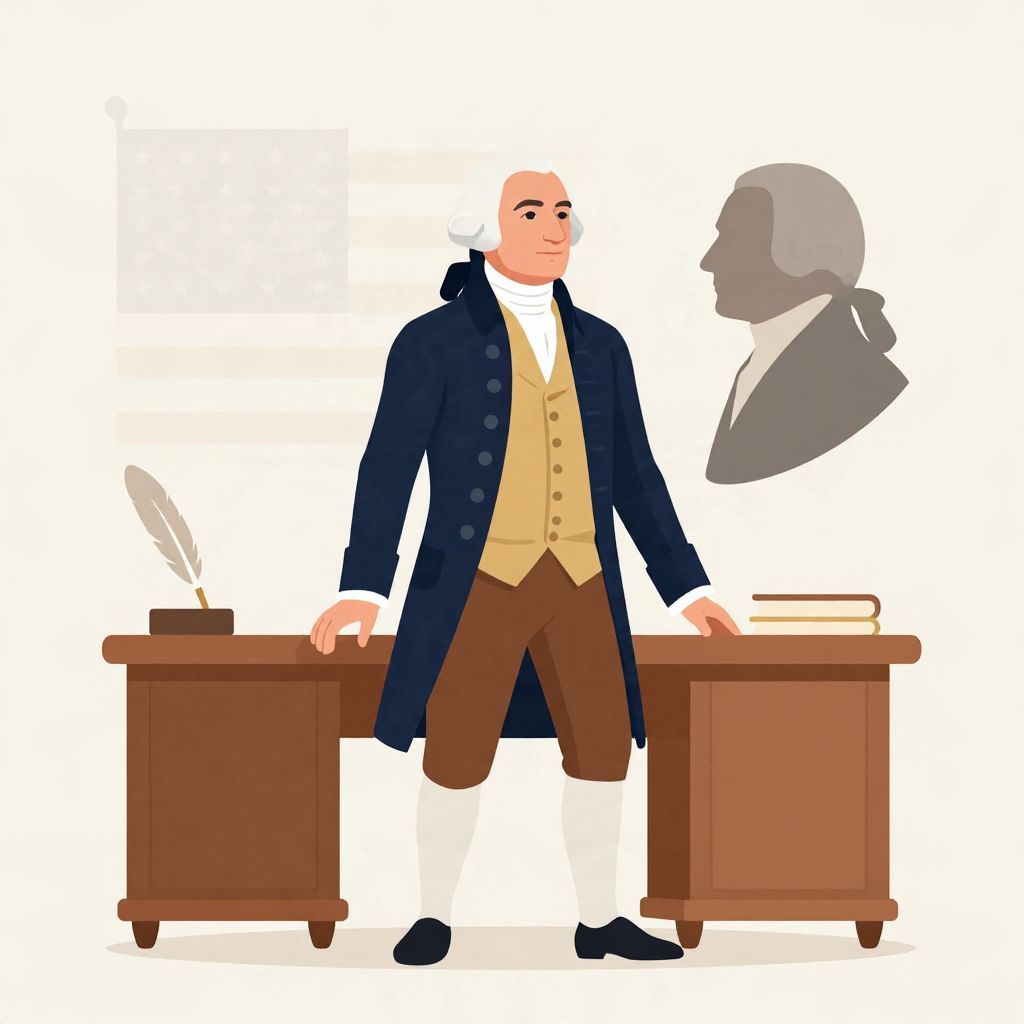
What did George Washington look like? The short answer is that he was a tall, broad-shouldered man with a long face, prominent nose, pale skin, and blue-gray eyes. He was often described as imposing rather than handsome, and his appearance changed over time as he aged, lost his teeth, and adopted the formal style of an elite 18th-century gentleman.
Because Washington lived before photography, historians rely on portraits, life masks, eyewitness accounts, and surviving clothing to reconstruct his appearance. Those sources give a fairly consistent picture, though they also reflect the conventions of portrait painting and the political image Washington wanted to project.
What did George Washington look like?
George Washington was tall for his era, likely about 6 feet 2 inches to 6 feet 3 inches in adulthood, with a lean but powerful build, light eyes, reddish-brown hair when young, and a serious, reserved expression. He had a long face, a strong nose, and a dignified bearing that made him stand out in a crowd. Later in life, he wore wigs or powdered hair and a set of dentures that shaped the closed, tight-lipped look seen in many portraits.
His height and build
Washington’s height is one of the best-established facts about his appearance. At a time when many men were shorter than modern averages, he was notably tall. He also had a long torso and broad chest, which helped create the impression of physical strength. As a young surveyor and soldier, he was known for riding long distances and enduring hard conditions, and his body reflected that active life.
His clothing often emphasized this stature. He favored tailored coats, waistcoats, breeches, and polished boots that gave him a formal, commanding presence. In portraits and public settings, he appears upright and controlled, which matched the image of authority he cultivated as a military leader and president.
His face and features
Washington’s face was long and narrow, with a prominent nose and a firm jawline. His eyes were light-colored, commonly described as blue-gray. He had a relatively small mouth, and later in life his lips often appear compressed because of dental problems and dentures. Unlike the smooth idealization seen in some paintings, eyewitness descriptions suggest a face that was serious, weathered, and expressive of discipline more than charm.
He was not universally considered handsome, but many contemporaries found him striking. What made him memorable was the combination of height, posture, and calm self-control. In the 18th century, that kind of physical presence carried political meaning: it suggested virtue, steadiness, and leadership.
His hair, skin, and aging
As a young man, Washington had his own hair, which was described as reddish-brown. In later decades, he wore his hair styled in the fashion of the period, often powdered and tied back, or covered by a wig-like arrangement. The white hair seen in many famous portraits is partly the result of age and partly the conventions of elite style.
His complexion was fair, and he likely freckled in the sun. Years of outdoor work, military service, and riding would have left him more weathered than the polished images suggest. By the time he became president, he was in his late 50s and then early 60s, so the face associated with him is that of an aging statesman rather than a young revolutionary officer.
How do historians know what George Washington looked like?
Historians reconstruct Washington’s appearance from portraits, written descriptions, life masks, and physical evidence such as his clothing and dentures. No photograph exists, so every image of him is an interpretation shaped by artistic style and political purpose. Even so, the sources broadly agree on his height, facial structure, and reserved expression.
Portraits and painted likenesses
The most familiar images of Washington come from painters such as Gilbert Stuart, Charles Willson Peale, and John Trumbull. Stuart’s unfinished “Athenaeum” portrait, begun in 1796, became the basis for the face on the U.S. dollar bill. It presents Washington as composed, dignified, and slightly stern. That image is not a candid snapshot, but it is important because it was based on direct observation and became the standard public likeness.
Portraits, however, must be read carefully. Artists often softened wrinkles, idealized features, and adjusted proportions to flatter elite subjects. Washington himself understood this and was attentive to how he was represented. He wanted to appear authoritative and republican, not vain or theatrical.
Eyewitness descriptions
Contemporary observers repeatedly noted his height and imposing presence. Many described him as erect, calm, and reserved. Some accounts mention a somewhat stiff manner and a serious expression. These descriptions matter because they come from people who saw him in person, though they also reflect the social expectations of the time and the political importance of describing a national leader with respect.
Written descriptions are especially useful for details that portraits may obscure, such as his posture, voice, and general demeanor. Together, they support the image of a man who was physically impressive but not flamboyant.
Life masks and dental evidence
Washington’s surviving life masks and dentures offer some of the most concrete evidence about his face. His false teeth were not wooden, as a popular myth claims. They were made from materials such as human and animal teeth, ivory, and metal components. His dental problems were severe and long-lasting, and they affected his mouth shape and expression.
These dental issues help explain why Washington’s portraits often show a tight mouth and a somewhat strained look. They also remind us that the iconic image of Washington was shaped by pain, aging, and the practical realities of 18th-century medicine.
What he looked like at different stages of life
Washington’s appearance changed significantly over time. The youthful Virginia surveyor looked different from the Revolutionary War commander and very different again from the elderly first president. Tracing those changes helps explain why his image became so powerful: it combined physical stature with the visual language of leadership.
- Young adulthood: Tall, athletic, reddish-brown hair, and a more energetic, less formal appearance.
- Middle years: Broader authority in dress and posture, with a more severe expression and increasing signs of dental trouble.
- Presidential years: Powdered or styled hair, formal clothing, and a controlled, statesmanlike face shaped by age and dentures.
By the 1790s, Washington’s appearance had become part of his public office. He was no longer simply a man; he was a symbol of the new republic. That is one reason his later portraits feel so carefully composed.
Why Washington’s appearance mattered in his own time
In the 18th century, appearance was closely tied to status, character, and authority. Washington’s height, posture, and clothing helped project the image of a disciplined gentleman. In a republic suspicious of monarchy, he needed to look powerful without seeming kingly. His appearance helped solve that problem.
A leader who looked the part
Washington’s physical presence reinforced his role in the army and in politics. Soldiers, diplomats, and citizens often expected leaders to embody self-command. Washington’s steady face and formal dress communicated restraint, a quality admired in both military and civic life. His appearance thus became part of his political identity.
The making of an American icon
After his death, Washington’s image was repeatedly reused in paintings, prints, currency, statues, and schoolbooks. Artists selected features that conveyed virtue and authority, turning a real man into a national emblem. Over time, the public learned to recognize a standardized Washington: tall, solemn, powdered-haired, and almost timeless.
This iconography mattered because the young United States needed symbols. Washington’s face became a visual shorthand for national legitimacy, sacrifice, and republican leadership. The more often his image was repeated, the more fixed it became in public memory.
What myths about George Washington’s appearance should be avoided?
Several popular ideas about Washington’s looks are misleading. The most common myth is that he had wooden teeth. He did not. Another misconception is that the famous portraits are exact photographs of his face. They are not. They are artistic representations based on observation, convention, and political image-making.
It is also easy to imagine Washington as permanently stern and emotionless because many portraits show him that way. In reality, he could be warm in private company and was known for humor among friends, even if he maintained a controlled public manner. The solemn look is partly historical fact and partly the result of how Americans chose to remember him.
Why the question still matters
Asking what George Washington looked like is not just a matter of curiosity. It opens a window onto how historical memory works. We know Washington through imperfect evidence, and the image that survives is both real and constructed. His face tells us something about 18th-century politics, portraiture, aging, and the creation of national heroes.
In the end, Washington looked like a tall, dignified, physically imposing man whose appearance changed with age and hardship. The familiar image of the first president is grounded in real evidence, but it was also carefully shaped by artists and by the nation that came to revere him. For more historical context, you can explore broader topics at HistoryOrg and compare how historical appearance is reconstructed in another article such as what Vikings looked like.