
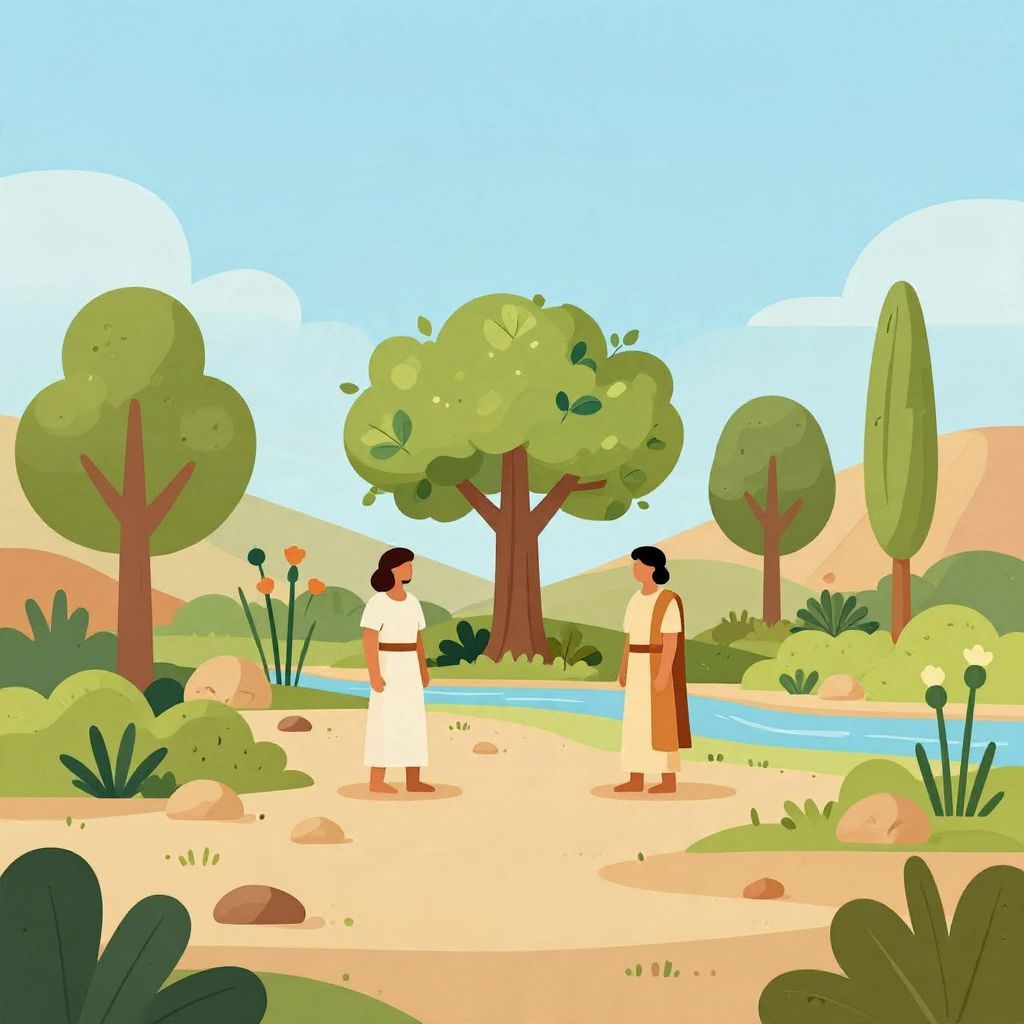
How long did Adam and Eve live? The short answer is that the Bible gives a lifespan only for Adam, not for Eve. According to the genealogies in Genesis, Adam lived 930 years. Eve’s age at death is never stated in the biblical text, so any exact number for her is speculative rather than historical fact.
This question sits at the intersection of scripture, tradition, and history. For readers asking about the origins of humanity in the Bible, it is important to separate what the text actually says from later interpretation, legend, and theological meaning.
How long did Adam and Eve live?
In the Book of Genesis, Adam is said to have lived 930 years before dying. Eve’s lifespan is not recorded anywhere in the canonical biblical text. Later Jewish, Christian, and Islamic traditions sometimes expand their story, but they do not provide a universally accepted or historically verifiable age for Eve.
What the Bible says about Adam
The clearest statement appears in Genesis 5, where Adam’s descendants are listed with their ages. The text says Adam lived 930 years and then died. This figure belongs to the biblical genealogical tradition, which presents extraordinarily long lifespans for the earliest generations of humanity.
What the Bible says about Eve
Eve is central to the creation narrative in Genesis 2–3, but the Bible does not tell readers how long she lived. Unlike Adam, she is not included in the age-at-death list in Genesis 5. That silence has led to centuries of speculation, but no standard biblical age exists for her.
Why are the lifespans in Genesis so long?
The long lifespans in Genesis are best understood as part of an ancient religious and literary tradition, not as straightforward modern biography. Scholars have offered several interpretations: symbolic meaning, theological emphasis on the early world, or a way of marking a primordial age different from ordinary human history.
Symbolic and theological readings
Many readers understand these ages as expressing the closeness of the first humans to creation itself. In that view, the long lives of Adam and the early patriarchs signal a world before the full consequences of human mortality had taken hold. The numbers may also reinforce the grandeur and antiquity of the biblical past.
Historical and textual context
Ancient Near Eastern literature often uses genealogies and long reigns or lifespans to communicate importance, legitimacy, and distance from the present. Genesis belongs to that broader world. While it is a foundational text for Judaism, Christianity, and Islam, historians do not treat its lifespan figures as independently verifiable demographic data.
Adam and Eve in chronology and tradition
Adam and Eve are not historical figures in the usual documentary sense. They belong to the creation narratives that explain human origins, moral responsibility, and the beginning of suffering and death. Their story is therefore more about meaning than measurable chronology.
The sequence of the Genesis story
- God creates Adam from the dust of the ground.
- Eve is created as Adam’s companion.
- They live in Eden and are commanded not to eat from the tree of knowledge.
- They disobey, leading to expulsion from Eden.
- Adam’s genealogy later lists his age at death as 930 years.
This sequence matters because the story links human life, labor, pain, and death to a moral turning point. The lifespan figure for Adam appears after the fall narrative, reinforcing the idea that death enters human experience as part of the biblical explanation of the world.
Did ancient readers take these ages literally?
Ancient audiences did not all read Genesis in exactly the same way. Some likely accepted the ages as literal within their worldview, while others may have understood them as part of a sacred and stylized account. Over time, Jewish and Christian interpreters developed many approaches, from strict literalism to allegory and symbolic reading.
Jewish interpretation
In Jewish tradition, Adam and Eve are foundational figures in the story of humanity. Rabbinic literature often expands their narrative, but it does not settle a single age for Eve. The emphasis is usually on moral lessons, human responsibility, and the consequences of disobedience.
Christian interpretation
Christian thinkers have also read the Genesis account in different ways. Some have treated Adam as a historical first man in a literal sense; others have viewed the story as theological truth expressed through ancient narrative. In either case, Eve’s lifespan remains unrecorded in Scripture.
Islamic tradition
Islam honors Adam as a prophet and the first human in a sacred history of creation. Eve, often identified as Hawwa, appears in later tradition, but the Qur’an does not give a precise lifespan for either figure. As with the Bible, the focus is on moral significance rather than biography.
Why people still ask this question
“How long did Adam and Eve live?” is a common question because it sounds like a simple historical fact, but it opens into a much larger issue: how sacred texts describe origins. Readers want dates, ages, and timelines, yet the sources themselves mix theology, genealogy, and narrative in ways that do not match modern historical writing.
The difference between history and sacred narrative
History, as a discipline, depends on evidence that can be compared and tested. Genesis is a religious text that communicates meaning through story. That does not make it unimportant; it means its purpose is different. The question of Adam and Eve’s lifespan is therefore answered by what the text says, while its historical value lies in how later communities understood human origins.
Historical significance of the Adam and Eve tradition
Even without a verifiable lifespan for Eve, the Adam and Eve story has had enormous historical influence. It shaped ideas about creation, marriage, temptation, sin, labor, gender, and mortality across Judaism, Christianity, and Islam. Few origin stories have had such lasting cultural power.
Influence on law, art, and ethics
For centuries, artists, theologians, and philosophers returned to Adam and Eve to discuss human nature and the meaning of choice. Their story appears in sermons, illuminated manuscripts, paintings, sculpture, and literature. The long life attributed to Adam became part of the wider imagination of a primeval age.
Why the lifespan matters symbolically
Adam’s 930 years can be read as a marker of distance from the present, a way of placing the first human in a world unlike our own. Eve’s missing lifespan is equally revealing: the text is less interested in biographical detail than in the roles she and Adam play in the origin story.
So, how long did Adam and Eve live?
Based on the biblical text alone, Adam lived 930 years, while Eve’s lifespan is not given. Any exact number for Eve comes from later tradition, speculation, or non-biblical sources, not from a clear historical record. The broader significance of their story lies in its enduring role as an explanation of human beginnings.
If you want to explore the wider biblical origin tradition, you may also be interested in who is considered the first person on earth and related topics such as what a eunuch is in the Bible. The Adam and Eve narrative remains influential not because it provides modern-style biography, but because it has shaped how generations have understood humanity itself.