
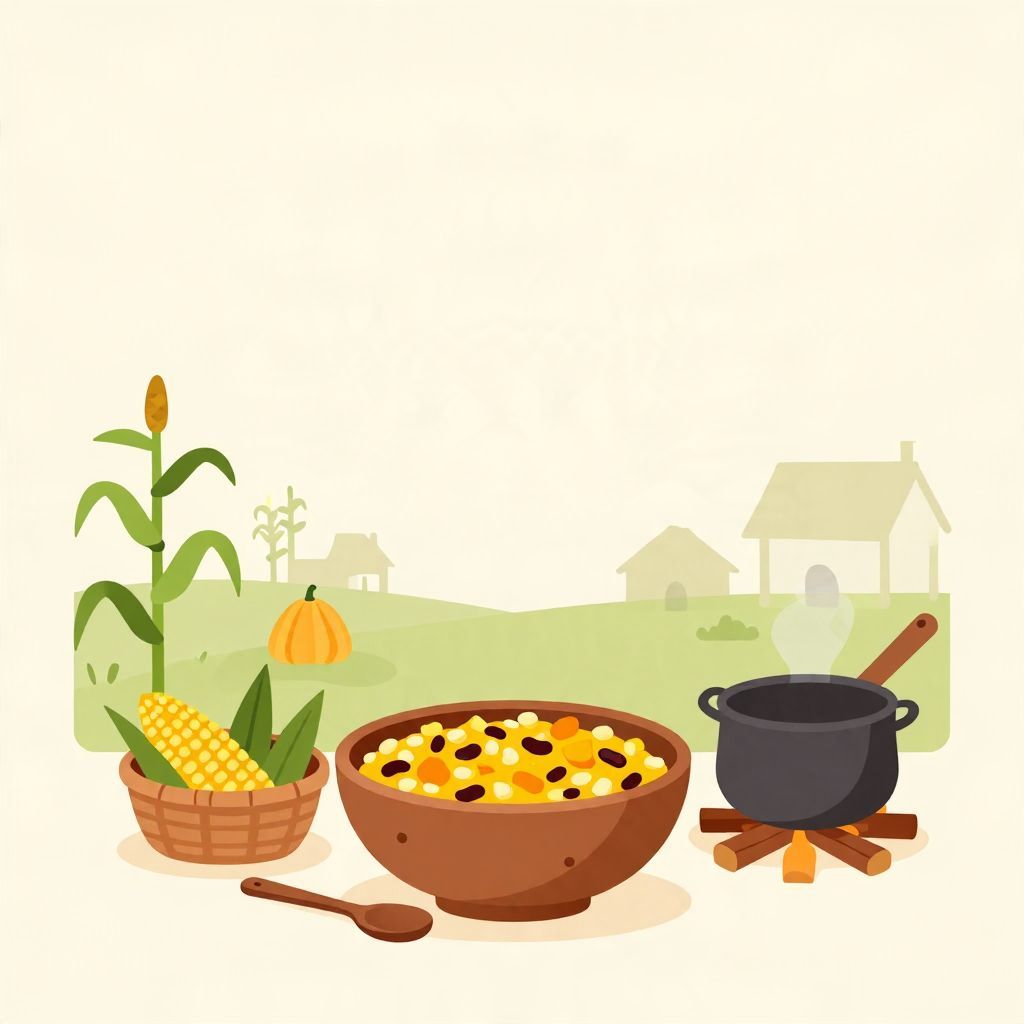
What is succotash? Today, it usually means a simple dish of corn and lima beans, often cooked with butter and sometimes with squash, peppers, or meat. But its history is older and more interesting than the modern recipe suggests.
The word and the food both come from Indigenous North American traditions, and succotash became part of colonial and later American cooking through cultural exchange, adaptation, and survival. Its story reveals how Native agricultural knowledge shaped the foodways of North America.
What Is Succotash?
Succotash is a dish made primarily from corn and beans, usually lima beans or another shell bean, sometimes with squash or other vegetables added. Historically, it grew out of Indigenous cooking traditions in eastern North America, where corn, beans, and squash formed a foundational crop combination long before European contact.
Where Does the Word “Succotash” Come From?
The word succotash is generally traced to an Algonquian-language term, often linked to Narragansett or related New England Indigenous languages. Spelling varied widely in early English sources, which is common for words borrowed from oral languages into colonial writing. The exact original form is not certain, but the word clearly entered English through Native contact in the northeastern colonies.
Language, borrowing, and early spellings
Early American writers recorded the word in multiple forms, reflecting both regional speech and imperfect English attempts to capture Indigenous pronunciation. That uncertainty matters: rather than a single neat “origin point,” succotash shows how foods and words moved across cultural boundaries in colonial North America.
How Did Succotash Develop Historically?
Succotash developed from Indigenous agricultural systems that were already centuries old before Europeans arrived. Corn, beans, and squash were often grown together because they supported one another in the field and on the plate. Corn provided structure, beans added protein and enriched the soil, and squash helped shade the ground and reduce weeds.
The “Three Sisters” food system
In many Native communities, these crops were part of what is often called the “Three Sisters” system. This was not just a recipe but a sophisticated agricultural practice. The dish later known as succotash likely reflects this broader tradition of combining corn and beans, sometimes with squash, into a nourishing meal.
From Indigenous foodways to colonial tables
European colonists encountered these foods in the seventeenth century and adopted them because they were practical, filling, and well suited to local conditions. In New England especially, succotash became associated with seasonal eating and with the mixing of Native and colonial culinary habits. Over time, it moved from a regional food to a recognizable part of American cooking.
What Did Succotash Mean in Early America?
In early American usage, succotash was more than a side dish. It represented adaptation to the land, reliance on Native crops, and the blending of culinary traditions in a colonial setting. For many households, it was an economical meal that used ingredients available in summer and early autumn, when fresh corn and beans were abundant.
A practical dish in a changing food economy
Before industrial food systems, people cooked with what was local and seasonal. Succotash fit that world well. It could be made with fresh or dried corn, shell beans, and fat or butter, depending on what a household had. In some regions it was a humble meal; in others it appeared as a familiar accompaniment to meat or fish.
How Has the Recipe Changed Over Time?
Like many traditional dishes, succotash has had no single fixed recipe. The basic pairing of corn and beans remained central, but ingredients shifted by region, class, and era. Some versions used lima beans, which became common in later American cooking; others used shell beans, fresh corn, and squash. Later recipes sometimes added cream, bacon, onions, or peppers.
Common historical variations
- Indigenous and early colonial forms: corn and beans, sometimes with squash or animal fat.
- Regional American versions: corn, lima beans, butter, salt, and pepper.
- Later home-cooking adaptations: additions such as bacon, cream, tomatoes, or herbs.
These changes reflect broader shifts in American food history: changing tastes, new ingredients, and the movement of recipes through print culture and family tradition.
Why Is Succotash Historically Important?
Succotash matters because it is a visible reminder of Indigenous influence on American cuisine. Too often, Native contributions to everyday life are overlooked, even when they are central. The dish shows how Native agricultural knowledge shaped colonial survival and helped define what became regional American food.
A symbol of exchange and inequality
At the same time, succotash also points to a harder history. Colonial adoption of Native foods happened alongside dispossession, violence, and the disruption of Indigenous landholding. So while the dish reflects exchange and continuity, it also belongs to a larger colonial story in which Native knowledge was often taken without equal recognition or power.
How Did Succotash Become an American Classic?
By the nineteenth century, succotash had become familiar in American households, cookbooks, and restaurants, especially in the Northeast and Mid-Atlantic. It was valued as a seasonal vegetable dish and later as a nostalgic marker of “old-fashioned” American cooking. As national cuisine developed, succotash remained associated with home kitchens, harvest meals, and regional tradition.
Print culture and culinary standardization
Cookbooks helped stabilize the name and spread the recipe, even though versions still varied. Once recipes were printed, ingredients such as lima beans became more common, and the dish gradually took on a more standardized form. But its older, flexible character never disappeared entirely.
Succotash in Modern Memory
Today, succotash is often treated as a classic side dish, especially in New England, the South, and in broader American comfort food traditions. Yet its deeper history is not just culinary. It is a story about Indigenous agriculture, colonial borrowing, regional identity, and the long survival of Native influence in everyday American life.
What the dish tells us now
Understanding succotash historically helps correct a common misconception: that American food developed mainly from European traditions. In reality, many of the most enduring foods in North America depend on Indigenous crops and Indigenous knowledge. Succotash is one of the clearest examples of that legacy.
So, What Is Succotash?
Succotash is a corn-and-bean dish rooted in Indigenous North American foodways and later adopted into colonial and American cooking. Its name likely comes from an Algonquian language, and its history reflects centuries of cultural exchange, adaptation, and survival. As a dish, it is simple; as history, it is deeply revealing.
In that sense, succotash is more than a recipe. It is a reminder that American cuisine was built through contact, borrowing, and resilience, with Native agricultural traditions at its heart.