
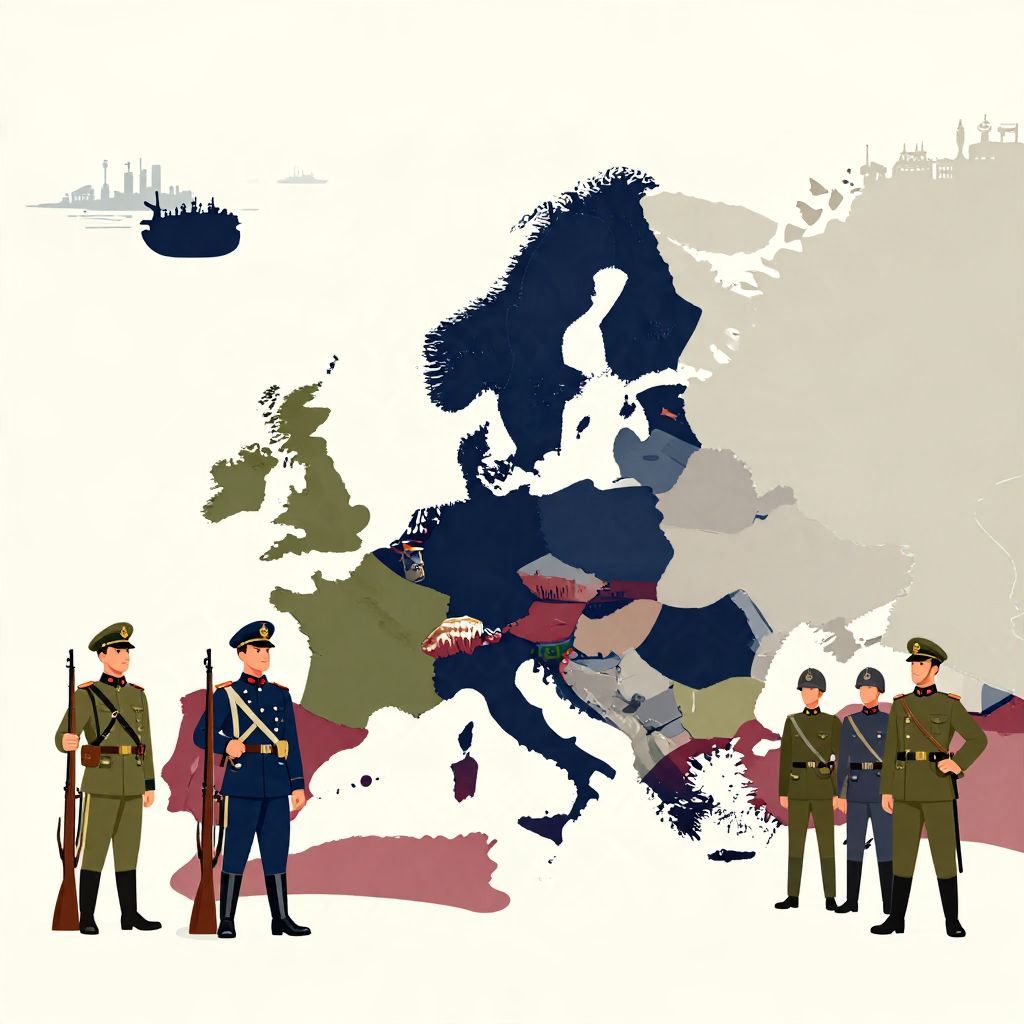
How did militarism lead to World War I? It helped turn a tense European rivalry into a system built for war. By 1914, major powers had expanded armies, built huge navies, and planned for rapid mobilization. That meant a crisis could escalate quickly, because leaders increasingly believed military strength was the best way to protect national interests.
Militarism did not cause the war by itself, but it made compromise harder and war more likely. When the July Crisis began after the assassination of Archduke Franz Ferdinand, military timetables, war plans, and the belief that delay meant weakness pushed governments toward a general European conflict.
How did militarism lead to WW1?
Militarism led to World War I by making military power central to politics, diplomacy, and national pride. European states competed in armaments, trusted war plans over negotiation, and assumed a future war was inevitable. In 1914, this mindset helped transform a regional crisis into a continent-wide war.
What militarism meant in pre-1914 Europe
Militarism was more than simply having large armies. It was the belief that military strength, discipline, and readiness should shape national policy. In the decades before 1914, governments, generals, and publics increasingly treated war as a normal tool of statecraft rather than a last resort.
Armies, conscription, and military prestige
Most major European powers maintained large standing armies and used conscription to train millions of men. Germany, France, Russia, Austria-Hungary, and others all expanded their forces in response to one another. Military service became tied to citizenship, masculinity, and national honor, which made leaders reluctant to appear weak in a crisis.
The naval arms race
Militarism also shaped the sea. Britain and Germany entered a costly naval competition in the early 20th century, especially after Germany began building modern battleships. The launching of Britain’s HMS Dreadnought in 1906 intensified the race, because it made older battleships obsolete and encouraged both sides to keep building.
Why military planning made war more likely
One of the most important ways militarism led to WW1 was through rigid war planning. European general staffs developed detailed mobilization schedules that depended on railways, timetables, and rapid action. Once mobilization began, leaders feared it would be impossible to stop without losing a military advantage.
The logic of mobilization
Mobilization was not just calling up soldiers. It meant moving troops, supplies, and equipment into position for war. Because armies were so large, these movements had to happen in a precise sequence. As a result, political leaders often felt trapped by military deadlines once a crisis started.
War plans and the pressure to strike first
Germany’s Schlieffen Plan, developed before 1914, assumed a quick war against France before turning east against Russia. Russia’s own mobilization system encouraged rapid response. Austria-Hungary and France also relied on strict military preparations. These plans made leaders think in terms of first strikes, not flexible diplomacy.
How militarism shaped the July Crisis of 1914
The assassination of Archduke Franz Ferdinand on 28 June 1914 did not automatically cause a world war. The crisis widened because military thinking dominated decision-making in Vienna, Berlin, St. Petersburg, Paris, and London. Civilian leaders often deferred to generals, and generals warned that hesitation could be fatal.
Austria-Hungary and the push for force
After the assassination, Austria-Hungary saw Serbia as a threat and wanted to punish it. Military leaders favored a hard line, believing that a limited war might restore imperial authority. The empire’s leaders issued an ultimatum to Serbia, and when the situation escalated, military solutions quickly overshadowed diplomatic ones.
Germany’s “blank check” and confidence in war
Germany backed Austria-Hungary in July 1914, encouraging a firmer response to Serbia. German leaders believed a strong stance might preserve their alliance system and deter rivals. At the same time, many in Berlin feared that Russia’s growing power would make a future war worse if delayed. Militarist assumptions made immediate action seem preferable.
Russia, France, and the chain reaction
Russia mobilized to support Serbia and protect its influence in the Balkans. France, allied with Russia, was drawn into the crisis. Once mobilization began, each side interpreted the other’s military moves as proof of hostile intent. What might have remained a Balkan conflict became a wider European war because armies were already prepared to move.
Militarism and the culture of competition
Militarism was not only a matter of generals and battle plans. It also shaped public culture. Newspapers, schools, parades, and nationalist organizations often celebrated soldiers and war. Many Europeans came to see military power as proof of modernity, strength, and international status.
Nationalism and military honor
In a competitive international system, governments feared humiliation. Military weakness could be read as national decline. This was especially true in Germany, France, Russia, Britain, and Austria-Hungary, where leaders linked military success to prestige. That made backing down politically dangerous, even when war was risky.
Public enthusiasm and its limits
It is important not to exaggerate popular enthusiasm. Not everyone wanted war, and many civilians feared it. Still, militarist language and patriotic pressure made it easier for governments to justify escalation. In several capitals, crowds cheered mobilization, at least at first, because war had been normalized as a test of national strength.
Militarism was a cause, but not the only cause
Militarism helped create the conditions for war, but it worked alongside other forces. Alliance systems, imperial rivalry, nationalism, and the instability of the Balkans all mattered. Historians generally see WW1 as the result of multiple interacting causes rather than a single explanation.
How militarism interacted with alliances
Alliances did not automatically cause war, but they widened the conflict once it began. Military planners assumed allies would join quickly, so a local crisis could spread fast. Because militarism emphasized readiness and speed, alliance commitments became more dangerous in practice than they might have been in theory.
How militarism interacted with imperialism
Imperial competition increased suspicion among powers and encouraged military buildup. Colonial disputes and global rivalries reinforced the idea that only strong armies and navies could protect a nation’s interests. In this sense, militarism and imperialism fed each other. For a related discussion, see how imperialism led to WW1.
Key events that show militarism at work
A few major prewar developments reveal how deeply militarism had shaped Europe by 1914.
- 1905–1906: Germany’s naval expansion and Britain’s response intensify the arms race.
- 1908–1909: The Bosnian Crisis shows how military threats can deepen Balkan instability.
- 1911: The Agadir Crisis increases distrust between Germany, France, and Britain.
- 1912–1913: The Balkan Wars demonstrate how quickly regional conflict can grow through military mobilization.
- July 1914: Mobilization timetables and war plans help turn a diplomatic crisis into general war.
Why militarism mattered so much in 1914
Militarism mattered because it changed how leaders thought. Instead of seeing war as a failure of diplomacy, many saw it as an acceptable, even necessary, instrument of policy. Once that mindset took hold, compromise looked like weakness, and military preparation looked like prudence.
It also mattered because modern states had built systems that rewarded speed and punished delay. Railways, conscription, and general staffs made war more organized, but also more difficult to stop once set in motion. In 1914, those systems turned a political crisis into a military race.
Aftermath and historical significance
World War I exposed the dangers of militarism on an industrial scale. The war killed millions, shattered empires, and transformed politics across Europe and beyond. After 1918, many observers blamed the prewar cult of military power for helping drive the continent into catastrophe.
The lesson historians often draw is not that armies alone cause wars, but that when military thinking dominates diplomacy, crisis management becomes far more dangerous. In the case of WW1, militarism helped make war seem inevitable, fast-moving, and honorable—until the reality of total war proved otherwise.
In short, militarism led to World War I by encouraging arms races, rigid war plans, and a political culture that treated military force as the normal answer to international problems. It did not act alone, but it made the July Crisis far harder to defuse. To explore the wider background, you may also want to read about what Prussia was and how imperial rivalry shaped Europe before 1914.