
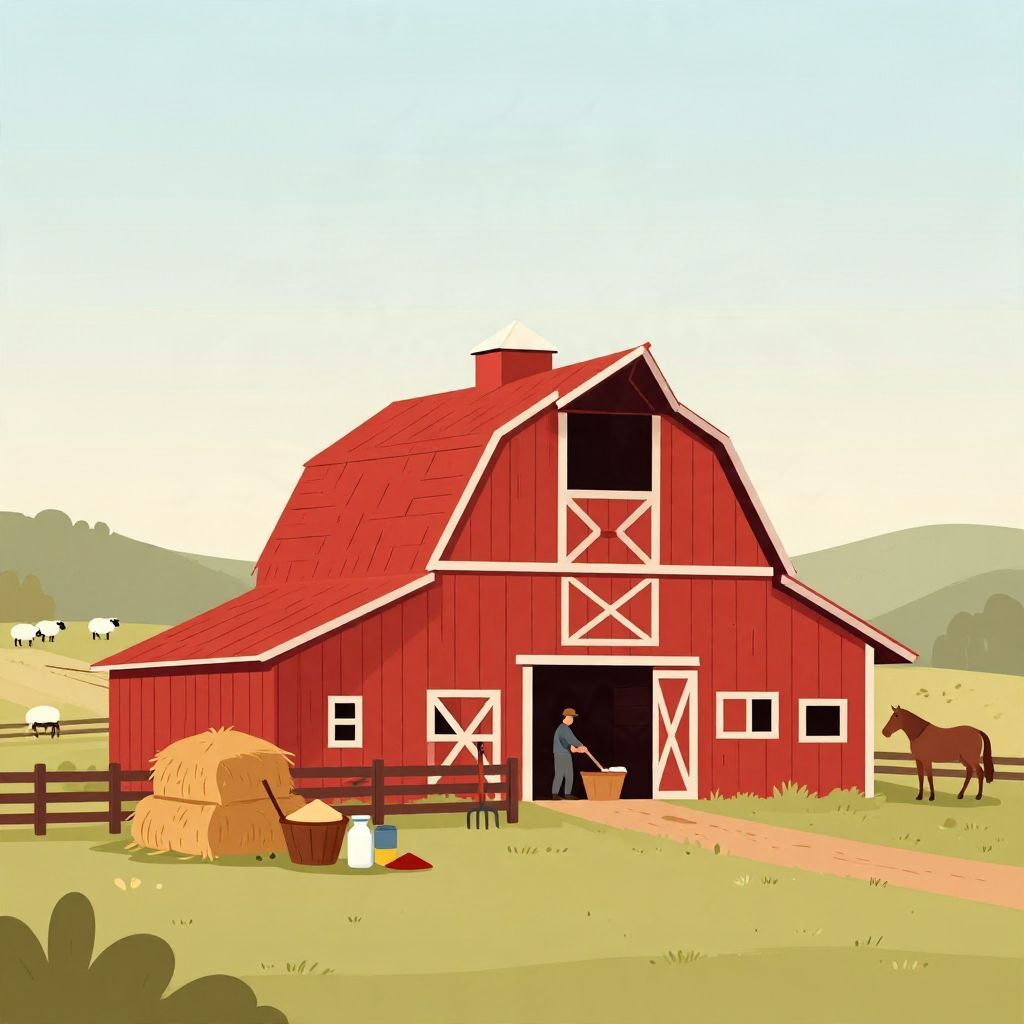
Why are barns painted red? The short answer is that red paint was once one of the cheapest, most practical, and most durable finishes farmers could make or buy. Over time, that practical choice became a familiar rural tradition, especially in the United States and parts of Europe.
The story is not one single origin but a mix of economics, chemistry, and custom. What began as a useful coating for weather protection eventually turned into a visual symbol of farm life, so common that many people now assume red barns were always a tradition.
Why Are Barns Painted Red?
Barns were painted red because early farm paint was inexpensive, easy to make, and helped protect wood from weather and decay. A common homemade mixture used linseed oil, milk, lime, and iron oxide, which gave a reddish color. As commercial paint became available, red remained popular because it was practical, familiar, and visually striking.
The Practical Origins of Red Barn Paint
Protecting wood from the elements
Before modern preservatives, wooden barns faced rain, snow, sun, insects, and mildew. Farmers needed a coating that would help seal the wood and slow rot. Paint was not only decorative; it was a form of maintenance. In rural economies where lumber, labor, and time were valuable, extending the life of a barn mattered.
Why red was affordable
Red paint often relied on iron oxide, a naturally occurring pigment that was widely available and relatively cheap. In many places, it could be gathered from local soil or purchased inexpensively. Farmers also made paint from ingredients they already had on hand, including linseed oil and milk. The result was a low-cost finish that looked tidy and offered some protection.
Homemade farm paint and the “barn red” recipe
In the 18th and 19th centuries, many farm families made their own paint. A common mixture included boiled linseed oil, milk or skim milk, lime, and iron oxide or other pigments. The milk helped bind the mixture, while the oil improved water resistance. The color was not always exactly the same shade of red, but it usually produced a reddish-brown finish that became known as barn red.
The Historical Development of Barn Red
From necessity to habit
Once farmers discovered that a red coating was useful and affordable, the color spread through habit and imitation. A practical solution can become a cultural norm when it is repeated across generations. In many farming communities, red barns came to signal care, order, and prosperity, even if the original reason was simply cost.
How commercial paint reinforced the tradition
By the 19th century, ready-made paints became more widely available in the United States and Europe. Even then, red remained a common choice because it was still economical and widely associated with farm buildings. As industrial paint production expanded, the color became less a homemade necessity and more a recognizable style.
Regional differences in barn color
Red barns were especially common in the northeastern and midwestern United States, where wooden farm structures were widespread. But not every barn was red. Some were left unpainted, some were white, and others were painted with different colors depending on local materials, taste, and wealth. In some regions, white paint or natural weathered wood was more common than red.
Did Red Paint Really Preserve Barns Better?
Protection, but not magic
Red paint did offer some protection, but it was not a perfect preservative. The main benefit came from the oil and other binding ingredients, which helped shed water and reduce weathering. The pigment itself was less important than the overall mixture. So while red barns were better protected than bare wood, the color red was not the reason the barn lasted.
The role of iron oxide
Iron oxide pigments may have helped resist mold and mildew to a degree, which added to the appeal of red paint. Still, historians generally treat this as a secondary benefit rather than the main cause. The strongest historical explanation remains economic: red was cheap, accessible, and easy to produce.
Popular Legends About Red Barns
The “red because it was the only paint available” idea
A common story says barns were painted red because red was the only paint farmers could get. That is too simple. Red was popular because it was affordable and practical, not because no other colors existed. Farmers could and did use other colors when they wanted or could afford them.
The “red barns are an old colonial tradition” idea
Another popular belief is that red barns go back to the earliest colonial period in North America. The truth is more nuanced. While farm buildings were painted in earlier centuries, the widespread association of red barns became especially strong in the 19th century, when farm architecture and paint production changed dramatically.
Folklore versus evidence
As with many rural traditions, later generations often attached symbolic meanings to a practice that began for practical reasons. Red barns came to represent nostalgia, hard work, and a certain ideal of country life. Those meanings are culturally important, but they should not be confused with the original cause of the color.
Why Red Barns Became So Symbolic
A color that stood out in the landscape
Red is highly visible against fields, trees, and snow. That made barns easy to spot from a distance, which may have added to the appeal. Over time, the color became part of the rural visual identity of North America, especially in painted postcards, calendars, advertisements, and later tourism imagery.
Red barns and the image of the family farm
By the late 19th and early 20th centuries, the red barn had become a cultural symbol of traditional agriculture. It appeared in art and popular imagery as shorthand for rural stability and self-sufficiency. This symbolism outlasted the practical reasons for using red paint, especially after modern paints and building materials became cheaper and more varied.
Changing farm life, lasting image
As agriculture industrialized, many barns were no longer painted the old homemade way. Yet the red barn remained an icon because it represented an older farming world that people remembered or idealized. In that sense, the red barn is both a real historical practice and a powerful cultural image.
How the Tradition Spread Beyond the United States
European roots and parallel practices
Red-painted agricultural buildings were not unique to America. In parts of Europe, especially Scandinavia and northern regions, similar practical paint traditions developed. Different local recipes and pigments were used, but the logic was often the same: protect wood cheaply and make a building look orderly and maintained.
North American popularity
The red barn became especially iconic in the United States because of the scale of wooden farm building, the abundance of rural land, and the strong place of the family farm in national memory. That does not mean every American barn was red, only that the color became unusually associated with American agriculture.
What Historians Can Say with Confidence
- Red barn paint was usually chosen for practical and economic reasons.
- Early mixtures often included iron oxide, linseed oil, and other inexpensive ingredients.
- The color became traditional because it was repeated and recognizable over time.
- The famous red barn image grew stronger in the 19th century and later became a cultural symbol.
- Popular explanations often simplify the story, but the historical reality is a blend of utility and custom.
The Lasting Meaning of the Red Barn
So, why are barns painted red? Because red was once a sensible, affordable way to protect wood, and because that sensible choice became a tradition. The color survived not only because it worked, but because people came to associate it with good farming, familiar landscapes, and rural identity. That is why the red barn remains one of the most recognizable images in agricultural history.
For readers interested in how practical choices become cultural traditions, you may also enjoy what cultural preservation means in architecture and one reason colonists came to America.