
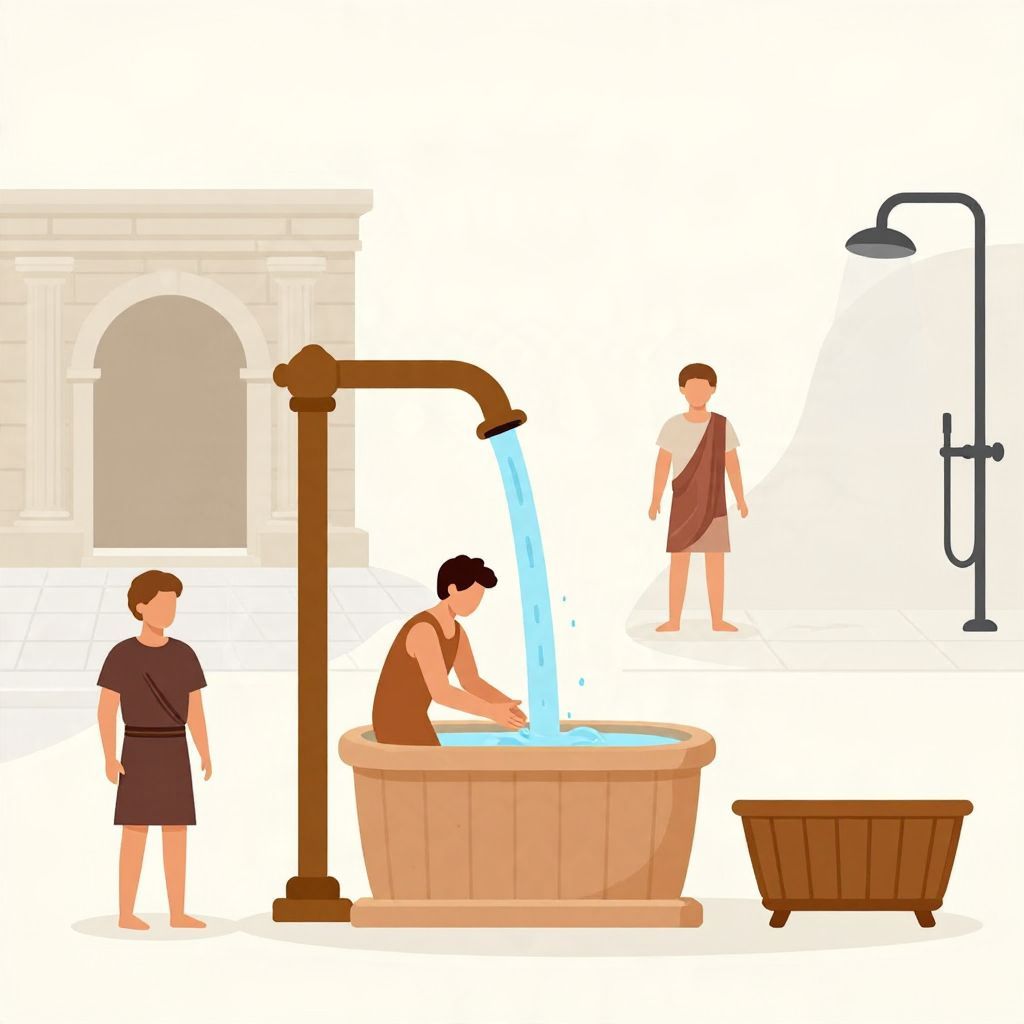
When were showers invented? The short answer is that the basic idea of washing the body with falling water is ancient, but the modern shower as a plumbing fixture developed in the 18th and 19th centuries. What people call a “shower” today was not a single invention so much as a long evolution from ritual bathing, gravity-fed water systems, and eventually indoor plumbing.
Because different cultures used different bathing methods, the answer depends on whether you mean the earliest shower-like practice or the modern device. Both have important histories, and they reveal how ideas about cleanliness, health, privacy, and technology changed over time.
When were showers invented?
Showers were not invented all at once. Shower-like bathing existed in ancient civilizations, but the modern shower emerged in the late 1700s and became practical and widespread in the 1800s, especially after improvements in water supply, drainage, and indoor plumbing. In other words, the “invention” of showers is best understood as a gradual development rather than a single date.
The ancient roots of showering
Water falling from above is an old idea
Long before modern bathrooms, people bathed by pouring or directing water over the body. Ancient societies in Egypt, Greece, Rome, India, and elsewhere used bathing spaces, basins, and water channels. Some of these systems allowed water to flow over bathers in ways that resemble a shower, even if they did not use a modern showerhead.
In the ancient world, bathing was often tied to public life, religion, and medicine. Cleanliness mattered, but so did ritual purification and social custom. The technology was usually simple: buckets, spouts, aqueduct-fed baths, and gravity-driven water flow.
Roman bath culture and early shower-like systems
The Romans are especially important in the history of bathing. Their public bath complexes used sophisticated plumbing, heated rooms, and running water. While Roman baths were not showers in the modern sense, they show that the principle of moving water through a built environment was already well established. In some cases, bathers could rinse off with water directed from above or from wall outlets.
These ancient practices did not lead in a straight line to the modern shower, but they created a cultural and technological foundation. The key idea was simple: water could be delivered to the body without the need for a full immersion bath.
Who invented the modern shower?
The modern shower is usually associated with William Feetham, who patented an early mechanical shower in England in 1767. His design used a pump to lift water into a container, then let it fall back over the user. It was an important step toward the modern shower, but it was not yet a comfortable or hygienic household fixture by later standards.
Feetham’s 1767 patent
Feetham’s shower was a practical invention for its time, but it had limits. The same water was often reused, and the system did not necessarily provide a steady supply of clean water. Still, the patent marks one of the clearest moments when the shower became a distinct mechanical device rather than just a bathing method.
This is why historians often point to the late 18th century as the beginning of the modern shower’s history. The concept was now engineered, not merely improvised.
How showers changed in the 19th century
From novelty to health device
In the 1800s, showering became more closely tied to medicine, discipline, and hygiene. Doctors and reformers increasingly promoted bathing as a way to improve health. At the same time, prisons, military barracks, schools, and public institutions began using showers because they were efficient and used less water than full baths.
Early 19th-century showers were often harsh by modern standards. Some were cold-water dousing devices, and others were used in institutional settings for regulation rather than comfort. But the period was crucial because it normalized the shower as a functional system.
Plumbing made the shower practical
The real breakthrough came when cities expanded water infrastructure and homes gained reliable plumbing. Once water could be piped in and drained out safely, showers became more useful and more appealing. Better valves, faucets, heaters, and pipes made it possible to control water temperature and flow.
By the late 19th century, showering was no longer just an experimental or institutional practice. It was becoming part of modern domestic life, especially in urban areas with developed plumbing systems.
Why the shower became popular
Efficiency and cleanliness
Showers gained popularity because they were faster than baths and often more economical with water. A bath requires filling a tub, while a shower can clean the body with a continuous flow. As hygiene became more important in modern public health thinking, showers fit the new emphasis on regular washing.
Urban life and modern bathrooms
The rise of apartments, tenements, and dense cities also helped. Space was limited, and plumbing systems had to serve many people. A shower could be installed where a full bath was impractical. Over time, bathrooms were redesigned around convenience, and the shower became a standard feature in many homes.
Changing ideas about the body
Showering also reflected changing cultural values. In earlier periods, bathing could be social, ceremonial, or occasional. In the modern era, it became more private and routine. The shower matched this shift: it was quick, individual, and suited to daily life.
A brief timeline of shower history
- Ancient times: Shower-like washing practices appear in several civilizations through pouring water, spouts, and gravity-fed systems.
- Roman era: Advanced bath complexes use plumbing and flowing water, helping establish the idea of directed water bathing.
- 1767: William Feetham patents an early mechanical shower in England.
- 1800s: Showers spread in institutions and become linked to hygiene and efficiency.
- Late 1800s to early 1900s: Indoor plumbing and improved water heating make showers common in homes.
Was the shower a sudden invention or a gradual evolution?
It was a gradual evolution. If you are asking when the shower was first invented as a device, the best-known date is 1767. If you are asking when people first used falling water to wash the body, the answer goes back thousands of years. If you are asking when showers became a normal part of modern homes, the answer is mainly the late 19th and early 20th centuries.
This distinction matters because everyday technologies often have layered histories. A modern shower depends on plumbing, water pressure, drainage, heating, and building design. Without those systems, the shower remains only an idea or a rough prototype.
Historical significance of the shower
The history of showers tells us more than the history of a bathroom fixture. It shows how technology reshapes daily life. Showers helped transform bathing from a labor-intensive or communal activity into a private, routine act of personal care. They also reflect broader historical changes: urbanization, public health reform, industrial engineering, and new expectations of cleanliness.
In that sense, the shower is a small invention with a big historical footprint. It changed how people organized their mornings, how institutions handled hygiene, and how modern societies thought about the body.
So, when were showers invented? The most accurate answer is that shower-like bathing is ancient, the modern shower was first patented in 1767, and the shower as a common household fixture emerged in the 19th century. For more on the long history of everyday life and technology, explore HistoryOrg’s history articles and related background on when walking was invented.