
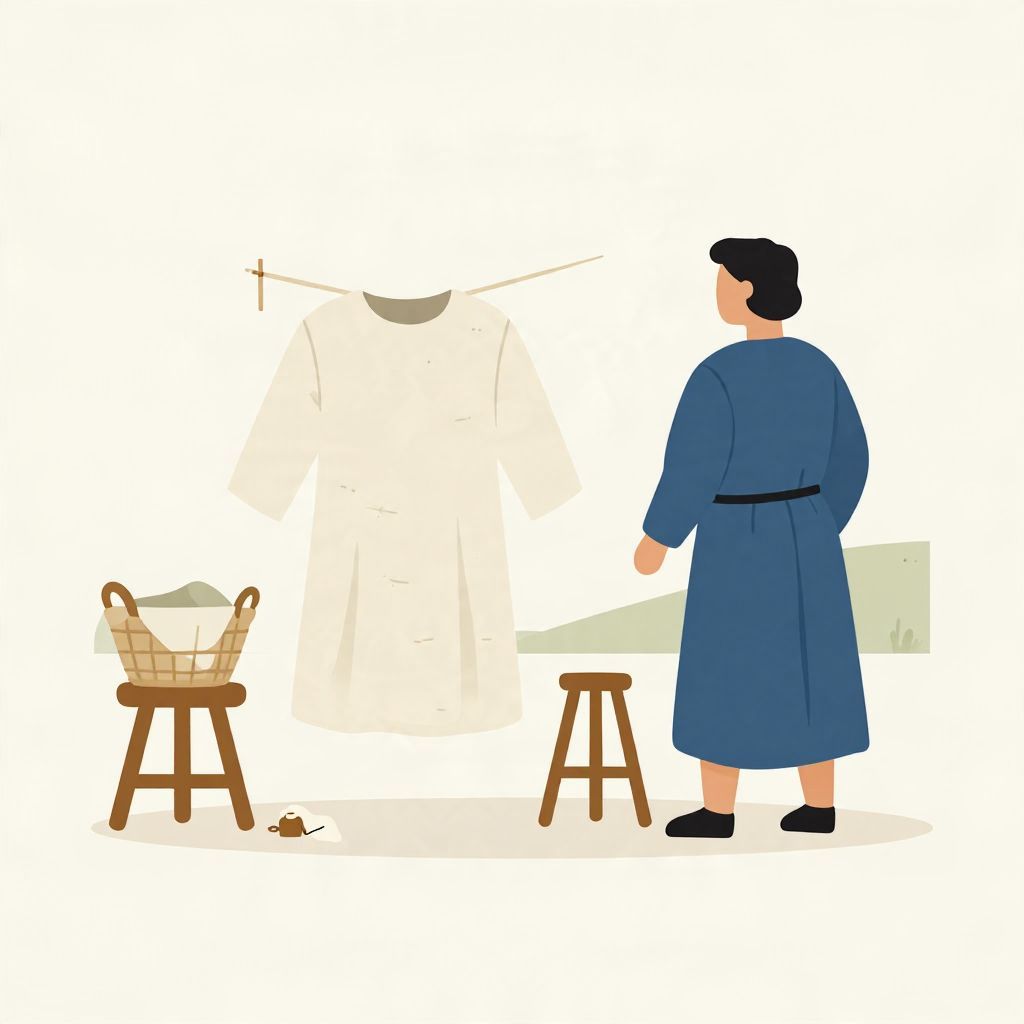
What is a smock? In historical terms, a smock was a loose outer garment, usually made of linen or another washable fabric, worn over everyday clothes to protect them from dirt and wear. It began as practical workwear and later became associated with rural labor, children’s clothing, and certain regional costumes.
Its meaning changed over time. The word has referred to different garments in different periods, but the core idea remained the same: a simple protective layer shaped by utility, not fashion.
What is a smock?
A smock is a loose, often pullover garment designed to cover and protect clothing underneath. Historically, it was commonly worn by farm workers, artisans, and children, especially in Europe. The smock’s history reflects everyday labor, changing textile practices, and the long life of simple clothing forms in preindustrial society.
The origins of the smock
The smock emerged from practical needs in medieval and early modern Europe, when clothing was expensive and difficult to wash. A protective overshirt made of linen helped preserve the garments beneath it. While exact origins are hard to pin down, smocks were well established by the late Middle Ages and became especially common in rural English life.
Medieval roots
By the later medieval period, loose tunics and overshirts were already familiar across Europe. The smock developed from this broad family of work garments. In English usage, “smock” came to describe a plain outer layer worn by laborers, often belted at the waist and sometimes gathered at the neck or cuffs.
Why linen mattered
Linen was the preferred material for many smocks because it was durable, breathable, and easier to launder than wool. That made it ideal for people working outdoors or in messy trades. In a world before modern detergents and cheap replacement clothing, a washable protective layer was a practical necessity.
How was a smock worn?
Smocks were usually loose-fitting and simple in cut, allowing freedom of movement. They could be pulled on over the head or fastened at the front. Many were plain, but some were decorated with embroidery, pleating, or smocking, the gathered stitching that gave the garment a shaped, elastic effect.
Common features
- Loose cut: allowed movement during physical work.
- Protective purpose: kept dirt, dust, and stains off inner clothing.
- Durable fabric: often linen or another sturdy textile.
- Simple construction: practical rather than tailored.
Smocking and the garment’s name
The decorative stitching called smocking is related to the garment’s history, though the terms are not identical. Smocking refers to gathered embroidery that creates stretch and texture in fabric. This technique became associated with children’s clothes and decorative dress, but the original smock was primarily a functional work garment.
Smocks in rural and working life
In early modern England, the smock became strongly associated with agricultural laborers, carters, shepherds, and other outdoor workers. It was part of the visual world of the countryside. Because it was practical and inexpensive, it suited people who needed reliable clothing rather than status display.
The “smock-frock”
One well-known variant was the smock-frock, a fuller, often long smock worn by men in the 18th and 19th centuries. It could be quite distinctive, sometimes decorated with elaborate pleating or embroidery. Although it was still workwear, it also became a recognizable symbol of rural identity in Britain.
Social meaning
The smock was not just a garment; it marked social position. In many societies, clothing signaled occupation and class. A smock suggested manual labor, modest means, and practical habits. At the same time, the decorated smock-frock could show regional style and craftsmanship, reminding us that workwear was not always visually plain.
Smocks for children and women
By the 18th and 19th centuries, smocks also appeared in children’s clothing. A loose smock was easier to clean and allowed growing children to move comfortably. Women’s smocks and undergarments also existed in earlier periods, though the word could refer to different types of linen garments depending on time and place.
From undergarment to outer garment
In some historical contexts, “smock” could mean an undergarment, especially a linen shift or chemise. This older usage helps explain why the word appears in different clothing histories. Over time, however, the workwear meaning became more prominent in English, especially when discussing rural dress.
The smock in fashion and culture
Although smocks began as practical clothing, they later influenced fashion. Designers and dressmakers borrowed the loose shape, gathered necklines, and decorative stitching of traditional smocks. In the 20th century, “smock” could describe women’s blouses, children’s dresses, or artist’s protective coats, showing how an old work garment adapted to new uses.
Artistic and domestic uses
Smocks were also worn by painters, potters, and other workers who needed to protect their clothes. This preserved the original function of the garment: shielding the body’s clothing from mess. In kitchens, workshops, and studios, the smock remained useful long after its rural associations began to fade.
Regional and folkloric associations
In Britain, the smock-frock became part of folk memory and historical costume. It appears in paintings, village imagery, and later heritage displays. While these representations can romanticize rural life, they also preserve evidence of how ordinary people dressed and worked before industrial clothing became widely available.
How the smock changed over time
The history of the smock is tied to wider changes in textile production, labor, and fashion. As machine-made clothing became cheaper in the 19th century, the need for a single protective overshirt declined. Smocks did not disappear, but their role shifted from everyday necessity to specialized use, costume, or style.
Key stages in the smock’s history
- Late medieval period: loose protective garments become common in Europe.
- Early modern era: smocks are widely used by workers, especially in rural England.
- 18th–19th centuries: the smock-frock becomes a distinctive laboring garment.
- Modern period: smocks survive in art, children’s wear, and fashion-inspired designs.
Why the smock matters historically
The smock may seem simple, but it tells an important story about everyday life. It reveals how people protected scarce clothing, how labor shaped dress, and how practical garments could become cultural symbols. Like many humble items of clothing, the smock helps historians understand work, class, and daily routines in the past.
Beyond the garment itself
Studying a smock also opens a window onto broader history: the cost of cloth, the value of laundry and cleanliness, the division between workwear and fine dress, and the way clothing expressed identity. In that sense, the smock is a small but revealing part of social history.
So, what is a smock? It is a loose protective garment with deep roots in European everyday life, especially in rural and working communities. Its long history shows how a practical piece of clothing could move from necessity to tradition to fashion influence. For related historical clothing and social context, you may also find what is a duchess and what is a merchant marine useful starting points.