
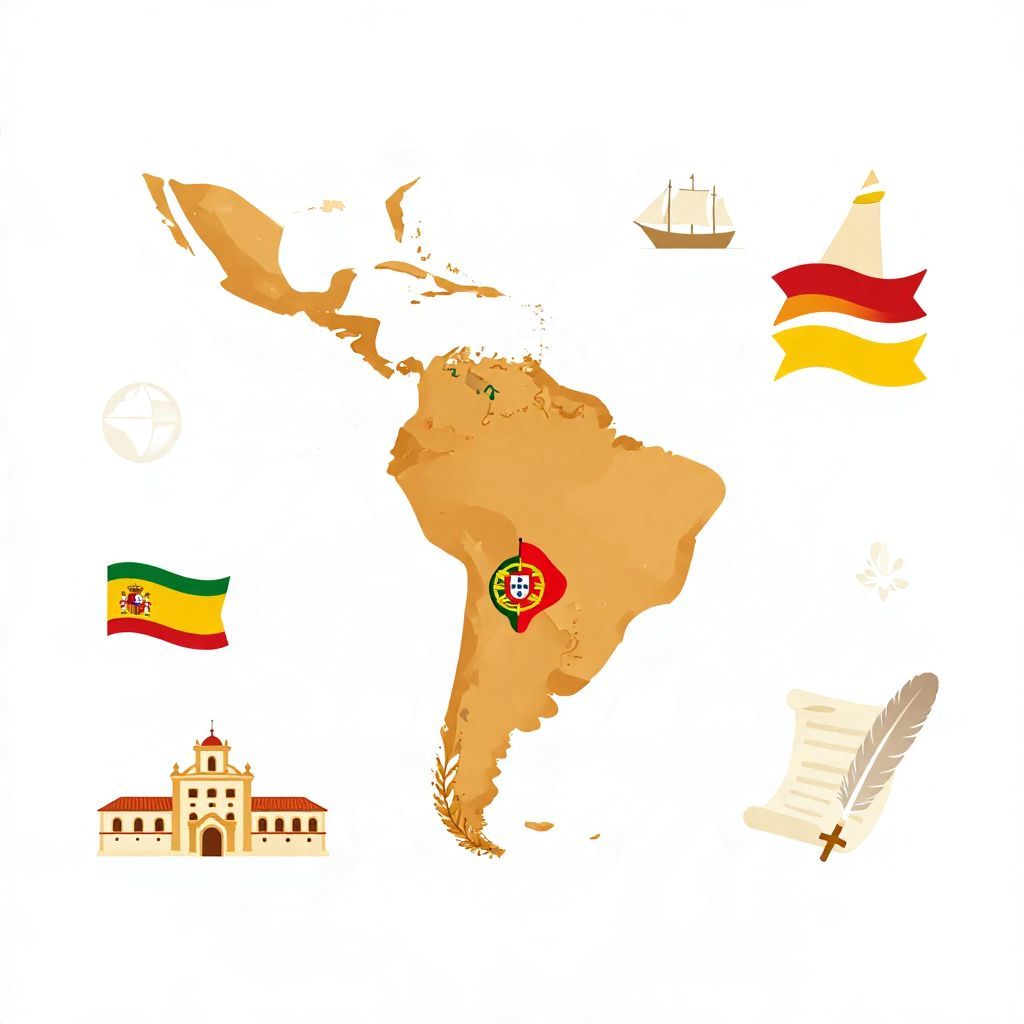
Why is it called Latin America? The short answer is that the region was named for the Romance languages—especially Spanish and Portuguese, and sometimes French—spoken there after European colonization. The word “Latin” refers not to ancient Rome directly, but to languages descended from Latin, the language of the Roman Empire.
The term became popular in the 19th century, when intellectuals and politicians used it to describe parts of the Americas shaped by Latin-derived languages and European cultural ties. Over time, the name also carried political meaning, helping distinguish these countries from the English-speaking United States and from the broader “Anglo” world.
Why is it called Latin America?
It is called Latin America because most of the region’s dominant languages—Spanish, Portuguese, and in a narrower sense French—come from Latin. The name emerged in the 1800s as a cultural and political label for the parts of the Americas colonized by Iberian and, in some cases, French powers, rather than by English-speaking powers.
The linguistic origin of the word “Latin”
The “Latin” in Latin America does not mean that the region is ancient Roman. It refers to Latin-based languages, also called Romance languages. These developed from the spoken Latin of the Roman Empire after the empire’s western territories fragmented in late antiquity and the early Middle Ages.
From Roman Latin to Romance languages
Classical Latin was the language of administration, law, literature, and elite education in Rome. Everyday people, however, spoke a more flexible form often called Vulgar Latin. As Roman authority weakened in western Europe, local speech patterns evolved into distinct languages such as Spanish, Portuguese, French, Italian, and Romanian.
When Spain and Portugal colonized much of the Americas from the late 15th century onward, they brought these languages with them. That linguistic inheritance became the most obvious reason for grouping the region under the label “Latin.”
Who coined the term Latin America?
The exact origin is debated, but the term became widespread in the 19th century, especially in French and Spanish-language political and intellectual circles. It was used to describe the peoples of the Americas whose cultures were shaped by Romance languages and Catholic traditions, in contrast to the English-speaking, Protestant North Atlantic world.
Why the 19th century mattered
This was the age of independence movements across Spanish America and Brazil, the rise of new republics, and intense debate over national identity. Leaders and writers needed language to explain what linked these new states together. “Latin America” offered a broad identity that could unite diverse countries with a shared colonial past.
At the same time, the phrase served geopolitical purposes. It helped emphasize cultural connections with France and the Iberian Peninsula while also setting the region apart from the growing power of the United States.
How colonization shaped the name
The name reflects the history of European conquest and settlement after 1492. Spain and Portugal established vast colonial empires in the Americas, and their languages became dominant in government, religion, law, and education. This is why most countries in the region today speak Spanish or Portuguese.
Key colonial powers in the Americas
- Spain colonized most of mainland Latin America, including Mexico, Central America, and much of South America.
- Portugal colonized Brazil, which is why Portuguese is the main language there.
- France had a smaller but important presence in the Caribbean and parts of mainland America, and French influenced some uses of the term.
Because these empires shared languages descended from Latin, later observers grouped their former colonies together as “Latin” America. The label is therefore a colonial and postcolonial category, not an ancient geographical one.
What the term was meant to distinguish
“Latin America” was not just a descriptive phrase. It also created a contrast with “Anglo America,” meaning the English-speaking parts of the Americas, especially the United States and Canada. In many 19th-century uses, the term implied a cultural divide between Latin-derived and English-derived societies.
A political idea as much as a geographic one
For some writers, the phrase suggested a shared heritage among Spanish- and Portuguese-speaking nations. For others, it was a diplomatic or ideological tool. French thinkers in particular sometimes promoted “Latin” identity to justify France’s influence in the hemisphere. In that sense, the term had both cultural and strategic meanings.
That is why “Latin America” should be understood as a historical construction. It describes real linguistic and colonial patterns, but it also reflects the politics of the 19th century.
Was the whole region always called Latin America?
No. The name was not used from the beginning of European colonization. People in the 16th, 17th, and 18th centuries usually described territories by empire, viceroyalty, kingdom, province, or local name. The broader regional label “Latin America” emerged later, after independence and during a period of nation-building and international competition.
Earlier names and identities
Before “Latin America” became common, people might have referred to:
- New Spain for much of present-day Mexico and parts of Central America
- Peru or the Viceroyalty of Peru for large areas of Spanish South America
- Brazil as a Portuguese colony and later empire
- Spanish America for the Spanish-speaking colonies
These older labels were imperial and administrative. “Latin America” is broader, more modern, and more cultural than political mapmakers of the colonial era would have used.
Why the term is sometimes controversial
Although widely used today, “Latin America” is not a neutral label for everyone. Some people criticize it because it centers European languages and colonial history rather than Indigenous identities, African heritage, or local national traditions. Others note that the term can flatten an enormously diverse region into one category.
Alternative ways to describe the region
Depending on context, historians and geographers may use other terms such as:
- Hispanic America for Spanish-speaking countries only
- Ibero-America for Spanish- and Portuguese-speaking countries
- Spanish America for former Spanish colonies
- Caribbean, Central America, or South America for specific subregions
These labels can be more precise than “Latin America,” depending on the topic being studied. For example, Brazil is part of Latin America, but not Hispanic America; Haiti is often included in broader cultural discussions of Latin America, though French and Haitian Creole complicate simple language-based definitions.
How language, religion, and empire shaped the identity
The term “Latin America” reflects more than speech. Spanish and Portuguese colonization also spread Catholic institutions, legal systems, urban planning, and Atlantic trade networks. Over centuries, these influences mixed with Indigenous civilizations and African diasporic cultures, creating societies that were neither purely European nor simply colonial copies.
A mixed historical inheritance
That mixture is central to the region’s history. The name “Latin America” points to the European linguistic layer, but the region’s actual past includes the civilizations of the Maya, Mexica, Inca, and many others; the forced migration of millions of Africans through slavery; and the survival and adaptation of Indigenous languages and traditions.
So while the name highlights one major historical thread, it does not capture the full complexity of the region’s population or culture.
How the term is used today
Today, “Latin America” remains a standard term in history, politics, economics, and cultural studies. It is useful because it groups together countries with related colonial histories and many shared institutions. But scholars also use it carefully, recognizing that it is a broad umbrella rather than a perfect description.
The term is especially helpful when discussing the aftermath of European conquest, independence movements, migration, regional diplomacy, and cultural exchange across the Americas. At the same time, historians often pair it with more specific labels to avoid oversimplifying the past.
So why is it called Latin America?
It is called Latin America because the region’s dominant colonial languages—Spanish, Portuguese, and sometimes French—descend from Latin, the language of ancient Rome. The name became common in the 19th century as a way to describe the postcolonial societies of the Americas shaped by those languages, and to distinguish them from English-speaking North America.
In other words, the name is both linguistic and historical: it points to the legacy of Rome through European languages, and to the colonial era that carried those languages across the Atlantic. For related background, see why Latin became a dead language and what language the Romans spoke.